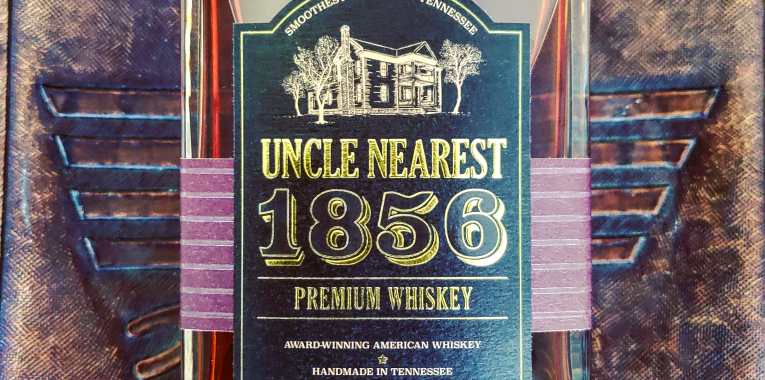
Whiskey Wednesday: The Open Story of Uncle Nearest

Today is not about depleting old bottles but celebrating something relatively new that honors something very old. A story that was an open secret yet like all open secrets unacknowledged. And being unacknowledged also means it’s a story not told. This is the story of Uncle Nearest.

Nathan “Nearest” Green was a slave in Tennessee during the Civil War. In the 1850’s he was, as horrible as it is to say, owned by a firm that leased him out to a preacher, grocer, and distiller named Dan Call. Now, back in those days to say someone was a distiller often meant that their slaves were distillers. And Nearest was one of the best. In fact, he was so good that when a young Jack Daniel’s came to work for the preacher, Call took him to Nearest reportedly saying that, “Nearest is the best whiskey maker that I know.” Only a few years older than Jack, Nearest is the one that taught him how to distill.

It was also while distilling at Call’s Distillery  in 1856 that biographer Fawn Weaver believes Nearest perfected the Lincoln County Process that became the trademark of Jack Daniel’s Whiskey.

While there are report of small scale charcoal filtration in whiskey distillation in the 1800’s there was nothing like the large scale, deep vats that make up the Lincoln County Process of filtration. This timeline is enshrined in the name of their flagship whiskey.

In 1963 the Emancipation Proclamation took effect and freed exactly zero slaves in Tennessee, The Proclamation only applied to states in open rebellion against the Union and although Tennessee had seceded it was now under Union control with Andrew Jackson as Military Governor. Jackson did free all of the slaves in Tennessee on October 24, 1864. One year later the 13th Amendment to the Constitution of the United States was passed finally abolishing slavery in the United States.

Once he was finally freed Green continued to distill for Call and now Daniel as well. Call and Daniel having founded a distillery venture together in either 1866 or 1875 depending on which documentation you believe. Shortly after, Call retired from the whiskey business for religious reasons leaving Jack in sole control and Uncle Nearest as the first Master Distiller of Jack Daniel’s Tennessee Whiskey.

In the years that followed three of Green’s sons and four of his grandsons worked at the distillery making the Green family instrumental to the early years of Jack Daniel’s. These open secrets finally began to be discussed with a 2016 article in the New York Times. This article, and the lack of real information about Nearest Green, inspired Fawn Weaver to dig deeper into Green’s story. She published a book on his life and much of the information about Green that has been incorporated into the Jack Daniel’s Distillery tours comes from Weaver.

She also founded the Nearest Green Foundation, a non profit dedicated to Green’s legacy and providing scholarships for Green’s descendants. She’s also been instrumental in helping create Uncle Nearest Whiskey which is a fully minority owned venture.

While there are plans underway to construct a distillery in the old farms of the Call distillery the whiskey is currently sourced from around 5 distilleries in Tennessee. Exact sources aren’t revealed but as everyone involved has stated that none of the whiskey is coming from the Jack Daniel’s Distillery we can assume that a fair portion of it is coming from the George Dickel Distillery. I also wouldn’t be surprised if there’s some whiskey coming from Popcorn Sutton

The whiskey then undergoes the Lincoln County Process on a proprietary filtration rig designed by Sherrie Moore, the former Director of Whiskey Operations at Jack Daniel’s who came out of retirement to assist with the Uncle Nearest Project. Uncle Nearest is also working with the Corsair Distillery to distill New Make to their own specifications and recipe for future release.

In a landscape where it often feels like a story is crammed on top of a whiskey to create some sort of marketing narrative it truly is wonderful to see a story leading to the creation of a brand instead of the other way around. Nearest Green is one of the fathers of American Whiskey and it is phenomenal to finally see history truly being told, drank, and winning major awards including most recently 2019 World’s Best from Whisky Magazine’s World Whiskies Awards

NOSE: Grassy, banana, caramel, oak
PALETE: Baking SPice, bready, ripe fruit, a sweet apple and hay
FINISH: Medium with a green burst and a touch of molasses
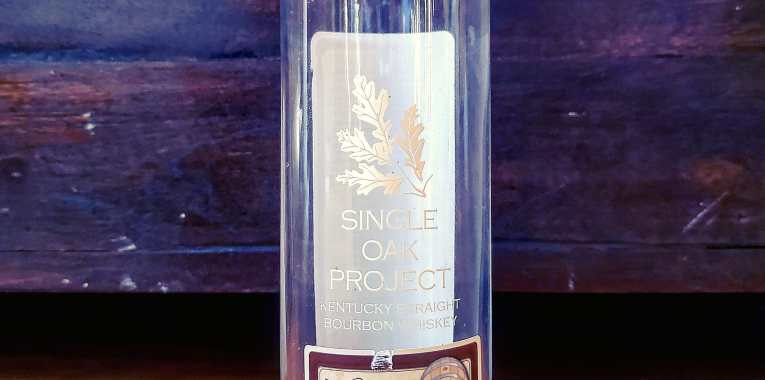
Quarantine Bottle Kill #4: Single Oak Project #156

I’m trying to cut down on the quarantine drinking so today’s bottle is a single 375 of Buffalo Trace Single Oak Project.

The Single Oak Project was a massive Bourbon experiment that was begun by Buffalo Trace in 2011. The goal was to break down the very DNA of Bourbon and be able to catalogue exactly what element imparts what flavor on the final product. It was the Human Genome Project of American Whiskey.

As the name implies the major variable that affects the final flavor of a whiskey is the process of oak aging. And more importantly how the oak interacts with the spirit over time. Ever tree and every barrel is different so the first variable that needed to be controlled was the oak.

Buffalo Trace carefully selected 96 American Oak trees with special attention paid to the grain and growth rings of each tree. These were then turned into oak staves and separated into staves from the top of the tree versus the bottom of the tree. They then varied the seasoning time of the staves. Half were seasoned for 6 months the others for 12 months.

Barrels were assembled using only staves that had been prepared in the exact same way. This produced 192 unique barrels.  These barrels then received either a #3 or a #4 char, the char essentially being how long the interior of the barrel was lit on fire and how deep it penetrated the staves.

They didn’t stop there though. Once the barrels were completed there were a few variables about what they were filled with. The mashbill of the whiskey varied (either a wheated or a rye Bourbon), the entry proof varied (105 or 125 proof) and then the style of ricks they were aged in varied (concrete or wood). 

By their own calculations this produced 1,396 taste combinations spread between 192 bottles. And over the course of four years they released all of these bottles to the public and opened a website where everyone could catalogue their tasting notes. At the end of the project all of the ratings, scores, and tasting notes would be gathered and a “winner” would be declared. Seeing how the project saw it’s final release in 2016 we know that the “winner” was Barrel #80 which has gone into production and will be released after reaching proper maturity in 2025, if we’re all still around by then. 

Barrel 80 was from the bottom half of the tree with an average grain size, seasoned for 12 months, and given a #4 char. The spirit was a rye Bourbon mashbill that entered the barrel at 125 proof and aged in a concrete rick. This is honestly very similar to traditional Buffalo Trace and it makes sense that a crowd source tasting would select something that is similar to an already popular flavor profile.

But of course the real winner of this project is the breadth of knowledge and flavor demonstrated by controlling the minutiae of every aspect of the whiskey making process. And with that in mind it’s still worth finding bottles and tasting through to see what those changes produce.

This bottle of Single Oak Barrel 156 has been on the booze shelf for years which completely defeats its purpose. So lets dive in.

This is another barrel from the bottom half of a tree with coarse grain, staves seasoned for 12 months, and given a #4 char. The spirit was a rye Bourbon base, entered the barrel at 105 proof and aged in a wooden rick. Now, after all that nerdiness here’s what it actually tastes like:

NOSE: Vanilla, Cherry, Heavy Oak, Pepper
PALETE: White Pepper, Tobacco, Leather, Stone Fruit, Rye Spice
FINISH: Dry, Spice, Medium, Earthy

I love the Single Oak Project because I love the minutia and variation.While I can wish that something on one of the more extreme ends of the bell curve had one out for wide production but the wealth of knowledge generated is worth a dram or a bottle.

Quarantine Bottle Kill #2: Woodford Reserve Rare Rye

The next victim of the Quarantine Bottle Count is the Woodford Reserve Master’s Collection Rare Rye twins from 2011. Yes, I’ve been sitting on two open 375ml bottles for nine years. Don’t judge me.

Let’s put this into context. Nine years ago rye whiskey was just becoming the hot item after decades of obscurity. And then here lands a pair of Woodford Ryes for $100. It was one of many signals that not only was Rye moving from the bargain category but that distillers and distilleries had been contemplating the move for a while.

The distillate is 100% Rye, probably a blend of malted and unmalted, triple distilled on the Woodford Pot stills and bottled at 92.4 proof. The only stated difference between the bottles is that one was aged in freshly charged new oak, just like Bourbon or American Rye legally must be, and the other is aged in reused Bourbon barrels. This technically makes it a rye “spirit” and not a whiskey.

What’s interesting to me though is that the New Cask is labeled as “Straight Rye Whiskey” with no age statement. Legally, this means that the “New Cask Rye” is a minimum of four years old. And as Woodford clearly says the only difference between the two bottles is the maturation process that means the “Aged Cask” is also four years old. 

Whiskey makers are accustomed to think in the long term. Production is measured in years if not decades but even then it seems a risky move to have distilled a 100% Rye in 2006-2007 even if it was meant to be a limited release. But the demand for rye has only gotten stronger in the past decade, clearly evidenced in Woodford having a dedicated Rye as part of it’s core line up in 2020.

As interesting as all of that backstory is, how does the whiskey actually taste?

AGED CASK RYE
NOSE: Grassy, Bready, with a touch of green apple
PALETTE:  Bright rye, a hint of vanilla and orange, honey
FINISH: Surprisingly Long, with a hint of mint and cinnamon, dry

NEW CASK RYE
NOSE: Tobacco, Honey, Vanilla, and oak
PALETTE: Cinnamon, deep baking spices, ripe apple, and leather
FINISH: Sweet, with a lingering oak and white pepper

Overall, these bottles are an fantastic example of the impact a barrel has on a distillate. The New Cask is 100% a rich, fully embodied rye while the Aged Cask is still young and fiery. It reminds me a lot of Mellow Corn, a personal favorite, but it could benefit from more time letting the flavors integrate.

They both unmistakably taste like Woodford. I’ve talked about this before but to me there is always a slightly undefinable, yet incredibly identifiable, characteristic to Woodford that I can only imagine comes from their Pot Stills. Both of these ryes carry that DNA.

Nine years after their release I’m not as excited by either of these bottles as I was when they first came out. But the world is a different place, the whiskey market is a different place, and I’m a different person.

While they’re not mind blowing whiskies on their own the weight of time evidenced in the aging and the drinking sits heavily with me as the last drops pour from the bottle.

Quarantine Bottle Kill #1: Heaven Hill 7 Year Bottled In Bond Bourbon

Sheltering in place has led to a massive spike in booze sales across the United States a the days are now divided into “Coffee Hours” and “Alcohol Hours.” Being forcefully unemployed by the pandemic I’m unable to contribute to that spike and have had to reexamine my hoarding tendencies. My reluctance to open bottles, let alone finish them, has been overtaken by my belief that whiskey is meant to be enjoyed. And if not now, when?

So, join me as I work my way through my bar cart with the great Quarantine Bottle Kill of 2020.

First up is a relative newcomer: Heaven Hill Bottled In Bond 7 Year Old Bourbon. Not to be confused with the Heaven Hill Bottled In Bond 6 Year Old Bourbon which was only available in Kentucky and was discontinued in 2018. One year later this 7 Year hit shelves with an updated label, an extra year of age, and a boosted price tag.

I’ve made no qualms about Heaven Hill being one of my favorite distilleries but their lack of an eponymous bourbon certainly means they have much less name recognition as a distillery than say Jim Beam. The old Heaven Hill 6 Year was one of my favorite bottles to bring back from a Kentucky trip and at $12 was an absurd steal.

Now, what exactly does an extra year and a new label and bottle taste like?

NOSE: Chestnut, dusty leather, vanilla, and oak

PALETTE: Earthy with a strong oak presence. A dusting of baking spices and a hint of tobacco. There’s a slight woodsy quality to it with a surprisingly light punch for a bonded whiskey.

FINISH: Medium and dry with a touch of stone fruit and capped with the oak and vanilla from the nose.

This is quintessential Heaven Hill. In fact, if you told me this was the 6 Year Old bottle I would believe you. Which makes sense as it’s the exact same mashbill only a year older and released a year after the 6 Year was discontinued. You can do the math. And that’s my only real con with this bottle: the math.

$12 would be an absurd price for any quality Bourbon these days.  However, at $40 it enters a very crowded field of more household names like Eagle Rare, Woodford Reserve, and Knob Creek. While this is solid bourbon I’d personally pick up a bottle of Elijah Craig from the same distillery for a lower price tag. 

I am happy to see it on the shelves though if only to help spread the Heaven Hill name. Though if it was still at the old price point I might have been able to stock up for the quarantine instead of having to finish the bottle.

Whiskey Wednesday: Blood Oath Pact #5

A couple of months ago I was graciously sent a sample of the new release of Blood Oath Bourbon. Between competitions, menu flips, leaving a job, and much needed vacation travel after leaving said job the sample unfortunately fell by the wayside. But with Halloween nearly upon us I figure it would be appropriate to crack open a little Blood Oath and see what it was about. 

Blood Oath is a brand owned by Luxco, Inc. a beverage producer and marketer based out of St. Louis. In addition to Blood Oath Luxco also produces Ezra Brooks, Rebel Yell, and distributes Yellowstone for Limestone Branch Distillery. While Luxco has sold bourbon for years they’re personal bourbon distillery, Lux Row Distillers, didn’t start production until January of 2018. Although their first year of production outpaced projections none of the whiskey they’ve distilled is old enough to be used for any of their brands meaning the Blood Oath is a sourced whiskey. 

Now, sourced isn’t a dirty word and while I wish Luxco was open about where they sourced the whiskey they at least are open about the fact that Blood Oath is sourced and blended. In fact, Blood Oath boldly claims that they are “loyal to no one family, favoring no one distillery, and bound by no one philosophy.” The cynic in me wants to say that’s marketing speak for “we can’t guarantee a source” but blending is an art form that can produce some spectacular bottlings so let’s take the idea at face value. The Blood Oath isn’t trying to create a consistent bottling but rather a unique, limited, yearly offering. So, what’s in the Blood Oatch Pact this year? 

Pact 5 is a blend of three whiskies a 13 year old rye Bourbon, an 11 year old wheated bourbon, and an 8 year old rye bourbon finished in Caribbean rum barrels. Bottled at 98.6 proof (the temperature of the human body) we don’t know the distilleries or the proportions of the blend but given Luxco’s working relationships it’s not too much, of a leap to assume that a lot of the whiskey comes from Heaven Hill. Also, considering the current state of aged whiskey it’s probably also fair to assume the bulk of the blend is the 8 year. This is noteworthy because it is this rum finish that really sets the Pact 5 apart from the previous four releases of Blood Oath.  

NOSE: Vanilla, Red Apple, Cherry, Brown Sugar

PALETTE: Wet oak, molasses, earthy, candied citrus peel, clove, and a touch of hogo

FINISH: Short to medium, orange, pepper, and oak 

The rum finish is surprisingly apparent once your mind is keyed to look for it. There’s a hint of that funk and brown sugar but without knowing it was a rum barrel I would have thought this was a slightly over oaked release. 

It’s a touch sweet, a little aggressive, and surprisingly oaky all around. It’s a style that’s leaning into heavily oaked, older American whiskies which is certainly on trend. People are looking for flavors that are unique, big, bold, and a heavy barrel influence can make a spirit pop out of the more mellow distillates. 

While the blend is interesting, I personally couldn’t justify the price point. At a suggested MMRP of $99.99 but often appearing on shelves at north of $110 I don’t know that it’s interesting enough to justify the “special occasion” pour of the price tag. This is something I’d rather sip, compare, and enjoy rather than store and dole out during the justifiable times that a 100+ dollar bottle usually enjoys. 

I ultimately find myself wishing I had more context for the Blood Oath. There’s nothing bad with the Pact 5, aside from my hesitation on the price, but I don’t see a through line. I’ve had several of the previous Blood Oath’s and can’t connect the dots between the Pacts. While it’s all well and good to not have a “favorite” I would love to see a point of view that makes this whiskey more than an experiment. 

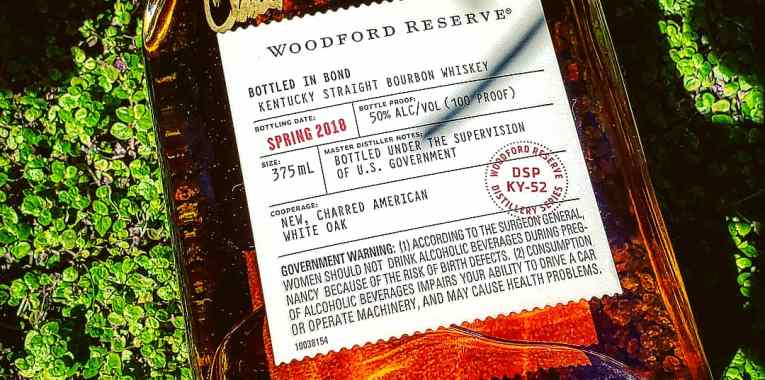
Whiskey Wednesday: Woodford Reserve Bottled-In-Bond

Let’s get meta. 

I run a blog, which you’re currently reading, called Bottled In Bond, LA. I write about bartending, cocktails and spirits, primarily whiskey but occasionally not. I’ve been doing this for a few years now and occasionally old articles will suddenly get a few more views because someone Googled a bottled in bond product that doesn’t exist. You would not believe how many people are looking for a bonded Chartreuse

About a year ago, I noticed a huge spike in an old article about Woodford Reserve. It was getting a Google search almost daily for a month. I became curious, did my own googling, and found a single Reddit post about a Woodford Bottled-In-Bond but not much else. 

After asking around with no clear answers my friend Luke Ford, who works for Woodford, returned from a visit to Kentucky with a .375ml bottle signed by Woodford Master Distiller Chris Morris. A distillery only release of Woodford Reserve Bottled In Bond. 

My natural hoarding instincts took over, it went on the shelf and remained unopened for the past year. But why? I’ve always maintained that whiskey is meant to be drank, to be experienced, and after all the curiosity that lead to me actually receiving a bottle shouldn’t I be curious about what the whiskey actually tastes like? So, I opened it. 

NOSE: Super oak, straw, light stone fruit
PALETTE: Caramel, cinnamon, baked peach pie, with a touch of the metallic pie tin
FINISH: Bright, quick, and surprisingly light for the extra proof 

This bottle tastes exactly like what I would expect a Bonded Woodford to taste like and that is incredibly interesting to me because by all right’s it shouldn’t. 

The Bottled In Bond Act of 1897 states that to be bottled in bond a product must be produced by one distiller at one distillery within in one 6-month distillation “season.” It must also be aged in a federally bonded warehouse for a minimum of four years and bottled at 100 proof. 

It’s the one distillery requirement that makes this interesting. The traditional bottle of Woodford is made up of spirit from two different distilleries. Column Still distillate from the Brown Foreman Distillery in Shively, KY and Pot Still distillate from the Woodford Distillery in Versailles, KY. This bottle only caries the DSP Number, essentially the distillery address, for the Woodford Distillery. Meaning this should legally be only the pot still whiskey. Which to me says there should be a bigger flavor difference. In a way it’s almost impressive that this really does just taste like Woodford. 

Part of what I love about Bonded whiskey is how clear cut it is. You always know the exact distillery, proof, and process whenever a product is bottled in bond. It strips out a lot of the mystery and marketing from a brand. It was an often overlooked mark of quality on affordable whiskey. And yes, the category is seeing a resurgence and premiumization in the past few years, however these are often just upscaled versions of existing brands. They aren’t bad but they are a sign of the times and they are familiar. 

This Woodford Bottled In Bond clearly falls into this ongoing trend but this bottle also raises questions for me. Is the labeling on this very small run inaccurate or have I always overestimated the impact of the column stills on the final Woodford profile? It’s made me think about Woodford in a way that I honestly haven’t in years. I don’t have an answer to these questions but at least it’s something to ponder over the next glass. 

Whiskey Wednesday: Four Roses’ New Selection

Conservatively, I would say that 87% of the Four Roses Single Barrel depletions at any bar I work at are due to it ending up in my mouth.

Conversely, my Partner-In-Bars, Dave Purcell, would rather sit in the pool with a bottle of the Four Roses Small Batch. I’ve sourced Four Roses Barrel Strength Single Barrels and have dived into the history of the distillery in the past. All of this is to say that I am a big fan of Four Roses and became very excited when they announced their first permanent product line extension in over 12 years. And immediately became wary when they announced that it would be called the Small Batch Select. 

Four Roses is one of the two great modern distilleries to emerge from the collapse of the old Seagram’s Empire. While Four Roses languished as a bottom tier blended whiskey for the later half of the 20th century it quickly became a staple of the new Bourbon Boom in the ‘00s when the distillery was purchased by the Japanese beverage conglomerate Kirin. Under the leadership of Master Distiller Jim Rutledge Four Roses became one of the most sought after Bourbon’s in the world. This was in part due to the process that Four Roses uses to make their whiskey.

Four Roses makes 10 different Bourbon recipes. And they’re all coded so you can tell what whiskey is being used in every bottle. For every code there are four letters, the first and the third will always be the same. The first letter will always be ‘O’, signifying that it was made at the Four Roses Distillery in Lawrenceburg, KY and the third letter will always be “S” meaning that it is Straight Bourbon. 

 The second letter will then signify that mash bill. Four Roses utilizes two different mash bills:

Mash bill E, which is 75% corn, 20% rye, and 5% malted barley
Mash bill B, which is 60% corn, 35% rye, and 5% malted barley. 

These mash bills are then fermented with one of five unique yeast strains, which is designated by the fourth letter: 

K – rich in spiciness, full bodied 
O – floral, spicy, medium bodied 
Q – slightly fruity, spicy, medium bodied 
F – herbal
V -delicate fruit 

The Single Barrel is always OBSV, high rye and delicate fruit. The Small Batch is a blend of four: OBSK, OESK, OBSO, OESO, and the standard Yellow Label is a blend of all ten. Special releases throughout the years have used different mash bills in different amounts. 

My initial hesitation upon hearing about the Small Batch Select was two fold. I’m just not as big of a fan of the Small batch as the Single Barrel and I didn’t know if it would be different enough from the Small Batch to warrant a new extension. So, what makes it different?

First up is the proof. Bottled at 104 Proof and Non-Chill Filtered the Small Batch Select is hotter than the Single Barrel which comes in at 100 Proof. Second, while there is no age statement Four Roses has said that it is a blend of 6-7 year old Bourbons. Lastly, that blend is a blend of six of the recipes: OBSV, OBSK, OBSF, OESV, OESK, and OESF. We still don’t know the proportions, but this brings in distinctly different flavors from the standard Small Batch. 

NOSE: Baking Spice, red fruit, and oak 

PALETTE: Vanilla, apricot, cinnamon, oak, and dark chocolate 

FINISH: Medium and dry, tobacco and leather 

This fourth Four Roses is truly distinct from its siblings. Enough to warrant its entry to the family. My initial skepticism came from the name yet upon further research and tasting its clear that this new entry is vastly different from the established small batch while still being a technical small batch. 

It’s also important to note that this is new Master Distiller Brent Elliott’s first permanent edition to the Four Roses line up since taking over in 2015.  Coupled with previous limited releases like the Al Young 50th Anniversary and the 130th Anniversary Small Batch I think we’re getting a sense of how Brent’s palette differs from Jim’s. 

While this won’t replace the Single Barrel for me it is a worthy addition that fans of Four Roses will love but is also a great introduction for new comers to the brand. 

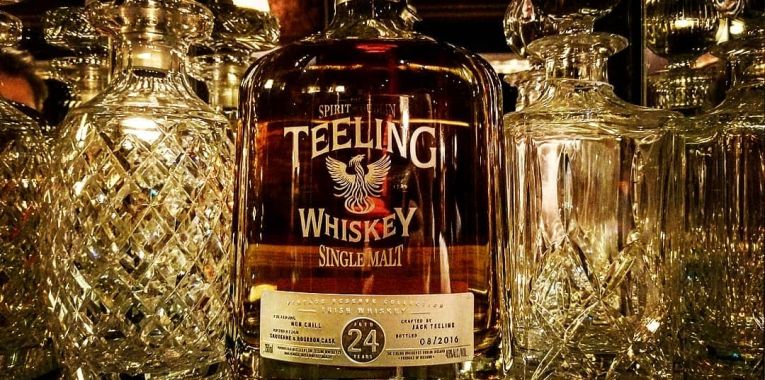
Whiskey Wednesday: Teeling’s 24 Year Old Single Malt Award

Awards are a fickle thing. Being the “best” is an arbitrary construct that essentially says that something followed the rules really well. Without a larger context the sentence “an Irish Whiskey wins best single malt in the world for the first time” doesn’t carry any meaning even if it is 100% factually accurate. Which it is. 

In March of 2019 the World Whiskey Awards, presented by the thedrinksreport.com, announced the Teeling 24 Year Old Irish Single Malt whiskey as the Best Single Malt in the world. Much of the conversation after this announcement was how Ireland had won an upset victory over Scotland, the home of Malt Whisky. Especially since an Irish Whiskey had never won this award before.  

But the World Whiskey Awards have only been handed out since 2012. Meaning there haven’t been many opportunities for an Irish Whiskey to make the list. Also, in 2014 the same awards selected a Taiwanese whiskey as the best single malt so there was already precedent for Scotland not being the top dog. 

It’s easy to see the headlines as mere clickbait but there’s a deeper story. Ireland isn’t traditionally associated with Single Malt whiskey, for a wealth of historical reasons, so they’re not going to traditionally win single malt whiskey awards. And while Irish Single Malt has been made for centuries if anyone was going to win an award it was probably going to be the Teeling’s.

The Spirit of Dublin

The Teeling family first got into the Irish Whiskey game in 1782 when Walter Teeling established a distillery on Dublin’s Marrowbone Lane, an epicenter of distilling at the time. This original distillery was eventually purchased by William Jameson & Co., cousins of the more famous John Jameson. This original distillery was shuttered in 1923 as economic woes began to systematically destroy the Irish Whiskey industry. In fact, by 1976 every single distillery in the city of Dublin had shut its doors. Then in 2015 Teeling reestablished itself in Market Square, not far from the family’s first distillery.  

Now, if you’re paying attention you’re probably asking, “How does a four year old distillery win an award with a 24 year old whiskey?” and the answer reveals another layer.

The new Teeling Distillery was founded by John Teeling and his sons, descendants of good ol’ Walter, and it was not his first time starting new Irish Distillery. In 1985 John purchased an old industrial alcohol production plant in Cooley and began converting it to an actual whiskey distillery. It reopened in 1987 as the Cooley Distillery and was the first “new” distillery in Ireland in at least a decade. 

Over the next several years the Cooley Distillery gained a reputation for quality and excellence in style. One of those being a distinctly Irish style of single malts. The Tyrconnell has always been one of my favorites, winning the International Wine and Spirits (IWSC) Gold Medal in 2004. They also gained a cult following with the Connemara, a peated Irish Single Malt, and the distillery quickly became a go to source for the slowly growing segment of drinkers looking for Irish Single Malt. After winning “Distillery of the Year” from the IWSC in 2008 and then the same award from Malt Advocate Magazine in 2010 the distillery was sold to Beam, now Beam Suntory, in 2011. 

With all of this old Cooley whiskey I assumed that this bottle was old Cooley malt but after talking with people who know more about these things than I do it turns out that this is actually old Bushmill’s Single Malt.

As part of the sale Teeling kept 16,000 barrels worth of whiskey from Cooley and used that stock to establish the new Teeling brand in 2012, quickly followed by the new Dublin distillery three years later.

With all of this old Cooley whiskey I assumed that this bottle was old Cooley malt but after talking with people who know more about these things than I do it turns out that this is actually old Bushmill’s Single Malt. This adds yet another layer to the story as trying to pick apart who distilled, blended, aged, and otherwise had a hand in this whiskey over the years.

Here is a family, accustomed to winning awards winning another award on a whiskey that seems to have a foot in almost every part of the active Irish Whiskey world.

Whatever its providance the whiskey itself is a 24 Year Old Single Malt Irish Whiskey distilled in 1991. It was first aged in ex-Bourbon barrels before being married and further aged in ex-Sauternes casks. How much time it spent in each barrel type is unknown. Only 5000 bottles of 92 proof (46% ABV) non-chill filtered whiskey were produced, meaning that even if it wasn’t the best it’s still one of the rarest and oldest Irish whiskies on the market.

NOSE: Orange Zest, apricot, a slight nuttiness, and a bittersweet chocolate 

PALETTE: Honey and malt, bright stone fruit, leather, caramel and a sprinkle of saltiness 

FINISH: A long mellow finish that leans into the saltiness and the Sauterne finish 

After all that, is this the best Single Malt in the world? I have absolutely no idea. It certainly falls into the rich flavors that I expect from old, indulgent malts yet it also presents a few flavor curve balls and is surprisingly alive which helps it stand out. 

This is a malt that is relying on the past while building a future. It’s caught between multiple worlds and you can almost taste the journey it’s been on. Best may be a matter of opinion meant to generate buzz but the more I’ve learned about where this whiskey comes from the more interesting it’s become.

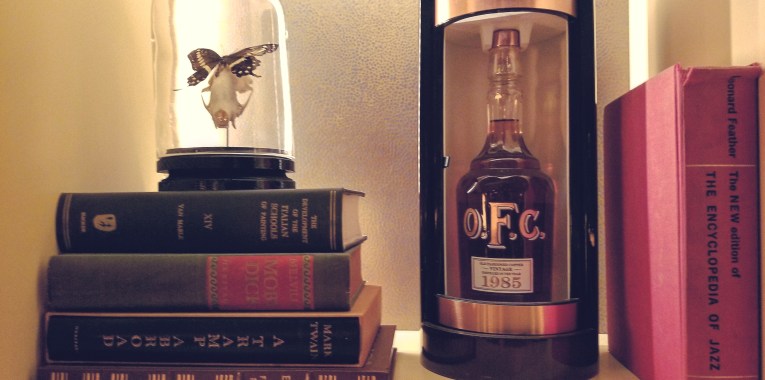
Whiskey Wednesday: O.F.C. 1985 Vintage Bourbon

Spontaneity is not my strong suit. 

Example A: my girlfriend swears by the deals emailed out daily by Scott’s Cheap Flights. Yet every time a deal lands, I have to ask about time frame, logistics, check on available vacation days, and generally stressed about the fact that booking this trip means that we won’t be able to book some other hypothetical trip that doesn’t yet exist and just like that the deal, and the moment, is gone. 

Example B: We received a bottle of the O.F.C 1985 Vintage Bourbon a year ago and I’ve been planning to write about it ever since. So, what the hell is O.F.C. and why has it been on my mind for literally a year? 

O.F.C. stands for Old Fashioned Copper and is the original name for the distillery founded by Col. E.H Taylor in 1869. Col. Taylor was an expert marketer and helped establish the concept of a Bourbon “brand” as well as being one of the major figures behind the passing of the Bottled In Bond act of 1897. 

The distillery itself was sold to another legend, George T. Stagg, in 1878. There’s an apocryphal story that one of the conditions of the sale was that Stagg could keep the initials O.F.C. but he had to change at least one of the words it stood. This is why the distillery is sometimes called the “Old Fire Copper” distillery. Regardless of the veracity of this claim the distillery’s name was officially changed to the George T. Stagg Distillery in 1904. It was the first distillery to utilize climate-controlled aging warehouses when Stagg installed steam heaters in 1886 and was one of only four Kentucky Distilleries granted a license to continue distilling throughout Prohibition.

The distillery changed hands a few more times in the 20th century before finally being purchased by the Sazerac Corporation in 1992 and its named changed once again. Now known as Buffalo Trace it arguably produces some of the most sought after American Whiskey on the market, including bottles named after both Taylor and Stagg as well as the much desired Pappy Van Winkle line. 

The distillery clearly has experience with special releases but even amongst the plethora of rare bottles the O.F.C. stands out. 

 The O.F.C. is less a special release and more of a time capsule. These are all single barrel, vintage dated Bourbons. Each bottle is sourced from a single barrel and marked with the year of distillation. This makes each vintage completely unique with the mashbill and age varying depending on the bottling. Another intriguing fact is that this line up was originally produced only for charity. 

A literal Time Capsule.

The team at Sazerac and Buffalo Trace are just as savvy marketers as Col. Taylor was back in the day. I have to imagine that when they see bottles of their whiskey selling for thousands of dollars on the secondary market that they looked for a way to capitalize on that market value yet still offer an added bonus. The original three releases were only made available to 200 charities, at no cost, to auction off and help raise money for their cause. It was a great way to turn the image of limited whiskey auctions on its head and raise $1.2 million dollars for charity. It also immediately established the O.F.C. line as a super limited, ultra premium bottle. I was silently jealous of the fact that I would never see one of these bottles yet still applauded the move to raise money for worthy causes. But when the second round of releases was made available for retail purchase I leapt at the opportunity. Especially with the vintage being offered was the 1985. It’s not often you have a shared birth year for your whiskey. 

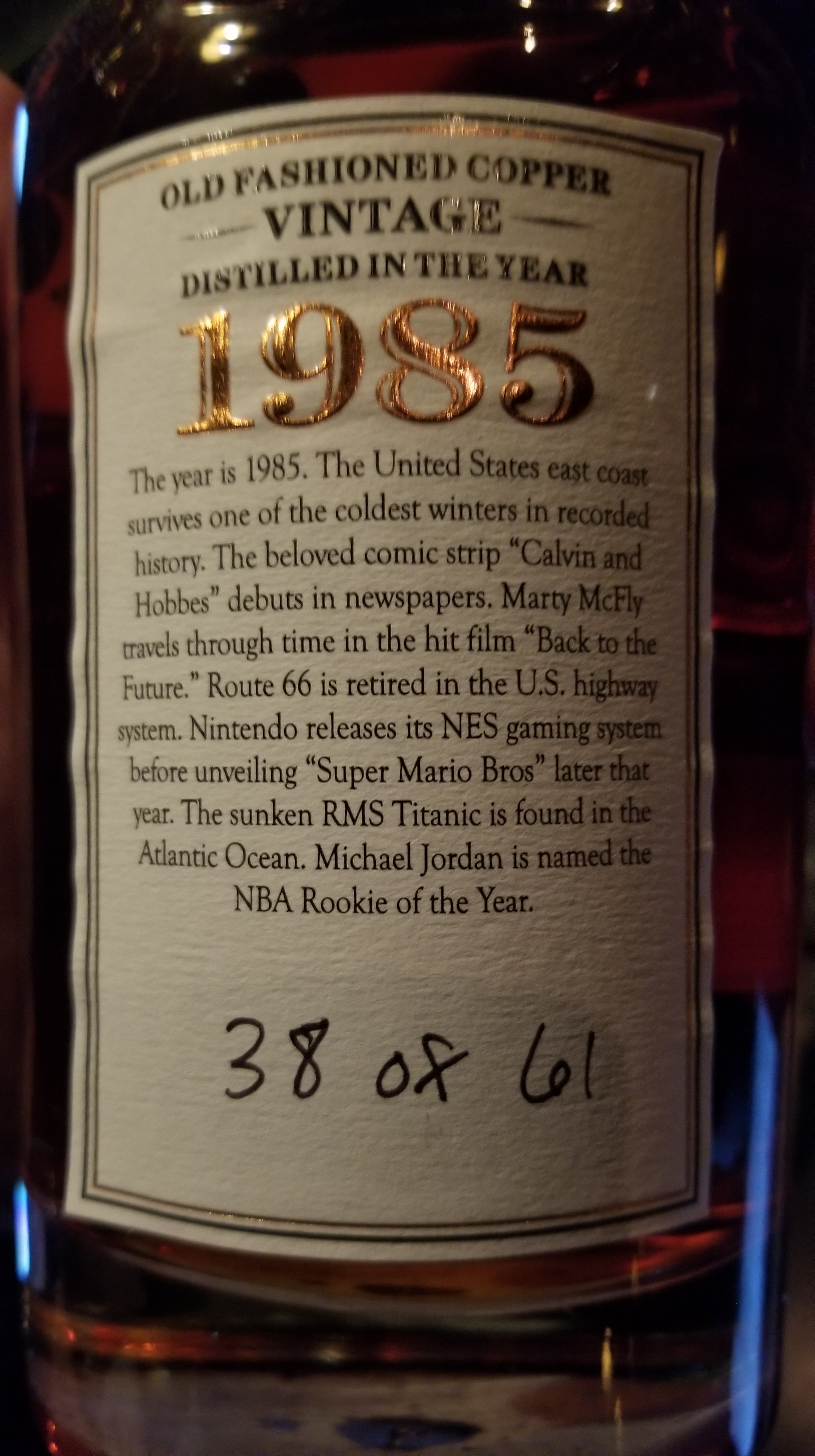
The 1985 Vintage is one of only 61 bottles to come from a barrel which was stored on the second floor of Warehouse Q. Buffalo Trace says that all of the barrels were tasted over time and removed from the barrel before becoming over oaked and since there is no age statement listed on the bottle it’s hard to tell the precise age of the bottle. This isn’t an uncommon practice, Buffalo Trace has done similar things with Eagle Rare 17 and Sazerac 18 so the whiskey isn’t as much as an oak bomb as you might expect. It is certainly old but there’s no official word on if it was a full 33 years in oak before being bottled. With that in mind let’s dive into the glass: 

NOSE: Rich oak, Dried fruit, and vanilla 

PALATTE: Rich vanilla, dark cherry, prune, oak, and a dark earthiness 

FINISH: Bitter chocolate, a touch of tobacco, and a coating lingering sense of time 

Overall this is an excellent example of old American Bourbon whiskey. It is still alive without being over oaked and has a power of flavor to match up to the power of the years it spent asleep in the barrel. The issue, as always, is the price. The bottle comes in at a staggering suggested retail price of $2,500. When the proceeds were going to charity this number wouldn’t have raised peep from me but now it changes the talking points. 

Is this good whiskey? Yes. Is it for everyone? Absolutely not. It is a special occasion, made so by the fact that it is a living time capsule. You are paying for the time and history as much as the whiskey itself. I will argue that experiences are more important than money but  the value is certainly subjective. I for one am going to savor the fact that I get to experience this bottled moment of time and not take it for granted. 

Whiskey Wednesday: The Old Bushmill’s Story

Irish Whiskey is my least favorite category of whiskey.

To be fair that’s only because I think about Canadian Whisky so infrequently that I genuinely forget that it’s a thing. Yet, there are some true gems in the category. Redbreast should be a staple at any bar. Tyrconnell Madeira Cask is one of my favorites bottles of any category, and I can’t count the number of shots of Power’s I’ve had. The problem is that these don’t define the category of Irish Whiskey. Accounting for 82% of sales in the United States Jameson’s Irish Whiskey is essentially the entire category of Irish Whiskey. And Jameson’s just isn’t for me.

            Call me elitist, I’m sure part of my distaste for Jameson is it’s ubiquity, but it isn’t very interesting to me. It’s light, forgettable and honestly a little harsh. And while I might love the aforementioned bottles the first two aren’t affordable mixers and trying to convince a Jameson drinker to have a dram of Power’s instead is a lesson in futility. People aren’t cold calling high end Irish whiskey the way they are Japanese, Scotch, or Bourbon so it becomes an afterthought. Which brings me to Bushmill’s.

            I got a call from friends at Half Full, The Daily Beast’s Food and Drink section, asking me what I thought about Bushmills. And my answer was, “I honestly haven’t thought about it in a while.” They then asked if I’d be interested in coming on a trip to film a documentary and explore Bushmill’s and I said of course because who doesn’t want an excuse to go to Ireland?

            But beyond the boondoggle of a trip there was a genuine curiosity. Irish Whiskey is currently the fastest growing spirit category in the world. The industry went from a measly four distilleries on the whole island in 2013 to 16 distilleries in production today with another 13 on the way. While these numbers pale in comparison to the sales and production numbers of Scotch and Bourbon clearly many people with a lot of money feel that this is not just single brand growth but a reemerging category. I wanted to see what was giving these people such confidence.

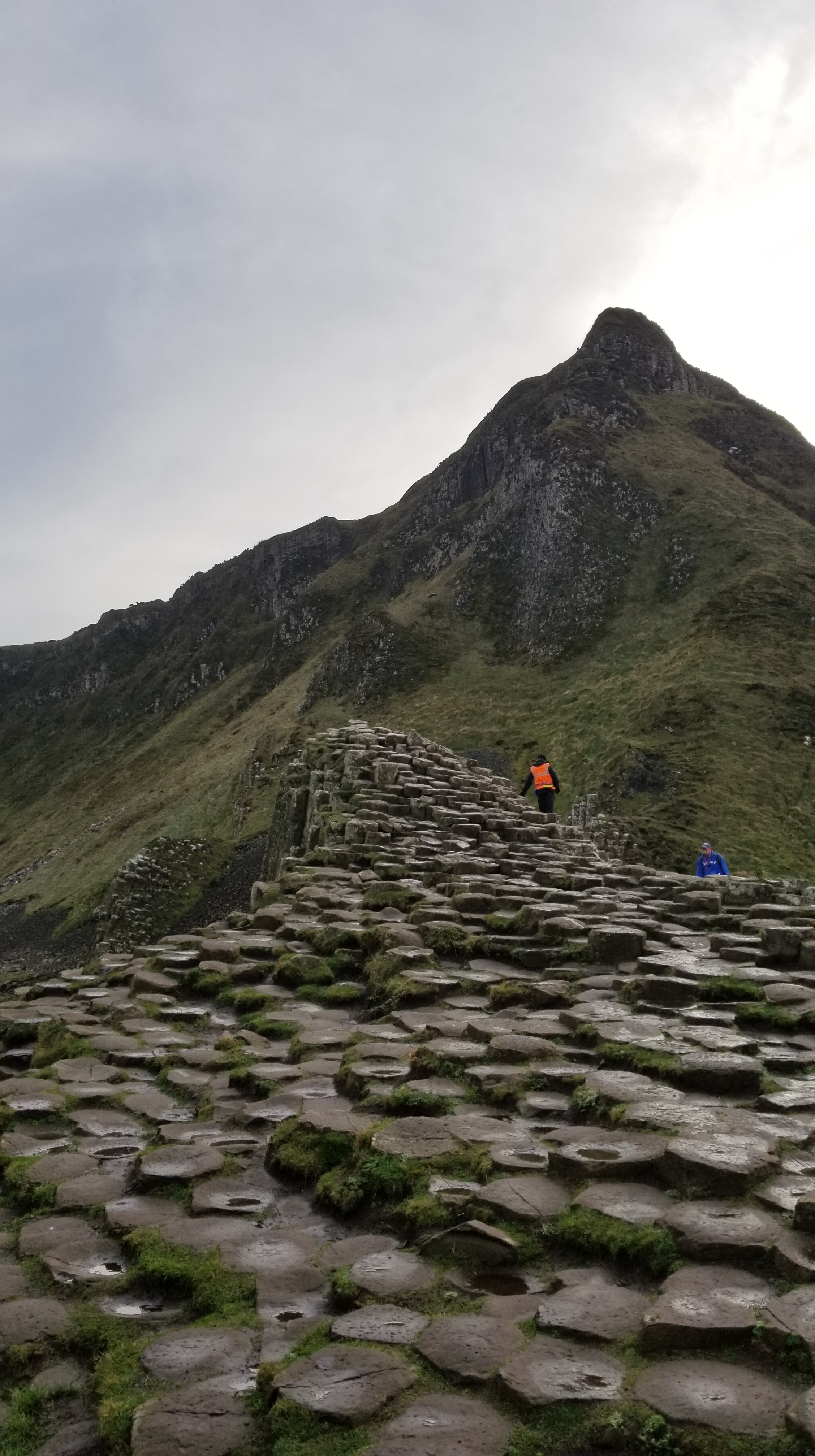
Giant’s Causeway

We spent two days at the Old Bushmills Distillery and the surrounding countryside. The distillery takes its name from the River Bush and all the water used on site comes from the rivers tribute Saint Columb’s Rill. Although the date 1608, the year King James I granted a writ to distill whiskey to Sir Thomas Philips, is emblazoned everywhere, the Bushmill’s Old Distilling Company wasn’t establish until 1784. No matter which date you take as the distillery’s origin Old Bushmill’s is the only distillery in all of Ireland that was in operation before 1974 and was one of the three that kept production alive.

Irish Whiskey has always been deeply tied to the American market and American Prohibition tanked the industry. 400 brands made by over 160 distilleries became three distilleries all owned and operated by a single group, Irish Distillers, with their purchase of Bushmill’s in 1972. Irish Distillers was purchased by Pernod Ricard in 1988 with Bushmill’s then purchased by Diageo in 2005. They began a massive ad campaign to gain market share  but even the largest liquor company in the world couldn’t seem to boost the brand and it was sold to Jose Cuervo in 2014 after Bushmill’s sold 1.3 million liter cases in the U.S. compared to Jameson’s 18 million.

Everyone loves a good underdog story and while technically being in second place Bushmill’s was a very clear underdog. A part of me was hoping I’d find some spark that craft spirit authenticity or other such nonsense that would make it worth the uphill battle to recommend Bushmill’s White Label over Jameson’s iconic green bottle. What I found out is that the White label isn’t what you should be drinking.

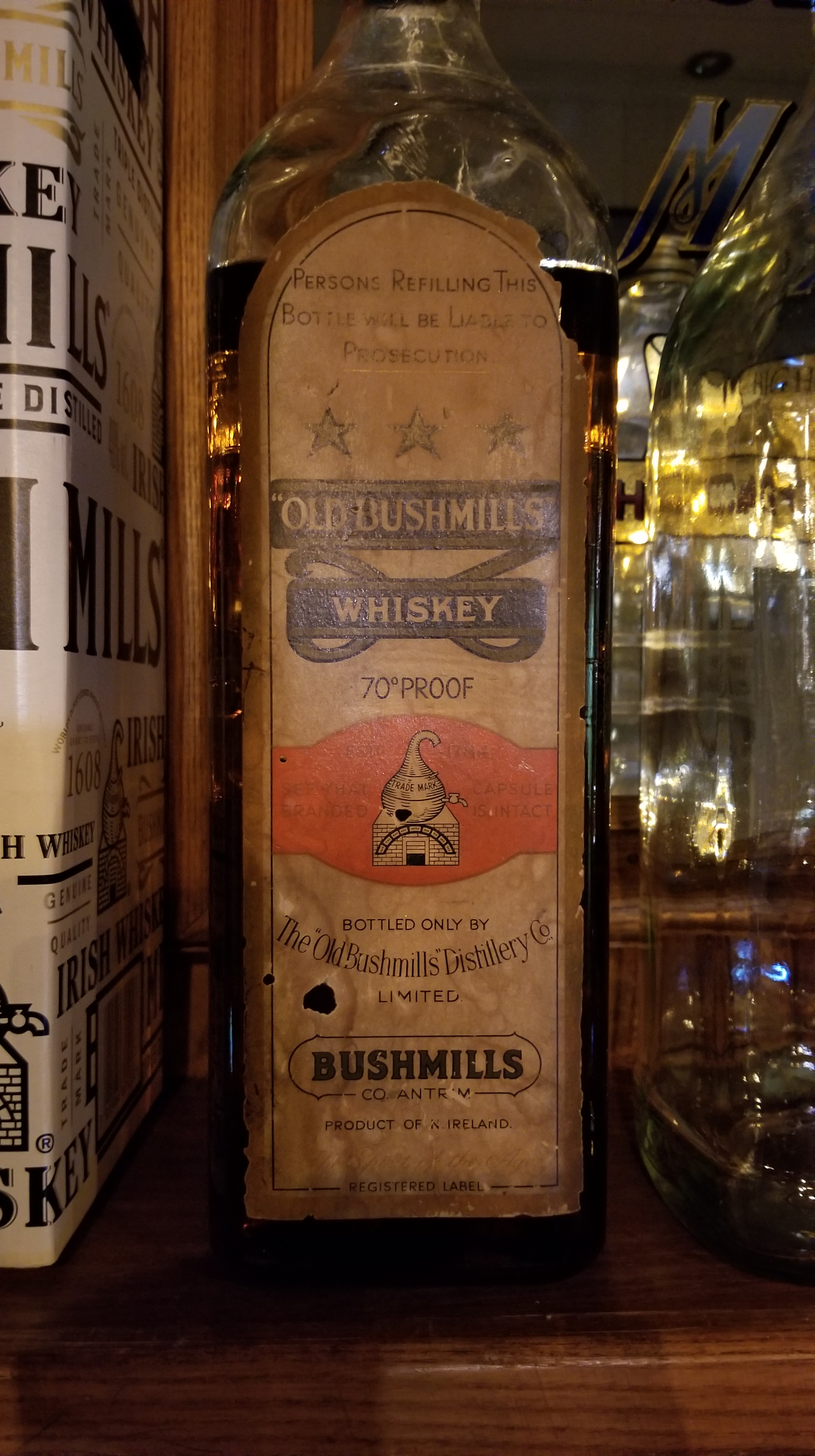
Old Bushmill’s bottle is old.

Bushmill’s is a single malt distillery. They age grain whiskey on site for blending but every drop of whiskey that’s distilled at the distillery is Irish Single Malt. This is unusual because most non-blended Irish whiskey is Single Pot Still, which is a distillate made up of  both Malted and Unmalted Barley. This style originated as a middle finger to the English who put a tax on malted barley in 1785. Despite the added expense Bushmill’s has only ever made Single Malt.  

Irish Single Malt is also distinct from (most) Scotch Single Malt in that it is triple distilled instead of double distilled. This creates a lighter whiskey as it’s gone through an additional set of cuts and stripping. This malt forms the base of all of the blends and single malt line at Bushmill’s . And every bottle of Bushmill’s is put together by the first female master Blender in all of Irish Whiskey history. She’s sitting comfortable with over 25 years of experience tripping across her palette and when she proclaims the 10 year old single malt to be her personal favorite there’s a weight that goes along with that statement.

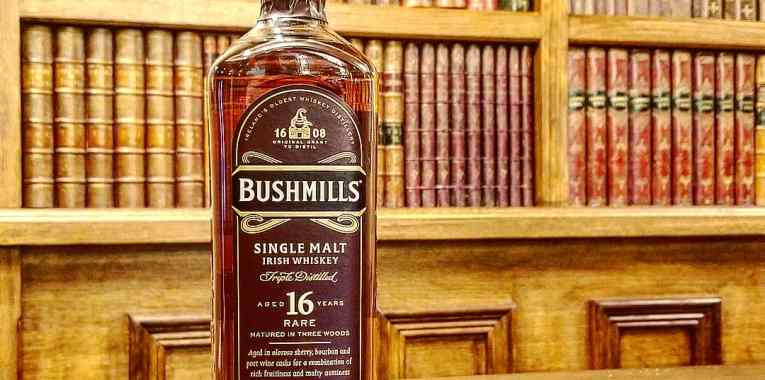
The 10 Year Old fills a very interesting place for Irish Whiskey. It’s affordable, mixable, and quaffable on it’s own it could honestly be that missing midpoint for Irish whiskey that bridges the shots and the Super Premium category. Yet from what I tasted it the true gem of the line is the 16 Year old Single Malt.

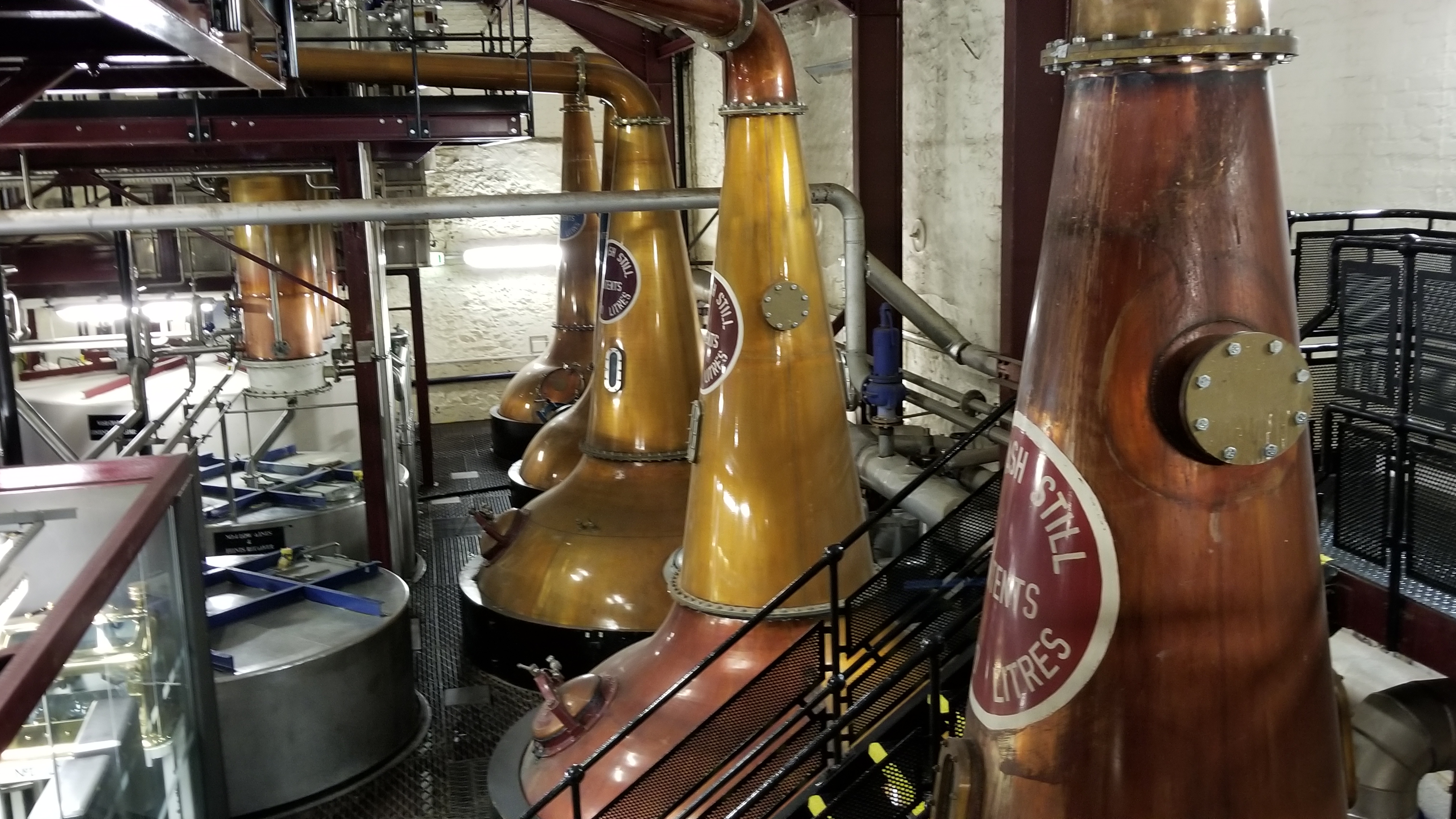
Pot Stills for days.

Aged for a minimum of 16 years a blend of ex-Bourbon and Olorosso barrel aged single malt is blended together and then further aged for an additional 6 months in used port barrels. It was the first thing I was poured after nearly 18 hours of travel and was one of those moments of surprise and disbelief at how good it was. In conversation with Noah Rothbaum, Senior Editor at Half Full, he expressed how it reminded him of the experience of discovering Hibiki 12 years ago before we drank it all-I had to agree with him. But not trusting my jetlagged senses I proceed drink at least a bottle over the next few days and to bring a bottle home for continued research.

NOSE: Dark Fruit, Raisin, Plum, and a touch of vanilla.

PALETTE: Dried Red Fruit, a slightly nutty undertone with a bright sherry through line to cut through the toffee, vanilla, and richness of the malt.

FINISH: Long and lingering, leaving the dried fruit and a slight amount of tannin and spice.

Ultimately I came away from Bushmill’s, and Ireland, with another story. A spirit is ultimately the distillation of the people who make it. A distillation of their culture, their taste, their landscape, and their time. Getting to know them, getting to experience them, ultimately opens doors to experience a spirit they way they do. In the end, Jameson is still my least favorite Irish Whiskey but, like life, whiskey is really shades of grey. A single dominant force can not define either.