
Almost every shift I get asked what has to be one of my least favorite questions, “What’s your favorite whiskey?” My response is usually, “That’s like asking a mother to pick her favorite child.” We all know mommy had a favorite but it’s a lot more complicated than it looks at first glance.
Is it a special occasion? What kind of bar am I at? What’s the price of a pour? These are all things that I take into consideration when it comes to what I drink but increasingly when I’m out I find myself ordering Four Roses Single Barrel. Part of this is that the whiskey is damn good, but it’s also the fact that it’s become almost ubiquitous and it’s cost effective. That wasn’t always the case though.
There are a few conflicting stories about the origin of the brand but the one that Four Roses currently promotes is that they were founded by Paul Jones, Jr. who trademarked the name Four Roses in 1888 with a claim of production and sales back to the 1860’s. The name supposedly comes from Jones, Jr. being smitten by an unnamed Southern Belle. He sent her a proposal and she replied that if her answer was “yes” she would arrive at the ball with a corsage of roses on her gown. When she arrived she was wearing not one but four red roses. This legend of romance lead to a romance in a bottle.
After prohibition Four Roses thrived. In the 30’s and 40’s it was the number one selling Bourbon in the United States. In 1943 the brand was purchased be Seagrams who, despite the brands popularity, discontinued the brand in the United States to focus on overseas markets. It quickly became the number one American bourbon in Europe and Asia while at home it became rotgut, blended whiskey, despite Seagrams creating new Bourbon brands in the following decades.
While the Seagrams company might not have been putting out the highest quality brands, they were training some amazing distillers. After Seagrams collapsed in 2000 we began to see the quality that was going on behind the scenes. Because a large part of Seagram’s business was contract distilling and blended whiskey there were a massive amount of recipes being produced at their distilleries that turned out to be absolutely phenomenal drinks on their own. Like Bulliet? That 95% rye mashbill is all made at MGP, the former Seagrams distillery in Indiana. And that Bulliet Bourbon? It was all originally made at the Four Roses.
After the Seagrams collapse Four Roses was purchased by Japanese beer giant Kirin, and while contract distilling remained part of the business this change also allowed Master Distiller Jim Rutledge to win his battle to revive the Four Roses label as an actual Bourbon whiskey.
Rutledge had been with the company since 1966 and had taken over as Master Distiller in 1995. And in 2004 he saw his dream realized as Four Roses was once again sold in the U.S and has quickly reclaimed its reputation of excellence.
Part of that quality again comes from the variety of distillation. Four Roses utilizes two different Bourbon mashbills, both of them high rye recipes, and five different strains of yeast. This allows them to create ten different reciepes each with their own unique characteristics. All ten of these mecipes are blended together for the Four Roses Yellow Label, four of them are used for the small batch, and only a single recipe, the OBSV, is used for my personal favorite Single Barrel.
These bottles have such an ever day, soft spoken elegance that its easy to see why it’s become such a ubiquitous bottle. But these recipe have also allowed some legendary special releases. The latest of which is the Al Young 50th Anniversary Edition.
While Jim Rutledge was the heart of the brand until his retirement in 2015 Al Young has been its face. Al started with the company only a few years after Rutledge in 1967 and this bottle celebrates his 50 years with the company. Working with current Master Distiller Brent Ellis the bottle is a blend of four recipes: 23 year old OBSV, 15 year old OBSK, 13 year old OESV, and 12 year old OBSF.
The result is a Bourbon that has a lot of fruit, the expected fig and cherry but also a touch of peach and raspberry. The oak is deep, but mellow with a toasted nougat and cinnamon. The bottle is also a throwback design. One of Young’s many hats at Four Roses is as archivist and looking through old ads and press clippings they settled on a bottle design from the year he started.
The end result is a prime example of what has given Four Roses such growth and recognition since it reemerged on the U.S. market. It combines the history, talent, and skill of the company and the people who make it up. Four Roses may still be making blends but this ain’t your granddad’s blend.



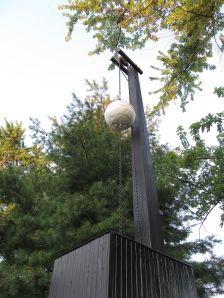 The highball is nothing new. It’s a simple class of drinks: a shot of spirit diluted with several ounces of a carbonated beverage on ice. My favorite rationale for where the term “highball” originated from comes from the old railroad days. Along the rail tracks there were “highball” signals where a ball would be hoisted out of a barrel signaling that the track ahead was clear and the trains could travel full speed ahead. A “highball” drink was at the time served in a highball glass with a single lump of ice. As the soda was added to the glass the ice would rise just like the highball signal telling drinkers they could dive in at full speed as well as quickly down the remainder of the drink when their train pulled in.


 Almost every year, as reliable as new iPhone releases, someone touts a new aging process that’s a breakthrough that allows for rapid aging, creating the equivalent of a 12-year old scotch in a fraction of the time. In every case the whisky produced by these methods either never materializes or falls vastly short of it’s lofty goals. I’d be just as skeptical of the claims that once the team at Kavalan stopped resisting the humidity and heat of the sub-Tropical Taiwanese environment they were able to rapidly age their product if the whisky in the bottle wasn’t so damn good. As their Master Blender Ian Chang says, “We think of our heat as a sandpaper and our newly made spirit as a rock with edges,”
 selection. The casks use a shave, toast, and re-char process on old Portuguese wine casks that creates a heavy oak influenced whisky. But rather than produce the heavily tannic, overly woody notes we often see in American quarter casks, instead it’s a finely tuned balance with rich dark berries, plum, and tropical fruit dancing along the edges of the oak’s vanilla and tannin while swimming in the traditional malt backbone of a well aged whisky. Being bottled at cask strength cuts through what could have been a cloying sweetness to instead add a spice note that allows the finish to linger long into the night.
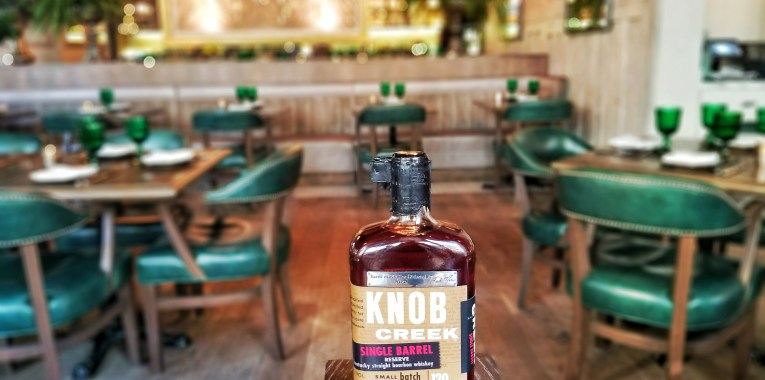

 the Knob Creek Smoked Maple, a bourbon flavored liquor bottled at 90 proof. Then camethe inevitable. In 2016, just shy of 25 years, Beam Suntory announced that Knob Creek would be dropping its age statement. That same year the

 inserts, but still makes them available online and they started the

 in tradition, both its own and the Scotch Whisky tradition that gave birth to it, so change comes slowly. And while whiskey history is littered with mythological founding fathers modern Japanese Whisky owes it’s life and it’s tradition, to one man: Masataka Taketsuru.
 (over objections from both families) and in May of that same year Taketsuru began an apprentice at Hazelburn distillery where he gained a greater understanding of blending whiskey as well as distilling. He and Rita returned to Japan that November with plans to help the Settsu Shozo Company set up the first Japanese Whisky distillery. These plans never came to fruition.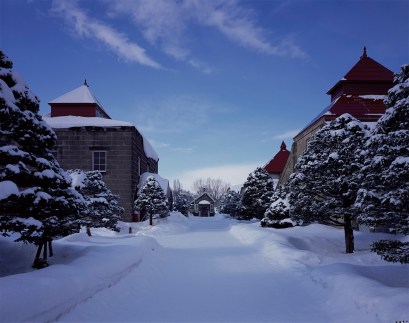

 Bottled In Bond LA