Whiskey Wednesday: Early Times Proof of Concept

I’ve talked about it before but I’m really into traveling. Travel opens our eyes to new things, it also shines a new light on the familiar and common place. While most people filter this experience through art or culture being a bartender and a boozehound I end up seeing it through the glass at the bottom of a bottle.

Proof is often erroneously conflated with quality

Spirits nerds, especially us whiskey focused ones, love to talk about “the rules.” Your spirit can’t be a Scotch if it isn’t made in Scotland, your spirit can’t be whiskey unless it’s made from some type of grain, your corn whiskey can’t be Bourbon unless it uses a brand new, freshly charred barrel, etc., etc,. We love these rules because they help us clearly delineate the teams and offer an offer a definitive right vs. wrong answer in any debate.

These rules also offer consumer protection. Ever wonder why most spirits in the US are bottled at 80 proof (40% ABV)? It’s because that’s the legal minimum. In the EU that minimum is 37.5% so you will see products, even ones that are traditionally 40%, packaged at the lower threshold. Why? The answer as it so often is, is taxes.

Proof is often erroneously conflated with quality. While the higher the alcohol content the more intense the intrinsic flavors of the sprit will be this is not the sole indicator of quality. If it was Everclear would be the number one premium spirit in the world. But it is true that spirits used to be sold at much higher alcohol content. The old standard of “proof” used to be if gunpowder soaked in the spirit would still light on fire. This ensured that rum rations on ships wouldn’t interfere with the firing of it’s canons but also that the spirit hadn’t been watered down. This proof point is 57%.

All of these taxes, traditions, and experiences coalesced over the years until it was finally turned into law with the double whammy of the Bottled in Bond Act of 1897 and the Safe Food and Drug Act of 1906

57% being proof is slightly intellectually irritating though so for ease of use in the US the scale was reduced to 50%=100 proof for easier conversions for, you guessed it, tax purposes. And before you could simply buy a prepackaged bottle of booze from the store you used to take an empty bottle to the store and fill it up directly from the barrel. Diluting the spirit to 40% again made the math easier. A 26oz bottle filled with 40% alcohol will always contain 10oz of alcohol so you always know exactly how much to pay in taxes. But why settle on 40% instead of 50%? That’s the ABV strength where ethanol mixed with water lights on fire at room temperature.

All of these taxes, traditions, and experiences coalesced over the years until it was finally turned into law with the double whammy of the Bottled in Bond Act of 1897 and the Safe Food and Drug Act of 1906 which finally legally defined all of the nefarious white lightning, applejack, and whiskies floating around the American country side. And while this does a wonderful job of maintain a threshold of quality, and safety, it ends up excluding flavors and drinking traditions that fall outside these norms.

For instance, The EU ended up with a lower proof point to respect many of the Eastern European vodka makers, and it should be noted that most international councils, like Scotch and Cognac, have their own rules and minimums that have to be met. And in one of my favorite anecdotes Elmer T. Lee, one of the Father’s of Modern Bourbon, supposedly only drank his Bourbon at 60 proof because he felt that was the perfect point where the alcohol burn didn’t get in the way of the flavor. The guy knew a few things so lets take a look at something that falls outside of almost all of these rules.

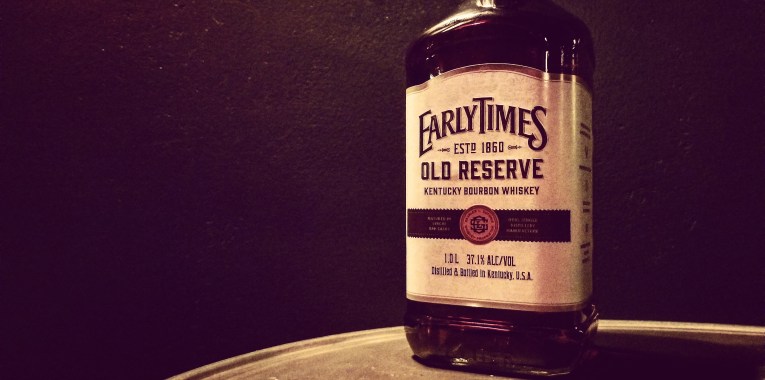
On a recent trip to the Cook Islands (look it up) in the second Duty Free store in an airport with only two gates I came across this bottle of Early Times. Now Duty Free is often a testing grounds for new products, premium bottlings, and a place to dump large amounts of product that aren’t moving.

Despite what the label says this bottle of Early Times is not a Bourbon, at least not in the United States. And this is where confusion comes in, does it follow the rest of the Bourbon laws? I have no idea so let’s assume it’s produced exactly the way regular Early Times is.

Regular Early Times is also not a Bourbon. It is produced in Kentucky by the Brown-Forman Corporation at the same distillery that produces Old Forester, which is a Bourbon. What separates the two is the barrel. Early Times is aged in reused Bourbon barrels so already it’s legally “just” a whiskey. But it’s packaged below the EU threshold of spirits at 37.1%, which means that this bottle isn’t even legally a whiskey. For the sake of novelty and the equivalent of nine American dollars I brought this bad boy across the ocean, through customs, and back home to the United States.

images.jpg

The reused barrels effect on the whiskey is immediately obvious as it’s color is lighter, more straw and hay than a full aged Bourbon that has those deep dark barrel influences.

On the nose there are all of those traditional whiskey aromas: vanilla, caramel, and a touch of stone fruit but they’re less intense due to the barrel. The spirits corn base is readily apparent even on the nose.

On the palette is sweet corn, a hint of spice, a touch of caramel, and not much else. It meats the flavor points of whiskey.

The finish is short but inoffensive. This isn’t terrible whiskey, but it is exactly the kind of whiskey an Old Fashioned cocktail was designed to enhance. Though it this case it would require a delicate touch because everything about this is so light that it would be easy to overwhelm the spirit with just a hair heavy dash of bitters.

I picked this bottle up because the proof point was amusing to me but in the end do those 2.9% points really make a difference? Yes, but there’s so much else going on with Early Times that they’re not going to make or break this spirit. It is putting in the minimum effort.

Ultimately, that’s why people look down on these bare minimum bottlings. It doesn’t feel special. They’re offering an experience that is just meeting a requirement. But sometimes all it takes is crossing an ocean for a requirement to transform into an unique, glass bottomed lens and let you see things in a new light.

Whiskey Wednesday: Willett Of The Past

Age adds value.

That doesn’t just mean a dollar value, I personally own dozens of books, papers, and social media accounts that only still exist because they’ve essentially become a time capsule. They’re important simply because they’ve survived.

Before NDP, Non-Distilling Producer, was short hand for overblown marketing these producers were some of the most celebrated.

I started collecting whiskey when I got back into bartending in 2011. I suddenly found myself with income surplus for the first time in years and set about recreating the back bar I had at work in my tiny Venice apartment. I ended up with more whiskey then I conceivably drink on my own, which leads directly to the fact that I have dozens of bottles in my overblown collection that are there because anytime I pick them up I think to myself, “I can’t drink that! I’ve had it forever.”

This is directly antithetical to my belief that all whiskey is for drinking, not hoarding. So I thought it was high time to revive that spirit and open some “old” spirits.

Before NDP, Non-Distilling Producer, was short hand for overblown marketing these producers were some of the most celebrated. And none have reached the cult status of the Willet Distillery.

willett-distillery.jpg

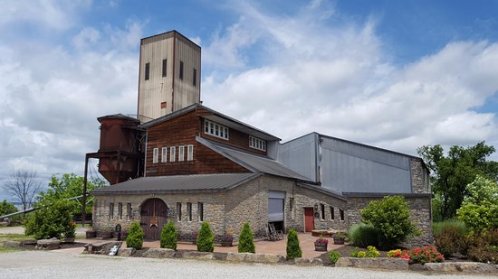
Officially know as the Kentucky Bourbon Distillers the distillery is most closely associated with it’s Willet Family Reserve line of premium whiskies. And that’s not marketing. The distillery was founded in 1935 by the Willet family as the Old Bardstown Distillery, which produced its first bourbon in March of 1936. Flash forward to 2016 and the old distillery is still family owned and some of the first whiskey distilled on site rolled down the line all over again.

How do you do something for the first time twice? You stop producing whiskey in the 70’s to make ethanol during the fuel shortage. Then the fuel prices drop, the bottom falls out from under the market, and you’re left flat footed.

From the 1980’s until about 2012 the “distillery” was just in fact an independent bottler, a NDP. They began by relying on the back stock of their own product that was still aging and began to source excess whiskey from neighbor distilleries. Most notably they were sourcing from Heaven Hill, which is so close you could roll a Bourbon barrel down the hill and hit a rickhouse. During this time Willet/KBD continued to produce award winning whiskies like Noah’s Mill, Rowan’s Creek, the formerly eponymous Old Bardstown, and turned the Willet brand into a coveted line of old, premium, single barrel whiskies.

While they may not have been producing liquid in-house the team at Willet showed

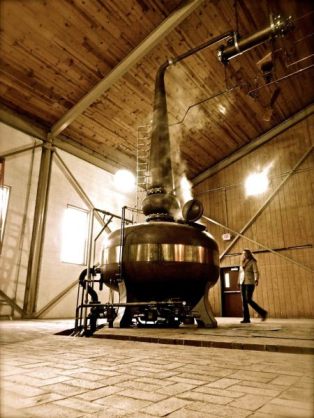
The Willet Pot Still…was incidentally also how I thought anyone who sat in front of my bar for years about what a “Pot Still” looked like.

remarkable skill in aging. The single barrels and older expressions of whiskey that they put together have long stood out as some of the best bottlings of the past two decades. But as the Bourbon boom ramped up the writing was on the wall for people trying to source whiskey. More was going to the in house brands and in 2012 KBD fired up its own set of stills and now 6 years later we are seeing bottles of old brands with new juice.

But lets get back in the way back machine to right before these stills started producing to when I bought this bottle of Willet Pot Still Bourbon.

The Willet line was already well established as a premium category but they were also pricey. The Willet Pot Still, introduced in 2008, was a non-age statement variation that could introduce people to the line with out breaking the bank. It was incidentally also how I thought anyone who sat in front of my bar for years about what a “Pot Still” looked like.

This bottle is a Single Barrel versus its modern counterpart, which is simple a “small batch.” Bottled at 94 proof, 47% alcohol, this whiskey has nearly as many awards for its packaging as it does for the Bourbon itself. So, after 7 years how does it taste?

Willett_Distillery20_ff71ed32-5056-a36f-2340837825148b38.jpg

On the nose is a sweet corn, yet dusty oak presence. The alcohol burn is larger than I would expect for something bottle at 94 proof, and for something that’s been in the bottle for three quarters of a decade. But under that burn is a touch of coffee and toffee.

On the palette the alcohol is much les noticeable. A large oak, vanilla, and slight char carry all the way through the dram with some darker fruit, a touch of cherry and almost blackberry, before giving sway to a musty, earthy, barn house sense.

The finish is light fades quickly leaving the oak on the tongue and the alcohol on the sides of the mouth.

It’s a good whiskey, something I wouldn’t be upset picking up off the shelf and drinking today but it’s not transcendent on its own. What is transcendent is the act of opening the bottle, pouring, and reminiscing as I sip on where I was at in my life when I bought this bottle and on all the events that have transpired since.

Nothing is precious on its own, the spirit we imbue it with verifies that value. And for something to have value it must have some use. So let’s raise a glass and reminisce.

Whiskey Wednesday: The Declaration of Jim Beam’s 200th Anniversary.

“We hold these truths to be self-evident, that all men are created equal, that they are endowed by their Creator with certain unalienable Rights, that among these are Life, Liberty and the pursuit of Happiness. — That to secure these rights, Governments are instituted among Men, deriving their just powers from the consent of the governed, — That whenever any Form of Government becomes destructive of these ends, it is the Right of the People to alter or to abolish it, and to institute new Government, laying its foundation on such principles and organizing its powers in such form, as to them shall seem most likely to effect their Safety and Happiness.”

There are some words, some achievements, that are worth celebrating, even if their modern iteration doesn’t live up to its ideals in the popular imagination. It’s hard to find a more iconic American brand than Jim Beam. It’s the #1 selling Bourbon in the world and in many ways the Beam story, both that of the family and of the whiskey, parallels the story of America.

download-3.jpgThe story begins with members of the Böhm family, German immigrants who would latter change the spelling of their name to “Beam,” settled in the Kentucky territory in the late 18th century. The family patriarch, Johannes “Reginald” Beam, was a farmer. And like many farmers of the time he started producing corn whiskey as a way of preserving crops. This side venture lead to the first Beam whiskey to start flowing from the Old Tub Distillery in 1795.

Known as Old Jake Beam Sour Mash, this whiskey proved successful enough that when David Beam took over the family business not only was he able to expand the distribution he was also able to construct a new distillery in Nelson County in 1854. This move came amidst an industrial boom in the country which allowed for modernization of production, and the move to Nelson County allowed for greater use of the massively expanding rail system in the States.

The eponymous James Beauregard Beam over saw the family business both before and after the Great Failed American Experiment of Prohibition. Prohibition interrupted the family production but James was able to rebuild the distillery in 1933 in Clermont, Kentucky in a mere 120 days. It was at this point where “Jim Beam” entered the international lexicon and a member of the Beam family has been at the still, and half the other whiskey stills in the country, ever since.

download-2.jpg

The Beam family has spearheaded this spirit for over 220 years now. However, the actual company hasn’t been owned by a Beam since 1945 when it was purchased by Harry Blum, a Chicago Spirits Merchant. It’s changed hands several times throughout the decades but currently it is a subsidiary of Suntory Holdings known as Beam Suntory. The most American of products is now owned by the second largest international beverage corporation in the world.

Flash back to the mid 90’s. Bourbon wasn’t the hip, award winning, auction breaking behemoth that its turned into today, yet it was still worth celebrating. In 1995 Beam released a 200th anniversary edition decanter and it’s like a little time capsule of Bourbon Past crossed with where Bourbon Future.

Decanters used to be the industry gimmick. When no one wanted to drink Bourbon you made the bottle so irresistible that you had to snatch it up. Compare that to the specialty releases of today where a warehouse surviving a tornado is cause for an award winning bottling.

It was a unique bottling. Bottled at 95 Proof and aged for 75 months, also known as 6.25 years. A higher than standard proof and emphasize on aging, albeit in an archaic ,confusing way. Yet ,the most interesting difference is that there is almost no information about this bottle online. No mashbill info, no tasting notes, and only a smattering of secondary market offerings.

We can assume this was the standard Beam mashbill, which puts us at something like a 76% Corn, 12% Rye, 10% Malted Barley with a #4 Barrel Char.

On the nose there is a farm house quality, along with a dusty oak and touch of sweet caramel. The palette gives way to a familiar barrel char, dark stone fruit, and a lively backbone. The liquid is still very much alive even after 20 years in the bottle. The finish is clean and lingers for just an extra moment and leaves the yeasty, dusty feel that, to me at least, is an indelible part of the Beam DNA. In the end this is a bottle that simply, and eloquently, celebrates the style of whiskey that Jim Beam made, makes, and continues to make.

The Declaration of Independence was a larger enough summer blockbuster that it will inevitably get a sequel. And I hope that this time we truly do mean all humankind are created equal, and that the casting is colorblind.

This is a whiskey made by a family of immigrants, who traveled to a new country, set down roots and became synonymous with one of the most iconic, and living, pieces of Americana to ever exist. A hometown hero on the international stage. I just returned from a trip to the Cook Islands which is in the middle of nowhere South Pacific and they had one bourbon: Jim Beam. Yet, this All American Bourbon isn’t even American owned. To me this doesn’t take away from it’s Americanness, in fact in just speaks to how tightly we are tied to the rest of the world. No matter how much we fight it, there is no “Us” and “Them” any more. We’re all in this together.

As I sit sipping this whiskey musing on the fireworks, hot dogs, and pool side celebrations I can’t help but think that the Declaration of Independence was a larger enough summer blockbuster that it will inevitably get a sequel. And I hope that this time we truly do mean all humankind are created equal, and that the casting is colorblind.

Whiskey Wednesday: Decanting Old Fitzgerald Bottled In Bond

Growing old is an interesting proposition.

It’s right there in our language. We GET older, we GROW up whether we like it or not. But these phrases imply a gift. The imply that it is a privilege to age and that we are constantly changing and growing.

Contrast that with the utter fear of aging that our culture exhibits. It’s also right there in our language. We don’t just develop. We deteriorate, mellow, and mature. And at every point along the journey we can’t help but express disbelief at how many chronological ticker marks we’ve accrued. Our own experience is that we are always the oldest that we have ever been, so exclamations like, “I can’t believe 90’s kids can legally drink!” or “Holy Shit, it’s been nearly five years since Old Fitzgerald Bottled-In-Bond was discontinued!” make us feel old and make those older than us roll their eyes at the young ‘uns.

Even in whiskey we want our spirits older, but not too old. Age at a certain point becomes a novelty act, reacting to a new release almost as if to your great-great aunts 97th Birthday, “A 27 Year old Bourbon you say? That’s adorable.” Yet we bemoan the loss of every single age statement, and doubly so when it’s a rocksteady brand that’s stood the test of time yet is still dropped in favor of something new, young, and millennial.

The loss of the Old Fitzgerald Bottled-In-Bond was a loss I felt personally and deeply. While never technically discontinued the Old Fitz was removed from most markets over the past five years in favor of it’s cousin Larceny. Same liquid inside, even still has the Fitzgerald name on the bottle still. It’s technically John E. Fitzgerald’s Larceny, referring to the legend that the original brand was named for.

In short, this tastes like Old Fitzgerald, which is a blessing and a curse

John E. Fitzgerald was a tax bondsman for the U.S. government, which meant that he was one of two people on site at the Old Judge Distillery to have keys to the bonded warehouse. This ensured that there was no theft, since no one could enter the warehouse with out him, and that the government was properly collecting it’s taxes on the whiskey production. However, the workers kept noticing certain honey barrels, the especially tasty ones, were coming up short and that Old Fitz always seemed to have some extra tasty liquid on hand. These barrels became known as “Fitzgeralds” and a brand of whiskey was eventually named after the man and his harmless acts of larceny.

The brand went on to become a working class hero. Bourbon Legend says that the brand was originally sold only to steamships, rail workers, and private clubs. After Prohibition the brand was purchased by Stitzel-Weller, the famed distillery owned by the notorious Pappy Van Winkle. In fact, during his tenure at the Stizel-Weller Distillery Pappy didn’t sell any Pappy. He sold Old Fitzgerald and it was by far their most successful brand. Like all the whiskies made at Stitzel-Weller Old Fitz had that “whisper of wheat” in the mashbill that made their whiskey so unique at the time.

old_fitzgerald_bottled_in_bond_bourbon_large.jpg

During the whiskey dark ages of the 70’s and 80’s the brand was purchased by United Distillers, which through several mergers and acquisitions eventually became the behemoth that is Diageo. United Distillers/Diageo closed the Sitzel-Weller distillery in 1994, moved production of Old Fitzgerald to the Bernheim Distillery. Then in 1999 they sold the Bernheim Distillery, and the Old Fitzgerald brand, to Heaven Hill. Heaven Hill continues to make wheated bourbon and releases it under the Old Fitzgerald name to this day.

ftcyrn5wmsfx.jpg

The story hasn’t changed. The whiskey hasn’t changed. But the age, the label, and the price certainly have. While Larceny is still a very reasonably priced bottle of whiskey it doesn’t carry the massive bang for your buck that the old Bottled-In-Bond did. And by freeing up the Fitzgerald name from a bargain priced Bottled-In-Bond the team at Heaven Hill have been able to make attempts to push the premiumization of the brand. Some of them more successful than others.

They tested the waters with the one off release of John E. Fitzgerald’s 20 Year Old Bourbon which was some of the last whiskey actually distilled at Stizel-Weller which was released to mixed reviews. And now comes the release of the long awaited Fitzgerald Bottled-In-Bond Decanter Series.

The series will be a limited release each Spring and Fall for the next few years. The throw back to the old label name also comes with a throw back to another old Bourbon tradition: fancy decanters. More important than the glassware though is that this is a Bottled-In-Bond whiskey, it’s 11 years old, and it’s got the price tag to prove it with a suggested retail price of $110.

So how does it stack up?

20180602_164023The packaging and labeling are fantastic. It’s like seeing an old friend after the divorce now that they’ve started working out and gotten a haircut. It still looks like them but a cleaner, fitter, more attractive version of them.

The nose has all the oak you’d expect from an 11-year old, but also a touch of apricot and butter. On the mid palette is black pepper, stone fruit, a hint of nuttiness and a slightly thin caramel which leads into an aggressively woody finish that lingers hot and with a slight exhalation of cherry.

In short, this tastes like Old Fitzgerald, which is a blessing and a curse.

On the one hand I’m incredibly happy to have something that tastes like my old timey Bottled-In-Bond back but at the rarity prices it’s not something I would necessarily pick up off the shelf, and it’s certainly not an every day drinker like it used to be. The extra aging has made the product deeper and mellower but it’s also made it richer and pricier. Much like your recently divorced friend it doesn’t seem interested with hanging out with the same crowd it used to.

In the end I’m happy to see the return of Old Fitzgerald in a semi regular release but it does feel like the difference between hanging out with your college buddies and your great-great aunt. The one you want to see every weekend, the other you’ll drop in on at the holidays. Maybe. If the plane tickets aren’t too expensive.

Whiskey Wednesday: Elijah Craig Check In

Another year and another barrel of Elijah Craig. The very first single barrel I ever picked out for a bar was a barrel of Elijah Craig for Areal a good five years ago. I’ve been fortunate enough to select an Elijah Craig barrel every year since so its arrival is usually a great touchstone for me to reflect on the previous year. A Bourbon New Year as it were. And it’s been a hell of a year.

I left a bar that I ran for nearly five years that promptly closed six months later. I started a new job at Faith and Flower in Downtown LA, competed in the National finals of three major cocktail competitions, traveled to Tokyo, started this wordy blog, and picked out another barrel of Elijah Craig.

Elijah Craig is often the answer to the inevitable question, “What do you drink?’ I’ve talked about it at length here, and here, and during innumerable shifts behind the bar. The basic gist though is that Elijah Craig is one of the semi-mythical early Bourbon distillers that sometime after his death was decreed to be “the Father of bourbon” after he became the first person to char his barrels before aging his whiskey. It’s a completely unsubstantiated claim that makes a good story. So, we all tell the story and then acknowledge that it’s complete nonsense.

The current Elijah Craig brand was introduced by Heaven Hill in 1986 and has gone through multiple changes in its 30-year history but the past year was quite striking. The iconic 12-year old age statement was dropped from the label with the whiskey instead becoming a blend of 8-12 year old. The old school squat bottle was also replaced with a sleeker, taller, more streamlined bottle that I’m personally not a fan of but does actually fit a pour spout .

If you can’t tell, I don’t like change. And that’s not to say anything against the whiskey. It’s still an earthy, massively tanic, barrel forward whiskey that is one of the few bottles that I think works equally well in both mixed drinks and as a neat sipper. Most of these changes were made because there’s not enough whiskey to go around. Especially not old whiskey. Part of me feels like saying so what? Let there not be enough for everyone, don’t change this bottle that I love. Yet, that view is selfish.

Part of the joy of bartending, and indeed the joy of this very blog, is getting to share things that I love with other people. In the end, these changes aren’t for me. I clearly jumped on the train years ago. These changes are for the people seeing Elijah Craig for the first time on a billboard, or a sports arena, or even hearing about it on its recent NPR advertisements. The old Preacher is growing and hanging out with a younger crowd these days and I’m glad to see it.

In the end change isn’t good or bad. How we react to it, how we deal with it, that’s where the emotion comes in. Sometimes, change is just change. And I look forward to seeing what the Preacher and I have to talk about the next time we see each other.

Whiskey Wednesday: Four Roses Al Young’s 50th

Almost every shift I get asked what has to be one of my least favorite questions, “What’s your favorite whiskey?” My response is usually, “That’s like asking a mother to pick her favorite child.” We all know mommy had a favorite but it’s a lot more complicated than it looks at first glance.

Is it a special occasion? What kind of bar am I at? What’s the price of a pour? These are all things that I take into consideration when it comes to what I drink but increasingly when I’m out I find myself ordering Four Roses Single Barrel. Part of this is that the whiskey is damn good, but it’s also the fact that it’s become almost ubiquitous and it’s cost effective. That wasn’t always the case though.

There are a few conflicting stories about the origin of the brand but the one that Four Roses currently promotes is that they were founded by Paul Jones, Jr. who trademarked the name Four Roses in 1888 with a claim of production and sales back to the 1860’s. The name supposedly comes from Jones, Jr. being smitten by an unnamed Southern Belle. He sent her a proposal and she replied that if her answer was “yes” she would arrive at the ball with a corsage of roses on her gown. When she arrived she was wearing not one but four red roses. This legend of romance lead to a romance in a bottle.

After prohibition Four Roses thrived. In the 30’s and 40’s it was the number one selling Bourbon in the United States. In 1943 the brand was purchased be Seagrams who, despite the brands popularity, discontinued the brand in the United States to focus on overseas markets. It quickly became the number one American bourbon in Europe and Asia while at home it became rotgut, blended whiskey, despite Seagrams creating new Bourbon brands in the following decades.

While the Seagrams company might not have been putting out the highest quality brands, they were training some amazing distillers. After Seagrams collapsed in 2000 we began to see the quality that was going on behind the scenes. Because a large part of Seagram’s business was contract distilling and blended whiskey there were a massive amount of recipes being produced at their distilleries that turned out to be absolutely phenomenal drinks on their own. Like Bulliet? That 95% rye mashbill is all made at MGP, the former Seagrams distillery in Indiana. And that Bulliet Bourbon? It was all originally made at the Four Roses.

After the Seagrams collapse Four Roses was purchased by Japanese beer giant Kirin, and while contract distilling remained part of the business this change also allowed Master Distiller Jim Rutledge to win his battle to revive the Four Roses label as an actual Bourbon whiskey.

Rutledge had been with the company since 1966 and had taken over as Master Distiller in 1995. And in 2004 he saw his dream realized as Four Roses was once again sold in the U.S and has quickly reclaimed its reputation of excellence.

Part of that quality again comes from the variety of distillation. Four Roses utilizes two different Bourbon mashbills, both of them high rye recipes, and five different strains of yeast. This allows them to create ten different reciepes each with their own unique characteristics. All ten of these mecipes are blended together for the Four Roses Yellow Label, four of them are used for the small batch, and only a single recipe, the OBSV, is used for my personal favorite Single Barrel.

These bottles have such an ever day, soft spoken elegance that its easy to see why it’s become such a ubiquitous bottle. But these recipe have also allowed some legendary special releases. The latest of which is the Al Young 50th Anniversary Edition.

While Jim Rutledge was the heart of the brand until his retirement in 2015 Al Young has been its face. Al started with the company  only a few years after Rutledge in 1967 and this bottle celebrates his 50 years with the company. Working with current Master Distiller Brent Ellis the bottle is a blend of four recipes: 23 year old OBSV, 15 year old OBSK, 13 year old OESV, and 12 year old OBSF.

The result is a Bourbon that has a lot of fruit, the expected fig and cherry but also a touch of peach and raspberry. The oak is deep, but mellow with a toasted nougat and cinnamon. The bottle is also a throwback design. One of Young’s many hats at Four Roses is as archivist and looking through old ads and press clippings they settled on a bottle design from the year he started.

The end result is a prime example of what has given Four Roses such growth and recognition since it reemerged on the U.S. market. It combines the history, talent, and skill of the company and the people who make it up. Four Roses may still be making blends but this ain’t your granddad’s blend.

Whiskey Wednesday: Unicorns, Whales, and Narwhales

Unicorns are all around. You can see them prancing through the Instagram forest, taunting you with delicious rivulets running down the sides of a glistening Glencairn glass yet the moment you emerge into the fields of the liquor stores they become a distant fable. What happened to these legendary bottles?

The short answer is: they became legendary. As humans we often seem driven to obtain the unobtainable. We strive to climb the highest mountain, to put a man on Mars, and to score a bottle of Pappy Van Winkle for our home bar. Pappy might not be as lofty a goal as the first manned mission to Mars but the spirit is the same. This mentality to obtain the best doesn’t just drive the whiskey market either.

In the world of craft beer the legendary brews are known as ‘whales’ and if you ever wanted to see a brewmaster roll their eyes and grit their teeth ask them

When everyone wants a unicorn what happens to all the workhorses?

about the notorious ‘Whale Hunters.’ These Sudsy Ahabs sail the special event scene, spear the rarest beer on tap, drain the keg and disappear, often without supporting the breweries core beer and usually never to be seen again. They don’t add value to the bar, or even necessarily to the brand, they’re just looking to score something that they feel only they can appreciate before anyone else can be exposed to it.

While the Unicorn and Whale market have certainly spurred growth, especially in the craft scenes, and have been some of the biggest drivers of the infamous Booze Black Market they have an unseen downside. When everyone wants a unicorn what happens to all the workhorses?

Unicorn bottles like the Pappy’s, or the Parker’s Heritage, or the Old Forester

The current whiskey boom has created a feedback loop where what were once reliable bottles are becoming, maybe not unicorns but certainly narwhales.

Birthday Bourbons are great special occasion bottles but they can’t support a distillery on their own. You need good product, at a good price, that people want to drink frequently yet responsibly. The current whiskey boom has created a feedback loop where what were once reliable bottles are becoming, maybe not unicorns but certainly narwhales.

Take the W.L. Weller line up. Created by William Larue Weller the brand has existed since the 1840’s and enjoyed great popularity at the time. Julian ‘Pappy’ Van Winkle joined the Weller Company as a salesman in 1893 and after W.L. Weller passed away in 1899 Pappy and Alex T. Farnsley purchased the company in 1908. A. Ph. Stitzel had been under contract to produce whisky for the Weller Company and after a merger in 1933 the infamous Stitzel-Weller Distillery opened in 1935. The distillery made W.L. Weller, Old Fitzgerald and many other whiskies (but no Pappy Van Winkle) until it shut down in 1992. The Weller brand was than purchased by Buffalo Trace in 1999 where it is currently made along side it more famous Van Winkle cousins.

IMG_2815.JPG
A.H. Hirsch 16 Year Special Reserve

At face value this story is similar to many other whiskey brands that existed before and after Prohibition. It enjoyed early success, sluggish sales in the middle of the century and has been enjoying rising tides with the rest of the Bourbon industry. But between Stitzel-Weller’s closing in 1992 and today we’ve been struck full force with the Bourbon Boom and Pappy Mania. And once the word got out that Weller was just “young, cheaper Pappy” stocks began to get bought up, and people saw a chance to raise prices.

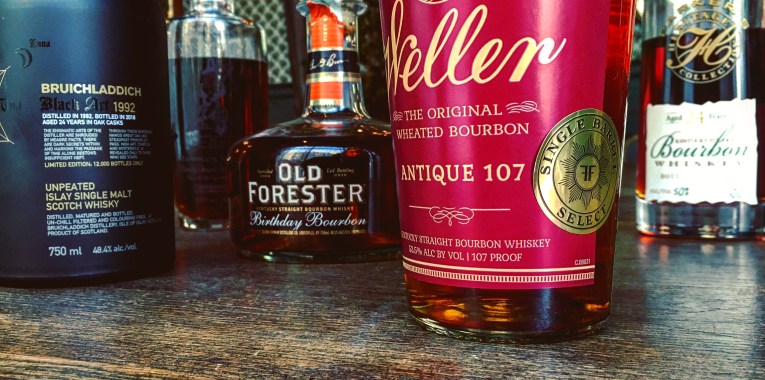
What was once a great everyday workhorse is slowly becoming something pricy and privileged rather than welcoming and friendly. And I say this as a spoiled man who just received a House Single Barrel of Weller Antique 107. This is going to be an everyday whiskey for myself and for the bar at Faith and Flower but we almost didn’t end up with it because of its Narwhale reputation.

Due to a snafu in the warehouses people who were not myself, or my bar, were able to order cases of our current barrel. And the entire barrel blew out of stock in less than 24 hours. And I first found out about this situation by being linked to a post of someone selling bottles of it on the Secondary Market for $70!

While all the one hand it’s flattering that someone would want to pay so much for a barrel I’ve picked out, it’s also infuriating not only because it feels like someone stole one of my favorite toys but because that’s highway robbery on the price. They weren’t just stealing from me, they’re stealing from the people they’re selling it to as well.

Thankfully we were able to retrieve all of the cases (minus a few missing bottles) and I can continue to wage my war against it becoming a true unicorn by making Old Fashioned Cocktails with it. But where does this unicorn hunt leave us?

Let’s look at the craft beer world again. For the first time in nearly two decades beer growth and consumption is down, not slowing. A gentle decline has emerged. Many analysts point to breweries being bought out by massive conglomerates and to choice fatigue, there are just so many damn options that its exhausting. But they also point out that people aren’t drinking less they’re just moving to other drinks. Like whiskey.

IMG_3196.JPG
Hibiki 17

What if these craft beer drinkers became exhausted not by choice but by the hassle and work needed to get they’re favorite brew, or were so discouraged by never being able to get a thimble of Pliny the Younger that they tried something else, say a workhorse Bourbon. Turns out they liked it and moved into a new category of drinking. What happens when these same problems invade the Whiskey World? How long can we maintain growth in an industry when the goalposts keep moving?

On the other hand, while my philosophy has always been education and approachability, I have felt the sting of working an entire year to craft a bar program that delivers everyday excellence, to then earn that one shinning Unicorn of a bottle and priced it in a way to reward thirsty travelers in their search only to have that one Unicorn Hunter swoop in an annihilate the bottle. It’s a balancing act that we’re all going to have to get better at if we want to keep this Whiskey Boom from going belly up.

Whiskey Wednesday: Knob Creek 25th Anniversary

Bourbon is an old tradition, dating back hundreds of years to our rugged frontier forefathers and foremothers who proved their American spirit by making a distinct product using brilliant recipes and methods that they would pass down unchanged to us to be poured into a glass for our drinking pleasure today. At least according to the marketing materials  it is… the truth is a bit more complicated.

Although the term “Bourbon” is associated with whiskey as early as the 1820s, “Bourbon” was only declared the native spirit of the United States by Congress 53 years ago with the passing of a 1964 resolution. And the definition of “Whiskey” as a spirit distilled from grain, and Bourbon as a spirit distilled from 51% corn is only 108 years old. President William Howard Taft put the definition in place in 1909 as part of the Safe Food and Drug Administration Act of 1906. Yes, it took him three years to come up with the definition of “Bourbon whiskey.” But with the start of Prohibition a mere 11 years away its questionable how many people would have enjoyed whiskey that lived up to these new regulations. Think about that the next time someone tells you their whiskey is “Pre-Prohibition Style.”

All of this is to say that tradition is long and constantly changing and in the adjusted timeline some landmarks are bigger than they appear at first. Like, for instance, Knob Creek’s 25th Anniversary.

images

Knob Creek was the whiskey child of Booker Noe, grandson of Jim Beam who tookover as Head Distiller of his grandfather’s distillery in 1965. Booker, along with Elmer T. Lee and Jimmy Russell, is credited with the revitalization of the Bourbon market at the end of the 80s with the introduction of now iconic brands of Bourbon. Booker first released Booker’s Bourbon in 1988 to much acclaim, and this was quickly followed up with Baker’s, then Basil Hayden’s and Knob Creek in 1992. These are the heart and soul of the Jim Beam Small Batch collection, which led the way in many respects for the premiumization of Bourbon.  None of these have survived to their 25th year with out some alteration.

Knob Creek is named after the stream that ran alongside Abraham Lincoln’s childhood home in Kentucky and is Booker’s take on  “Pre-Prohibition Style” whiskey. A term that we can now see is as nebulous as those early definitions of whiskey.

In this case it meant a Bourbon whiskey bottled at 100 proof and carrying an age statement of 9 years. Traditional Knob Creek is a deep caramel color, with a nose that carries a lot of oak, along with a touch of maple and baking spice, a super vanilla, white pepper, and dark cherry palette with a earthiness and dustiness that I can only associate with Jim Beam yeast, and a gripping, dry finish that is a bit bracing at 100 proof. It’s iconic. Immutable.

Except it wasn’t. In 2001 Booker, who had continued to oversee the brand well into his 70’s, passed the torch to his son Fred. And shortly after the Bourbon boom that Booker had helped create hit full force.

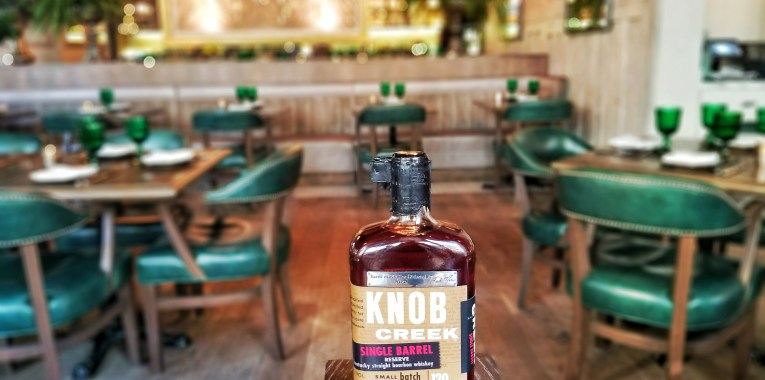
Knob Creek expanded. In 2010 Knob Creek Single Barrel hit the market. It was a natural expansion, still 9 years old but bottled at 120 proof from a single barrel. Then they began releasing a non age statement Knob Creek Rye in 2012, followed in 2013 by ae008e3717aca1adfe229d4d561643efthe Knob Creek Smoked Maple, a bourbon flavored liquor bottled at 90 proof. Then camethe inevitable. In 2016, just shy of 25 years, Beam Suntory announced that Knob Creek would be dropping its age statement. That same year the Knob Creek 2001 was released; a 13 year, Cask Strength release comprised of the last barrel that Booker Noe laid down before passing the torch to his son.

Jim Beam has followed up with a 25th Anniversary release appropriately named Knob Creek 25thAnniversary. It’s a limited release of 300 barrels, all between 12-13 years old and bottled between 120-125 proof that is exactly what it sounds like: bigger, more intense, Knob Creek.

Whether you’re going by the centuries old “traditional” definition or adhering  to a more modern practice twenty five years is still a milestone worth celebrating in the midst of so much change. Hell, maybe a few more milestones like this will help us truly appreciate that some change is as much a part of Bourbon heritage as all those pre-Prohibition style ways of making it are.

Whiskey Wednesday: A Little Russell In Faith

From no Turkey to a Turkey a month it really does seem like I’m filling that Wild Turkey hole. I promise I’m not repeating myself or selling out. I like exploring things I don’t know and I love sharing experiences.

I’ve talked several times in the past about house single barrels, and I’m sure I will many more times in the future. In case you’re unfamiliar with the concept of a what a house single barrel of whiskey is, it’s exactly what it sounds like. It’s an entire barrel of whiskey that has been bottled, labeled, and sold to a single bar or store.  Most bottles of whiskey are a batch of a couple dozen to a couple thousand barrels of whiskey depending on the brand. Each barrel of whiskey ages differently, aging is an organic process after all. The time spent interacting with the oak, where in the warehouse, what the weather was like over the years, all of these contribute to the flavor of the barrel. To create a consistent product these different barrels and flavors are batched together. Single barrels on the other hand celebrate those individual differences.

It’s also a collaborative effort. Sharing the barrel and story with the customer helps them build the story of their evening out on the town, while the actual selection process is a collaboration between the distillers and the account. The distillers have already narrowed down your choices to a mere handful of barrels before you start tasting anything. They’ve already passed the distillers/brands personal taste test and now it’s about trying to match that to not only what you as the buyer likes, but what you think your customers will enjoy. It’s an ever growing relationship.

And if I’m honest it is a way to keep myself and the other bartenders interested behind the bar. It’s a way to make things more personal and break up the monotony of the 369th Old Fashioned order of the week. But anything can become predictable if do it enough, even barrel picks. That’s exactly why this barrel of Russell’s Reserve caught my attention; it had a funk and an tannic note that I wasn’t expecting.

I reached out to Bruce Russell, grandson of the eponymous Jimmy Russell of Russell’s Reserve, as to why that might be and he had this to say, “The thing that I found interesting about your barrel is the fact thatit moved from the bottom floors (floor 2) of warehouse B up to floor 6 (and right by a window on the edge) after about 6 years. It’s the reason why I think your barrel has such a funky, unique flavor profile. Generally if we move barrels it is down in the warehouse. We do that if we find whiskey we really love because moving it down slows down maturation and will keep the whiskey from changing a lot. Moving it up in the warehouse will speed up the process and is usually done early on in maturation to fix a whiskey that didn’t age very much after 2-3 years. I honestly don’t know why they moved your barrel (or the other dozen or so that got moved) when they did. But it definitely gave it a palate that I haven’t seen in any other of the single barrels this year.”

So even the barrels personal journey was a unique story and it certainly seems to have left an imprint on the flavor of the whiskey. Bottled at 110 proof and non chill filtered, the nose is slightly hot, as you’d expect at 110 proof but it also has a dark chocolate and earthy note that carries into the mid palette. Once on the tongue the whiskey displays dark stone fruit, a rich brown sugar quality and a touch of nutmeg, while the finish is all of that vanilla and a hint of white pepper. It definitely has that Wild Turkey funk but it also has its own undeniable off kilter character.

Whiskey Wednesday: Ancient Age

I tend to live my life with a fair amount of snark and irony wrapped around the place where most people keep an actual personality. As such it sometimes becomes hard for me to tell when I stopped ironically appreciating something and start genuinely liking it. Or if that change ever happened.

Example A: Ancient Age.

Ancient Age is a low level or “value” brand. I remember drinking handles of it inAncient-Age.jpg college not because it was phenomenal stuff, but because it was affordable. I moved on as a slight increase in disposable income allowed me to try other things yet here I am unabashedly keeping it in a decanter of honor on my back bar. And I’m not the only one, Ancient Age has a massive cult following for its affordability and quality, at least its quality in comparison to its price. But why?

The brand is relatively old as far as Bourbon brands go. The brand was first introduced in 1946 by Schenley Industries, and has been made at the same distillery for the brands entire life. Both the brand and the distillery have changed hands many times but Ancient Age has always been made at what we now know as the Buffalo Trace Distillery. It is not, however, owned by Buffalo Trace. It is owned by a company known as Age International which is one of those incredibly interesting corners of the Bourbon world that is rarely talked about.

In the 80’s things were not good for brown spirits. Consolidation, shut downs, and sell offs were happening everywhere. Especially if you weren’t really a booze company, like say Nabisco. At the time Nabisco had a subsidiary called Standard Brands, which included Fleischmann’s Distilling. In 1983 Standard Brands was sold to Grand Metropolitan, which a few years later would merge with Guinness to become the behemoth Diageo.

Knowing that Grand Metropolitan already had a successful drinks arm Ferdie Falk and Bob Baranaskas, the CEO and President of Fleischmann’s respectively, resigned and started their own company. Having previous relation with Schenley, Falk approached them and the pair were soon the proud owners of the Ancient Age brand and its home distillery.

The new company was dubbed Age International and they believed that the future success of Bourbon lay outside the U.S., hence the ‘international’. Their interest in foreign markets led them to work with Elmer T. Lee to create Blanton’s Single Barrel, which was originally designed for a Japanese market and just happened to be released in the States as well. This focus on over seas markets is also why there are so many variations of Blanton’s available around the world that aren’t available here at home.

In 1992 Falk and Baranaskas sold the remainder of their shares in the company to their Japanese partners, Takara Shuzo who immediately turned around and sold the distillery to Sazerac while maintaining control of Age International and its brands.

Sazerac continues to distill Blanton’s, Ancient Age, and the other Age International Brands which lead them to develop a separate mashbill to create their own proprietary brands, like the distilleries eponymous Buffalo Trace. So while Buffalo Trace does distill Ancient Age the two Bourbons sit on different branches of the Bourbon Family Tree.

Over the decades there have been several different variations of Ancient Age, my personal favorite being Ancient Ancient Age 10 Year Old for the name alone, but the whiskey shortage has even effected value brands so you’re most likely to come across just standard 80 proof Ancient Age these days.

images.jpg

The bourbon itself is fiery. Despite its name it is a young whiskey where the grains are more predominant that in many of its older siblings. It’s more cereal with the vanilla and caramel taking a backseat with the barrel presence being much less refined. Honestly, this is the kind of whiskey an Old Fashioned Cocktail was designed for. It’s a whiskey that benefits from having its edges softened and it’s hot heart rounded.

In the end, I just like this whiskey. It is what it is and I just have to accept that it’s essentially the Pabst Blue Ribbon of the Bourbon world. Except people aren’t proudly drinking Ancient Age at their back yard hipster BBQs. Though to be fair I can’t remember the last time I actually saw someone drink a Pabst these days. Everything is cyclical. So I’m going to circle it back around and keep pretending I’m fancy even if it’s just Ancient Age in my decanter.