Sheltering in place has led to a massive spike in booze sales across the United States a the days are now divided into “Coffee Hours” and “Alcohol Hours.” Being forcefully unemployed by the pandemic I’m unable to contribute to that spike and have had to reexamine my hoarding tendencies. My reluctance to open bottles, let alone finish them, has been overtaken by my belief that whiskey is meant to be enjoyed. And if not now, when?
So, join me as I work my way through my bar cart with the great Quarantine Bottle Kill of 2020.
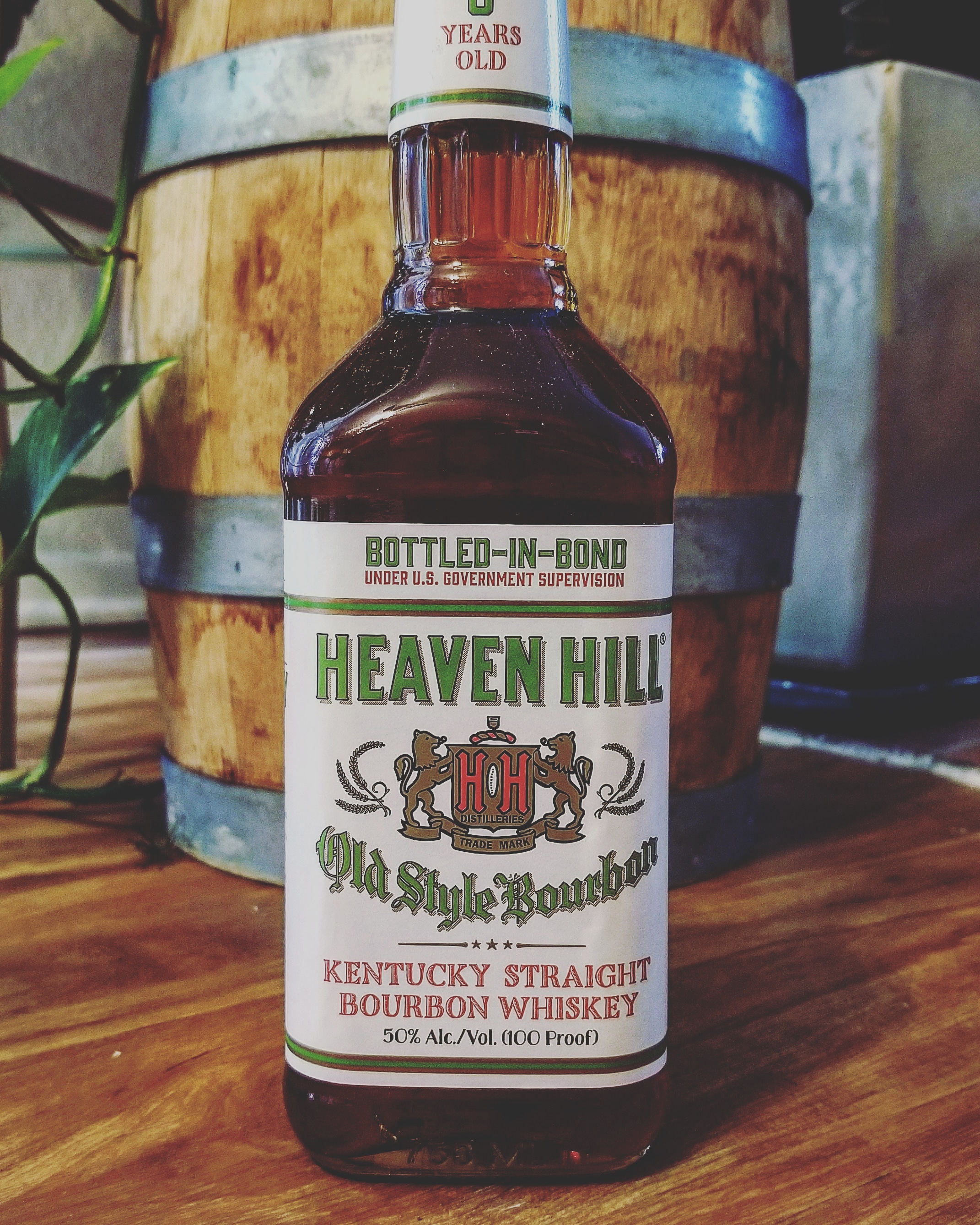
First up is a relative newcomer: Heaven Hill Bottled In Bond 7 Year Old Bourbon. Not to be confused with the Heaven Hill Bottled In Bond 6 Year Old Bourbon which was only available in Kentucky and was discontinued in 2018. One year later this 7 Year hit shelves with an updated label, an extra year of age, and a boosted price tag.
I’ve made no qualms about Heaven Hill being one of my favorite distilleries but their lack of an eponymous bourbon certainly means they have much less name recognition as a distillery than say Jim Beam. The old Heaven Hill 6 Year was one of my favorite bottles to bring back from a Kentucky trip and at $12 was an absurd steal.
Now, what exactly does an extra year and a new label and bottle taste like?
NOSE: Chestnut, dusty leather, vanilla, and oak
PALETTE: Earthy with a strong oak presence. A dusting of baking spices and a hint of tobacco. There’s a slight woodsy quality to it with a surprisingly light punch for a bonded whiskey.
FINISH: Medium and dry with a touch of stone fruit and capped with the oak and vanilla from the nose.
This is quintessential Heaven Hill. In fact, if you told me this was the 6 Year Old bottle I would believe you. Which makes sense as it’s the exact same mashbill only a year older and released a year after the 6 Year was discontinued. You can do the math. And that’s my only real con with this bottle: the math.
$12 would be an absurd price for any quality Bourbon these days. However, at $40 it enters a very crowded field of more household names like Eagle Rare, Woodford Reserve, and Knob Creek. While this is solid bourbon I’d personally pick up a bottle of Elijah Craig from the same distillery for a lower price tag.
I am happy to see it on the shelves though if only to help spread the Heaven Hill name. Though if it was still at the old price point I might have been able to stock up for the quarantine instead of having to finish the bottle.
Reinvention is the key to longevity. No matter how often you hear something being touted as “Old Fashioned” chances are it’s actually an update on an old technique or just straight up marketing. We are constant victims of nostalgia, even the term “Old Fashioned” implies a dissatisfaction with the modern. Yet as much as we glorify the past the only way to truly stand the test of time is by constantly changing.
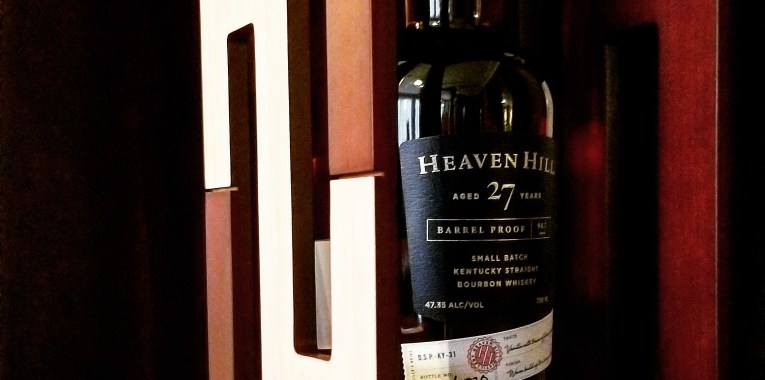
Take Heaven Hill’s new premium, limited edition release: the eponymous Heaven Hill 27 Year Old Barrel Strength Straight Kentucky Bourbon. Those are a lot of buzz words that add up to a lot of the old being new, just slightly different.
Let’s start at the top.
Unless you’re from Kentucky, Heaven Hill probably isn’t a brand you’re familiar with. But if you drink Bourbon it’s a distillery that permeates the very fabric of the category. Founded in 1935, Heaven Hill is the 7th largest alcohol supplier in the US, has the second largest inventory of American whiskey in the country, and is the largest, independent, family owned marketer and producer of spirits in the United States.
In an industry that’s built around the cult of personality and legends of the past (Jim Beam, Pappy Van Winkle, Jack Daniel’s, etc.) Heaven Hill built their name on other people’s legends: Elijah Craig, Evan Williams, and Henry McKenna. Hell, their master distiller since the founding of the distillery has always been a member of the Beam family.
However, they’ve never had that flagship, namesake bottle. Outside of a few specialty releases named after William Heavehill, the farmer who owned the land the distillery was built on, the only true bottling to carry the Heaven Hill name is a 6 year old, bottled in bond, Kentucky exclusive. And this bottle perfectly encapsulates the company in my mind.
Heaven Hill kept the bottled in bond designation alive when no one cared and can be directly credited to it’s resurgence with products like Rittenhouse Bottled In Bond Rye. It’s also a 6 year old, straight Bourbon whiskey that ran for $12 dollars a bottle. It is quality at an incredibly affordable price, which is something that Heaven Hill has done well for so long. It also isn’t what the whiskey world is about anymore. These days it’s all about limited, old and rare so it should be no surprise that this little gem has been discontinued in favor of creating a more premium line up.
Which brings us to the age statement.
American whiskies, almost as a rule, don’t get this old. The oldest, most consistent age statement caps out at the yearly release of the Pappy Van Winkle and Elijah Craig 23 Year Olds, the latter also being produced by Heaven Hill. Because of the law requiring Bourbon to be aged in brand new oak barrels Bourbon this old just doesn’t taste that good, because it’s often over oaked or overly tannic. There’s also the catch that the Angel’s Share steals a percentage every year meaning there’s less to sell and that’s not taking into account the unpredictable acts of nature. A lot can happen in 27 years.
At 27 Years Old this batch of a mere 41 barrels were all aged on the 1st or 2nd floors of the Heaven Hill rickhouses where the Angel’s Share is arguably at its most minimal; but with only 2,820 bottles produced that’s still a loss of 75% of the juice.
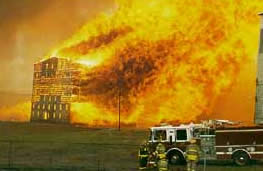
This whiskey can also never be replicated due to an act of god. In 1996, the Old Heaven Hill Springs Distillery burnt to the ground taking hundreds of barrels, and gallons upon gallons of aging whiskey with it. These 41 barrels were not only produced at a destroyed distillery, they survived an inferno that took much of its cousin spirit with it. This isn’t just rare because of its age, it’s both rare in addition to its age.
Heaven Hill goes up in flame.
The Barrel Strength designation is where things get really weird. There is no legal definition for what “barrel strength” means. In fact the TTB is currently working on a new set of regulations specifically about that designation, but in colloquial use barrel strength is generally expected to mean that the whiskey is bottled at the proof it comes out of the barrel at which is usually well north of 100 proof. It is shocking then to see this barrel proof listed at a measly 94.7.
This goes back to those 41 barrels on the 1st and 2nd floor. The lower flowers generally allow for more mellow aging that reduces the Angel’s share lost. However, it also creates a naturally lower ABV as the alcohol evaporates faster than the water. This literal loss of alcohol is another reason why you don’t see whiskey this old from Kentucky. One of the perks of not having a template though was that these barrels weren’t selected with the idea of creating consistent flavor profile like most standard bottling. Instead these were the barrels left standing. After everything that was over oaked, overly tannic, too harsh, too soft, etc only 41 barrels were left and when batched together the naturally occurring ABV was 47.35, resulting in a technical Barrel Strength whiskey at an incredibly drinkable 94.7 proof.
The rest of the words we know. Straight Kentucky Bourbon means that it’s legally 51% corn whiskey, made in the state of Kentucky, aged for a minimum of 2 year in brand new, freshly charred, white oak barrels with no added coloring or flavors.
That’s a lot to take in for a single bottle. And it’s surprisingly alive. Heaven Hill has released a lot of one-off older whiskies. They’ve got deep, deep store houses yet in my opinion a lot of them have fallen flat. There was always something just off about them whether they were over oaked, or they felt thin because of the proof point. Whatever that missing puzzle piece was they seem to have found it with this bottling.
And in the end this is less about of a single bottle and more a culmination of Heaven hill’s journey over the past three decades. Bourbon has gone from the unwanted step-child of the spirit world to a global commodity and the Heaven Hill brands have evolved to keep pace. They’ve gone from affordable work horse whiskies into some of the most awarded and sought after bottlings in the world. And with this pivot Heaven Hill may have finally found a brand to highlight the gems that are sleeping in those Kentucky hills. I just hope we don’t have to wait another 27 years to see them.
NOSE: The Oak leaps out of the glass, there is a seasoned cedar wood quality with only a mild hint of the vanilla often expected.
PALETTE: Tannic, with a dried orange, and deep baking spice note. The caramel takes a major back seat only slipping out towards the end while the mid a palette is all about that earthy, savory oakyness.
FINISH: Incredibly dry, and a lingering mélange of everything that reminds you of your grandfather: tobacco, cigars, and leather that lasts longer that it’s proof would suggest.
I sat down and did this almost exactly a year ago and it’s time again for the annual arrival of a privately selected Elijah Craig Barrel. This one, like all of them, is special because it is a 100% unique bottling but it’s also the culmination of an insane year.
Elijah Craig is the whiskey I’ve probably written about the most so I’ll skip the folklore and brand history, you can read about those here. Instead I want to get personal and talk about the time since the last barrel rolled into my hands.
I started buying single barrels of whiskey years ago. Elijah Craig was the first barrel I bought and it lit a fever in me. It was pretty easy to track where I had been working using this as a metric. As time went on as the list of “House Single Barrels” would balloon seemingly overnight. Last year was full of first for me. This year has been about constant change.
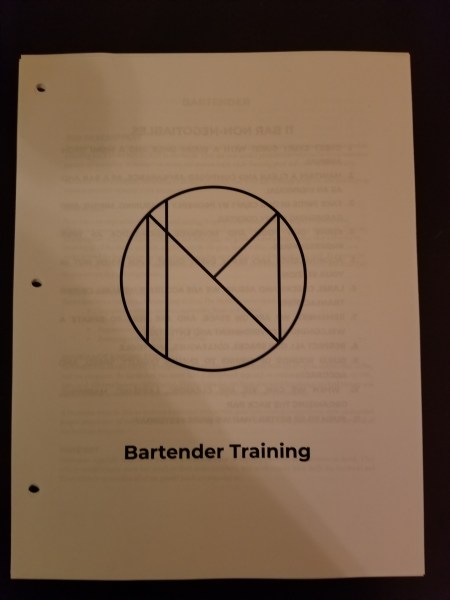
Training Tome
When the last barrel of Elijah Craig showed up to Faith & Flower I already new that in a few months I would be leaving it behind and traveling blocks away to the corner of 7th and Olive as one of the opening bar managers for NoMad Los Angeles. What I didn’t know was what that really meant.
I knew that I was joining a well-established,well-regarded, restaurant and bar team. I knew Leo Robitschek mostly by reputation and I knew the program; Pietro Collina, Nathan O’Neil and the rest of the team in NYC had built one of the most impressive bar programs not just in the country but the world. I knew it was going to be a lot of pressure and an immeasurable amount of work. What I didn’t know was how I fit into the equation.
My partner-in-bar Dave Purcell had already been a part of the team for months before I was brought on and given my crash course in everything NoMad. Three weeks after I started training I had pivoted learning to teaching. We were now training a barstaff that was 55 people large on an opening cocktail menu that was nearly 60+ drinks (not counting house specs on classic drinks) spread across four bars and not enough back bar space.
Every single member of that opening team was a goddamn rockstar and every member of our team, nearly a year later, is a member of that opening squad. It speaks to their professionalism and skill that they have risen above and beyond as the restaurant has constantly changed around them. Constant Reinvention is one of our guiding principles after all.
A lot of late night exits.
Our Head Bartenders, who moved across the country from to be a part of this project, are some of the hardest working, most dedicated hospitality professionals I have ever met and I couldn’t imagine a better crew to get this beast off the ground with.
But even after opening I still didn’t know where I fit in. I wasn’t behind the bar and the Head Bartenders embodied the program and the culture so much more deeply than I felt that I did. They had simply been living with it for longer then I had. As far as I could tell I was here to herd a pack of wild bartenders and to help make the NoMad more LA. The first inkling of what that might actually mean happened when the team at Heaven Hill approached me about buying another barrel this year.
I immediately leapt at the idea and pitched it to Dave and Leo. After some debate, and extended tasting sessions, we settled on this bottle that now sits before me. An Eight Year Old Elijah Craig Single Barrel aged on the 6th Floor of Rickhouse “S” outside the Heaven Hill bottling plant in Bardstown, KY.
It has a heavy caramel nose and an upfront sweetness yet also a delightful earthiness and tannic finish that allows it to be sipped on it’s own but also to be built into cocktails which are surely the lifeblood of any NoMad bar.
Elijah Craig has been an integral part of the history of NoMad. The only drink to have never left the menu at NoMad is the Start Me Up, a Whiskey Sour variation with ginger, honey, Strega, rum and of course Elijah Craig. Using this barrel really drives home those whiskey notes in this drink. Here was something that I could contribute to the NoMad lexicon that was still wholly the NoMad and also intrinsically me.
This year also had it’s fair amount of travel, back to Pennsylvania for my Grandmother’s 90th birthday, a trip to the Cook Island’s (look it up it’s a real place) and a chance to return to France with my always more intelligent than me girlfriend.
There were less competitions, opening four bars in less than three months eats up a lot of free time, but I now have a rotovap as part of my tool set and know more about working with sherry than I could have ever imagined. As I sit here sipping this whiskey I am incredibly proud to see the NoMad symbol on its label.
Last year I declared I hate change and this year I find myself wondering if the new norm is constant change. I don’t have an answer to the question but I do look forward to what next year’s barrel of Elijah Craig brings.
It’s right there in our language. We GET older, we GROW up whether we like it or not. But these phrases imply a gift. The imply that it is a privilege to age and that we are constantly changing and growing.
Contrast that with the utter fear of aging that our culture exhibits. It’s also right there in our language. We don’t just develop. We deteriorate, mellow, and mature. And at every point along the journey we can’t help but express disbelief at how many chronological ticker marks we’ve accrued. Our own experience is that we are always the oldest that we have ever been, so exclamations like, “I can’t believe 90’s kids can legally drink!” or “Holy Shit, it’s been nearly five years since Old Fitzgerald Bottled-In-Bond was discontinued!” make us feel old and make those older than us roll their eyes at the young ‘uns.
Even in whiskey we want our spirits older, but not too old. Age at a certain point becomes a novelty act, reacting to a new release almost as if to your great-great aunts 97th Birthday, “A 27 Year old Bourbon you say? That’s adorable.” Yet we bemoan the loss of every single age statement, and doubly so when it’s a rocksteady brand that’s stood the test of time yet is still dropped in favor of something new, young, and millennial.
The loss of the Old Fitzgerald Bottled-In-Bond was a loss I felt personally and deeply. While never technically discontinued the Old Fitz was removed from most markets over the past five years in favor of it’s cousin Larceny. Same liquid inside, even still has the Fitzgerald name on the bottle still. It’s technically John E. Fitzgerald’s Larceny, referring to the legend that the original brand was named for.
In short, this tastes like Old Fitzgerald, which is a blessing and a curse
John E. Fitzgerald was a tax bondsman for the U.S. government, which meant that he was one of two people on site at the Old Judge Distillery to have keys to the bonded warehouse. This ensured that there was no theft, since no one could enter the warehouse with out him, and that the government was properly collecting it’s taxes on the whiskey production. However, the workers kept noticing certain honey barrels, the especially tasty ones, were coming up short and that Old Fitz always seemed to have some extra tasty liquid on hand. These barrels became known as “Fitzgeralds” and a brand of whiskey was eventually named after the man and his harmless acts of larceny.
The brand went on to become a working class hero. Bourbon Legend says that the brand was originally sold only to steamships, rail workers, and private clubs. After Prohibition the brand was purchased by Stitzel-Weller, the famed distillery owned by the notorious Pappy Van Winkle. In fact, during his tenure at the Stizel-Weller Distillery Pappy didn’t sell any Pappy. He sold Old Fitzgerald and it was by far their most successful brand. Like all the whiskies made at Stitzel-Weller Old Fitz had that “whisper of wheat” in the mashbill that made their whiskey so unique at the time.
During the whiskey dark ages of the 70’s and 80’s the brand was purchased by United Distillers, which through several mergers and acquisitions eventually became the behemoth that is Diageo. United Distillers/Diageo closed the Sitzel-Weller distillery in 1994, moved production of Old Fitzgerald to the Bernheim Distillery. Then in 1999 they sold the Bernheim Distillery, and the Old Fitzgerald brand, to Heaven Hill. Heaven Hill continues to make wheated bourbon and releases it under the Old Fitzgerald name to this day.
The story hasn’t changed. The whiskey hasn’t changed. But the age, the label, and the price certainly have. While Larceny is still a very reasonably priced bottle of whiskey it doesn’t carry the massive bang for your buck that the old Bottled-In-Bond did. And by freeing up the Fitzgerald name from a bargain priced Bottled-In-Bond the team at Heaven Hill have been able to make attempts to push the premiumization of the brand. Some of them more successful than others.
They tested the waters with the one off release of John E. Fitzgerald’s 20 Year Old Bourbon which was some of the last whiskey actually distilled at Stizel-Weller which was released to mixed reviews. And now comes the release of the long awaited Fitzgerald Bottled-In-Bond Decanter Series.
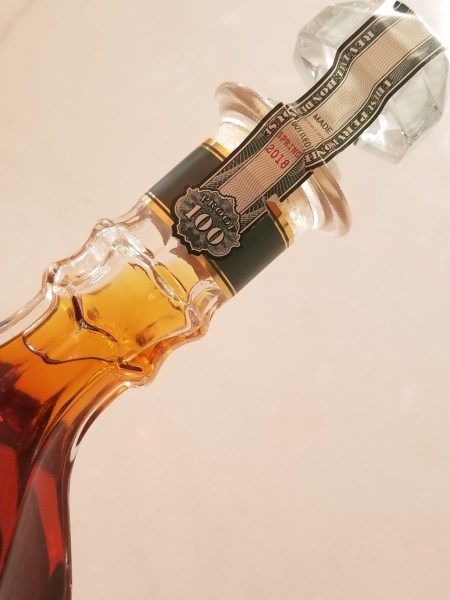
The series will be a limited release each Spring and Fall for the next few years. The throw back to the old label name also comes with a throw back to another old Bourbon tradition: fancy decanters. More important than the glassware though is that this is a Bottled-In-Bond whiskey, it’s 11 years old, and it’s got the price tag to prove it with a suggested retail price of $110.
So how does it stack up?
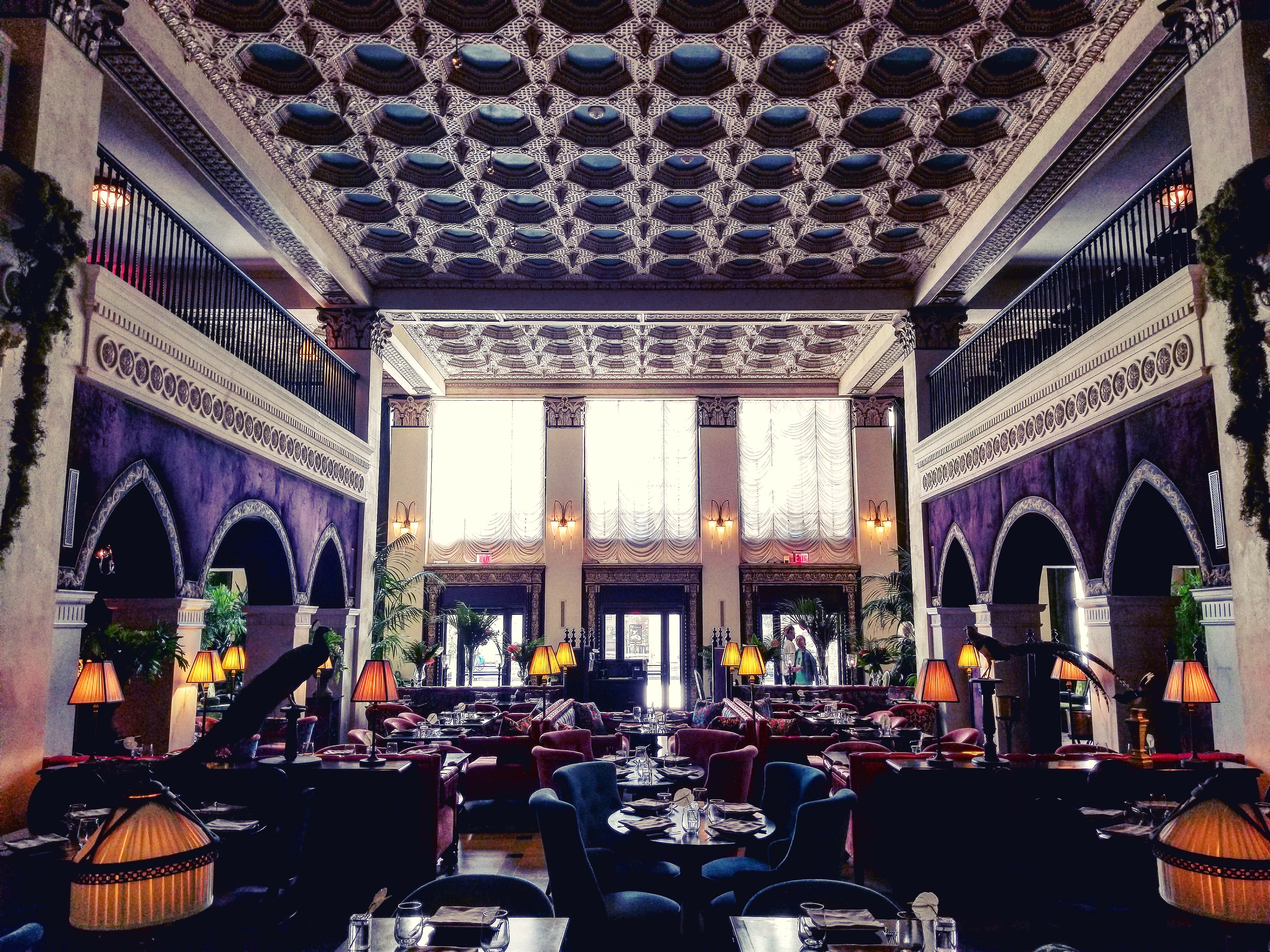
The packaging and labeling are fantastic. It’s like seeing an old friend after the divorce now that they’ve started working out and gotten a haircut. It still looks like them but a cleaner, fitter, more attractive version of them.
The nose has all the oak you’d expect from an 11-year old, but also a touch of apricot and butter. On the mid palette is black pepper, stone fruit, a hint of nuttiness and a slightly thin caramel which leads into an aggressively woody finish that lingers hot and with a slight exhalation of cherry.
In short, this tastes like Old Fitzgerald, which is a blessing and a curse.
On the one hand I’m incredibly happy to have something that tastes like my old timey Bottled-In-Bond back but at the rarity prices it’s not something I would necessarily pick up off the shelf, and it’s certainly not an every day drinker like it used to be. The extra aging has made the product deeper and mellower but it’s also made it richer and pricier. Much like your recently divorced friend it doesn’t seem interested with hanging out with the same crowd it used to.
In the end I’m happy to see the return of Old Fitzgerald in a semi regular release but it does feel like the difference between hanging out with your college buddies and your great-great aunt. The one you want to see every weekend, the other you’ll drop in on at the holidays. Maybe. If the plane tickets aren’t too expensive.
Another year and another barrel of Elijah Craig. The very first single barrel I ever picked out for a bar was a barrel of Elijah Craig for Areal a good five years ago. I’ve been fortunate enough to select an Elijah Craig barrel every year since so its arrival is usually a great touchstone for me to reflect on the previous year. A Bourbon New Year as it were. And it’s been a hell of a year.
I left a bar that I ran for nearly five years that promptly closed six months later. I started a new job at Faith and Flower in Downtown LA, competed in the National finals of three major cocktail competitions, traveled to Tokyo, started this wordy blog, and picked out another barrel of Elijah Craig.
Elijah Craig is often the answer to the inevitable question, “What do you drink?’ I’ve talked about it at length here, and here, and during innumerable shifts behind the bar. The basic gist though is that Elijah Craig is one of the semi-mythical early Bourbon distillers that sometime after his death was decreed to be “the Father of bourbon” after he became the first person to char his barrels before aging his whiskey. It’s a completely unsubstantiated claim that makes a good story. So, we all tell the story and then acknowledge that it’s complete nonsense.
The current Elijah Craig brand was introduced by Heaven Hill in 1986 and has gone through multiple changes in its 30-year history but the past year was quite striking. The iconic 12-year old age statement was dropped from the label with the whiskey instead becoming a blend of 8-12 year old. The old school squat bottle was also replaced with a sleeker, taller, more streamlined bottle that I’m personally not a fan of but does actually fit a pour spout .
If you can’t tell, I don’t like change. And that’s not to say anything against the whiskey. It’s still an earthy, massively tanic, barrel forward whiskey that is one of the few bottles that I think works equally well in both mixed drinks and as a neat sipper. Most of these changes were made because there’s not enough whiskey to go around. Especially not old whiskey. Part of me feels like saying so what? Let there not be enough for everyone, don’t change this bottle that I love. Yet, that view is selfish.
Part of the joy of bartending, and indeed the joy of this very blog, is getting to share things that I love with other people. In the end, these changes aren’t for me. I clearly jumped on the train years ago. These changes are for the people seeing Elijah Craig for the first time on a billboard, or a sports arena, or even hearing about it on its recent NPR advertisements. The old Preacher is growing and hanging out with a younger crowd these days and I’m glad to see it.
In the end change isn’t good or bad. How we react to it, how we deal with it, that’s where the emotion comes in. Sometimes, change is just change. And I look forward to seeing what the Preacher and I have to talk about the next time we see each other.
I compete in a lot of bartender competitions. Not only is it a great tool for advancing my career I also just find it fun. Like really fun. I love the whole shebang. I have a background in theater so I spend a lot of time crafting the oration and spectacle of the presentation trying to meld the drink with the competition performance. But ultimately, those 6-8 minutes presenting make up a fraction of the work that goes into competing. Because it doesn’t matter how great your soliloquy is if the drink doesn’t match up.
The R&D is where the true spirit, and fun, of these competitions lay. I’m incredibly fortunate to have an amazing collaborator in the form of my lovely, talented, and extremely patient girlfriend and some, if not all, of my best drinks have come out of R&D with her for these competitions. A lot of ideas end up on the cutting room floor only to find themselves resurrected for a cocktail menu down the line. Or sometimes ideas that have been kicking around your head find the absolute perfect outlet in a competition prompt.
That was the serendipitous case with The Ship of Theseus.
One of the cocktail prompts for Heaven Hill’s Bartender of the Year 2017 was to submit a drink based on a classic cocktail. This isn’t an unusual prompt but its one that’s always been difficult for me because, in my experience, drinks based on classics are really just classics with a part replaced. Can those really be called original cocktails?
This problem of identity is something that I would think about late night, several whiskies in while closing the bar and when it came up for the competition my late night musing immediately turned my thoughts to “the Ship of Theseus.”
The original Ship of Theseus isn’t a drink but a philosophical conundrum that has been debated for centuries And it goes like this: Theseus, the classic Greek hero who slew the minotaur, has a ship. On that much everyone can agree. But after slaying the minotaur Theseus returns to port needing a few repairs on the ship and a few replacement crewmembers. He then returns to adventuring and doing more hero things. This of course leads to more repairs and replacements. This time the mast, next time the rudder, this time a first mate that foolishly headed the siren’s call. Eventually every last plank, rivet and crew member of the ship has been replaced. With none of it’s original components intact is this still the ship of Theseus? And if it’s not when did it stop being that original ship? After the first repair? After the 31st?
Let’s make it even more complicated. Lets say the shipwrights doing the repairs saved all of the pieces they replaced and built another ship out of them and the two ships now float side by side in the harbor. Which one is the original and which one is merely ‘inspired by’?
While giving this long winded explanation to my girlfriend (have I mentioned how patient she is?) she casually asked if there were any ship based classic drinks which immediately brought up one of my least favorite drinks, the Remember The Maine. It first appears in Charles H. Baker’s 1939 book the Gentleman’s Companion and traditionally looks like this:
2 oz Rye Whiskey
.75 oz Sweet Vermouth
.25 oz Cherry Herring
Dash of Absinthe
Stir on ice and serve up.
Named after the U.S.S. Maine, a battleship sunk under suspicious circumstances of the coast of Cuba who’s sinking was used to insight the Spanish-American War with the battle cry “Remember the Maine, to Hell with Spain.” The drink has always fell flat for me so it seemed like the ideal ship to hit with a few “repairs.”
First, the Maine isn’t a true cocktail because it doesn’t contain any bitters so a few dashes of orange bitters were added. Next, the Cherry Herring in the Maine is one of my least favorite ingredients. I find it overly sweet and muddled, so I subbed it out for Kirschwasser, true cherry brandy. This made the drink brighter, more fruit forward and drier. This allowed the vermouth to be swapped to a Chinato style that added in an extra bittersweet quality to balance out the kirsch. Then the base remained rye whiskey, after all you need certain key features to be a ship, but using Rittenhouse BiB adds a depth and a back bone that is more specific than calling out for a “rye.” The drink ended up with an elegance and subtly that the absinthe in the original would have destroyed so the absinthe was dropped in favor of a chartreuse rinse on the glass to lend those floral, herbal notes with out disrupting the ships internal balance.
The new recipe looks like this:
1.5 oz Rittenhouse BiB Rye
.5 oz Kirchwasser
.5 oz Alessio Chinato Vermouth
2 dash of Angostura Orange Bitters.
Stir on ice. Strain into a cocktail glass rinsed with
Green Chartreuse.
Garnish with a marasca cherry
Identity Crisis Optional
Both ships now get to float side by side completely distinct. The Ship of Theseus is clearly no longer just a variation of the Remember the Maine but I’d be hard pressed to tell you when that change over happened. It’s a conundrum that deserves a drink of mythic proportions and I think I might have just the perfect one for it.
Bourbon is full of history, tradition, and ancient family recipes.
Except when it’s not. (which is pretty much all the time.)
This call back to the golden days of our frontier forbearers is meant to impart some sort of permanence, stability, and a patriotic appeal to what is actually a relatively new spirit. Bourbon wasn’t defined as a unique product of the United States until the 1950’s. As far as the United States government was concerned the term “whiskey” wasn’t even defined until almost 1907. So, while the “Founding Father’s” of Bourbon were certainly making whiskey, they were following their own rules by making what felt like a good product to them. Most of the regulation like the Bottled In Bond Act were spearheaded by the distillers themselves looking for tighter control and quality of their products.
In the worst case this clarion call to the past is meant to mislead consumers, but even the best intentioned creates a consumer base deathly averse to change. This is antithetical to the alcohol industry needing to be an ever-evolving marketplace.
Why would you ever change this glorious label?!
I still remember my first gut reaction of, “Why the hell would you do that” in the modern whiskey world. It was the label change on Henry McKenna Bottled-In-Bond.
Henry McKenna is a name that harkens back to the early days of the Kentucky distilling world. In some circles he’s as highly regarded as George T. Stagg and William Larue Weller, (very well regarded indeed).
McKenna was an Irish immigrant that moved to the Kentucky territory in 1838. Like many Irish immigrants at the time Henry worked on the railroads helping build the country’s early infrastructure. Also like many other immigrants he went into less backbreaking work as soon as he could.
He settled with his wife in Nelson County and by 1855 was a partner in a flour mill. Looking to make use of the spent grains they soon purchased a farm and soon after that were distilling about a barrel a day from the leftovers from the gristing process.
These early whiskies were almost assuredly all wheat but by 1858 the whiskey was had proved popular enough to hire a fulltime distillery manager and had begun distilling corn as well.
The whiskey produced at McKenna’s Nelson County distillery never carried the name ‘Bourbon’ but it was regarded to be of the highest quality. Newspaper at the time noted that McKenna never sold a drop that wasn’t at least three years old. There was even a bill introduced to Congress in 1892 asking for unlimited bond period on aging whiskey to prevent tax penalties on whiskey aging beyond the bond. This bill was known as “The McKenna Bill.” The next year McKenna passed away at the age of 75.
He left the business to his sons who had grown up in the distilling world. They managed the company until the advent of Prohibition forced them to mothball the distillery. But following Repeal James McKenna, a ripe 79, reopened the distillery with a distiller trained by his father’s original distillery manager supposedly keeping the family recipe intact.
James died in 1940 and the family sold the distillery to Seagrams, but not the original recipe. Seagrams marketed and produced Henry McKenna for decades until they dismantled the original distillery in 1976 and sold the brand to Heaven Hill in the early 90’s.
Under Heaven Hill two versions of McKenna are still on the shelves. The 80 proof Henry McKenna and the Henry McKenna 10 Year Bottled In Bond Single Barrel. You get one guess which one I love.
Not only does the Bottled-In-Bond meet all of the bonded regulations, it’s also 10 years old which is ancient in this shifting whisky scene AND it’s a single barrel so there is the possibility that each bottle you dive into will be different, a new variation upon the McKenna theme.
I’m spoiled and was able to purchase to Private Single Barrel a few years ago and haven’t tasted a regularly available bottling in a while. So, how does it stack up to all of that history?
The nose is redolent of salted caramel, and the mid palette is all pistachio and pecan drizzled with vanilla and a dry, oaky, tannic finish. There is still a heat, and a rough around the edges quality from the its 100 Proof nature that hasn’t been fully tamed by its ten years in the barrel. It’s a whiskey that you can sip on but feels like it loves to be tossed around in a mixing glass as well, with plenty to offer a cocktail while not losing its identity.
This is most assuredly NOT the whiskey that Henry McKenna was making when he first set out to Kentucky nearly 200 years ago, but it is good modern whiskey. The label change I originally hated has grown on me and I’m sure that its updated look helped introduce it to a modern audience. Trying to stand on tradition alone can often leave us unable to see over the crowd, but perching on it’s shoulders can help show us the stage set for the future.
Hey it’s time to talk about two of my favorite things again. Privately selected single barrels and, less enthusiastically, change!
Let’s take this arrival of a brand new 10 year old single barrel of Elijah Craig to look at just how much things have, or haven’t changed.
First things that clearly haven’t.
A bit of history:
Elijah Craig was a fascinating man. Born in 1738 in Virginia, he was a Baptist preacher arrested at least twice for preaching without a license from the Anglican Church. The Baptists at the time were given a bit of a hard time for their stance on slavery (they were against it) and he worked with James Madison and Patrick Henry to help preserve the right of religious freedom at a federal level after the Revolutionary War.
After the war he helped lay out and plan the city of Lebanon, Virginia which eventually became Georgetown, Kentucky as the state lines and city names changed to reflect a growing country and their pride in their first President. Our Preacher founded some of the first mills west of the Appalachian Mountains that produced cloth and paper. He was also a big proponent of education. Founding the first classical school in Kentucky in 1787, which was than linked to the Rittenhouse Academy in 1798 with the help of land donated by Craig. Rittenhouse eventually morphed into Georgetown College, not to be confused with Georgetown University. He also happened to found a distillery.
“If virtue consists in being useful to our fellow citizens, perhaps there were few more virtuous men than Mr. Craig”
In 1789…ish, Elijah Craig founded a distillery which, despite all his other accomplishments, is the reason any of us are talking about him today. According to almost all whiskey historians, and there are a surprising number of them, there is no reason to believe the Preacher was making anything other that the typical style of corn-based spirit being made by 100’s of other farmers at the time. By the time Bourbon County was formed in 1785, two years after the first registered distillery in Kentucky, people were already trying to find a way to distinguish between the corn based Kentucky style and the rye based style that predominated on the other side of the mountains.
Despite lack of evidence, Elijah Craig is first mentioned without citation as the inventor of Bourbon in 1874, nearly 70 years after his death. And most Bourbon aficionados can tell you the charming tale of his magical discovery of charring barrels to create Bourbon. After a lightning bolt set fire to one of his farm houses the good Preacher was too frugal to throw away some burnt barrels that he deemed perfectly suitable and the whiskey stored in these barrels emerged from “a process that gives the bourbon its reddish color and unique taste.” This story completely ignores the fact that barrels have been used for storage for millennia and they were valuable. Being reused to store anything from fish, to hardware, to whiskey. And they only way to truly clean out a wooden container after it’s stored salted fish: setting it on fire. Charring the inside. Bourbon was an evolution, not an invention.
So why are we still talking about the “Father of Bourbon”
Enter Heaven Hill. Founded as soon as the money could be pulled together after the end of Prohibition, Heaven Hill is the only remaining family owned distillery in Kentucky, The largest family owned and operated producer and distributer of distilled spirits in the US, the seventh largest alcohol supplier in the US and the second largest holder of Bourbon in the world. They’re lagging slightly behind Jim Beam, which almost feels appropriate with the number of Beam they’ve had as Master Distiller. Their very first distiller was Jim Beams 1st Cousin, he was eventually followed by Jim Beam’s nephew and even the current Master distiller’s, Parker and Craig, carry the Beam family name. There is history everywhere. And in 1986 Heaven Hill first released the Elijah Craig 12 Year Small Batch Straight Bourbon.
Named and marketed after the dubious claim of our good Preacher as the Father of Bourbon, the whiskey was nevertheless damn good. While “small batch” has never been a regulated term Heaven Hill has always stood by the fact that their Elijah Craig brand is never more than a 200 barrel dump per batch, which is more than most distilleries can actually distill but at least there is a number to the claim. It was also always 12 years old, which put it actual years ahead of most of it’s premium competitors.
But times change.
Due to the success of the super-aged version of Elijah Craig, the Barrel Proof Editions, a massive, debilitating fire in the mid 90’s that literally destroyed a distillery, and a massive uptick in the call for good bourbon this stalwart brand has had to make some interesting calls in the past few years.
The biggest being the fact that it’s dropped it’s age statement. For nearly 30 years Elijah Craig has been the benchmark for old bourbon. 12 years blasted out large on the label gave it a gravitas and a certain definitiveness in what the benchmark of flavor should be. Heaven Hill insists that the new “Small Batch” Elijah will always be a blend of 8-12 year old bourbon and that the change allows them to maintain the Barrel Proof at 12 years old and eventually increase supply of the highly lucrative and delicious 18 and 23 year old single barrel variations, but it still feels like a loss.
We in the bourbon world are sometimes overly obsessed with the idea of “the past” and “tradition” so much so that the marketing stories overtake the liquid even when they’re pretty blatantly misleading. The old tales of the Preacher Elijah Craig are mild compared to most brands. We resist change. But especially with the new, and in my opinion terrible, bottle redesign I can’t help but feel like something is being lost in translation.
Part of what always stood out for me with Elijah Craig was that it was an introduction to the wider world. It wasn’t a well whiskey, it wasn’t a call and it certainly wasn’t expected. It had all the right ingredients: amazing quality, an age statement that puts almost anything to shame, and a price point that let you experience something new without stress. It was the key that turned the lock on your palette. It’s bourbon and had all those necessary parts but added up to so much more. And as so many parts move, so rapidly, I can’t help but feel they might not be getting the combination to the lock right any more.
But maybe I’m just getting old.
I certainly wouldn’t have bought a barrel of it if I didn’t think it was worth it. This 10 year is the third generation in my personal selections of the Preacher and it is more lively and kicking than most standard issues I’ve had, with a deep oak backbone supporting a brighter stone fruit and peach note before finishing dry and tannic.
The future is wedded to the past and after all that Elijah Craig has been to me both personally and as something to share with customers I feel the need to do something we should all do more of, challenge our preconceptions and keep an open mind.
Elijah Craig had,been and is, one of my stalwart companions,- but I can’t help but feel there might be something subtly gleaned from the preacher’s actual obituary, “He possessed a mind extremely active and, as his whole property was expended in attempts to carry his plans to execution, he consequently died poor. If virtue consists in being useful to our fellow citizens, perhaps there were few more virtuous men than Mr. Craig”
People always ask, “What is your favorite whiskey?” and I always respond, “That’s like asking a parent to pick their favorite child.” It’s flippant but also kind of true. A parent will tell you they love all their children, but there’s always one that the spend more time with. In the bourbon world that child for me is the Preacher: Elijah Craig. But as the Nobel Laureate once said, “The times they are a-changin’.”
It’s gotten incredibly obvious over the past year with the old standard 12 year dropping its age statement and a major bottle design overhaul, but the first sign of change came nearly 5 years ago when they discontinued the original iteration of the Elijah Craig 18 Year Old Single Barrel.
As the Nobel Laureate once said, “The times they are a-changin’.”
The Bourbon was, without a doubt, one of my favorite things I’ve ever put in my mouth. Massive, oaky, creamy and not overpowering. It’s a prime example of the quality of the older whiskies that fed into and eventually led to the Pappy Van Winkle craze, and at $45 bucks a bottle it was something everyone could enjoy. It was an entry point into the bigger, wider world of Bourbon. And they had to take it away from us for two reasons: 1) We drank all of it. 2) The Heaven Hill fire.
In the mid 90s a fire started at on of the Heaven Hill distillery rickhouses, most likely from a lightning strike. Ironic in light of the old marketing story that Elijah Craig became the father of Bourbon when a lightning strike burned his barn to the ground, but being a frugal man he saved the barrels stored there and used them to store whiskey, becoming the first to use charred barrels and thus the first to make modern bourbon. The story is complete myth of course.
But this actual fire spread through the warehouses like, well like fire through alcohol. It followed the wind and the terrain and set fire to the distillery itself. Other distilleries banded together to help them continue production until they purchased the Bernheim distillery a few years later but with the loss of stock and production ability sacrifices had to be made and the 18 year was put on that altar.
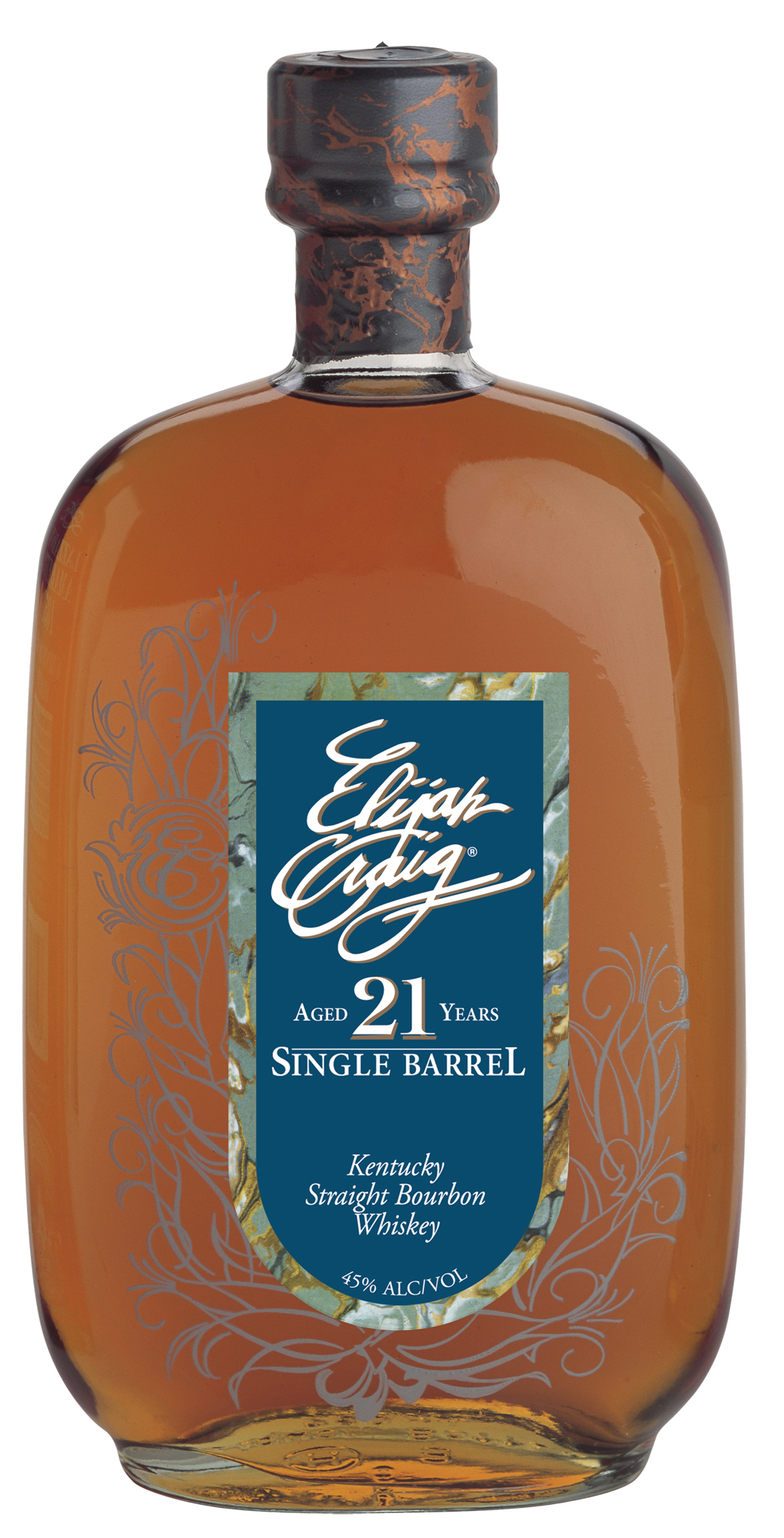
As a consolation prize in the following years Heaven Hill released a 20, 21, 22 and 23 year old version of the single barrel. Some with varying success but as the age on the bottles ticked up so did the price on the bottles, riding right along the crest of the Bourbon Craze. Then the 18 Year came flaming back last year.
Still a Single Barrel, but now a once a year release, I was excited to taste it and felt warm inside as it slid down my throat just like I remembered. Rich, deep, dark yet still lively. But with a price tag 3.5 times what it used to be the entry point was gone. No longer was this something to share with newcomers and aficionados alike. Now this was for the connoisseur. And yes, now this means that you actually might have a chance of finding a bottle on the shelf. Of having something to share in those special moments, but with the bottle change and the loss of the 12 year age statement from the Preacher’s Small Batch bottles I’m left wondering where that entry point is going. So, tonight I’m going to raise a glass because I want to. And because I can. For now.





 The packaging and labeling are fantastic. It’s like seeing an old friend after the divorce now that they’ve started working out and gotten a haircut. It still looks like them but a cleaner, fitter, more attractive version of them.




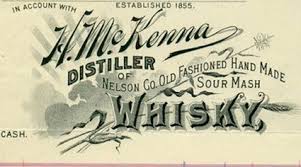 The whiskey produced at McKenna’s Nelson County distillery never carried the name ‘Bourbon’ but it was regarded to be of the highest quality. Newspaper at the time noted that McKenna never sold a drop that wasn’t at least three years old. There was even a bill introduced to Congress in 1892 asking for unlimited bond period on aging whiskey to prevent tax penalties on whiskey aging beyond the bond. This bill was known as “The McKenna Bill.” The next year McKenna passed away at the age of 75.
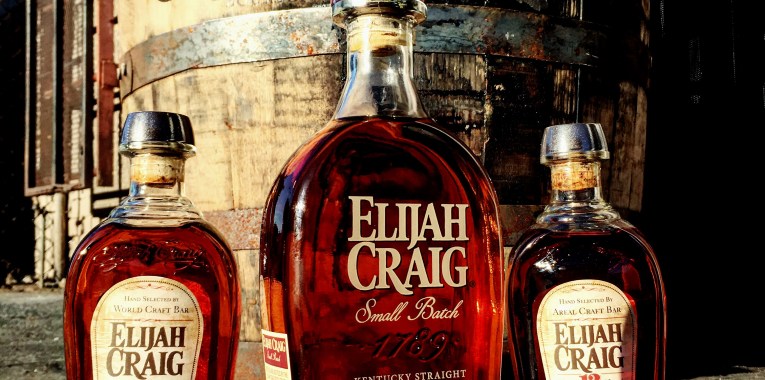
 After the war he helped lay out and plan the city of Lebanon, Virginia which eventually became Georgetown, Kentucky as the state lines and city names changed to reflect a growing country and their pride in their first President. Our Preacher founded some of the first mills west of the Appalachian Mountains that produced cloth and paper. He was also a big proponent of education. Founding the first classical school in Kentucky in 1787, which was than linked to the Rittenhouse Academy in 1798 with the help of land donated by Craig. Rittenhouse eventually morphed into Georgetown College, not to be confused with Georgetown University. He also happened to found a distillery.
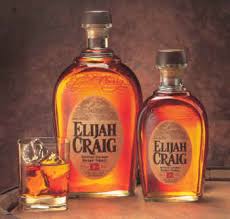 amed and marketed after the dubious claim of our good Preacher as the Father of Bourbon, the whiskey was nevertheless damn good. While “small batch” has never been a regulated term Heaven Hill has always stood by the fact that their Elijah Craig brand is never more than a 200 barrel dump per batch, which is more than most distilleries can actually distill but at least there is a number to the claim. It was also always 12 years old, which put it actual years ahead of most of it’s premium competitors.
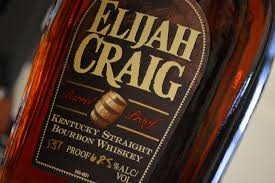 12 years blasted out large on the label gave it a gravitas and a certain definitiveness in what the benchmark of flavor should be. Heaven Hill insists that the new “Small Batch” Elijah will always be a blend of 8-12 year old bourbon and that the change allows them to maintain the Barrel Proof at 12 years old and eventually increase supply of the highly lucrative and delicious 18 and 23 year old single barrel variations, but it still feels like a loss.
 As a cons
 olation prize in the following years Heaven Hill released a 20, 21, 22 and 23 year old version of the single barrel. Some with varying success but as the age on the bottles ticked up so did the price on the bottles, riding right along the crest of the Bourbon Craze. Then the 18 Year came flaming back last year.
 Bottled In Bond LA