Whiskey Wednesday: The Open Story of Uncle Nearest

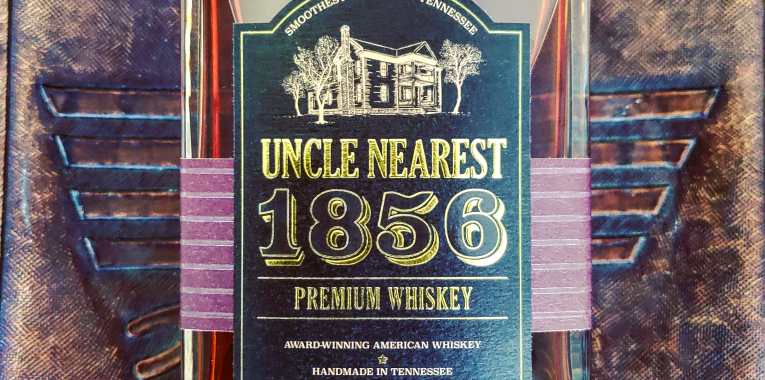
Today is not about depleting old bottles but celebrating something relatively new that honors something very old. A story that was an open secret yet like all open secrets unacknowledged. And being unacknowledged also means it’s a story not told. This is the story of Uncle Nearest.

Nathan “Nearest” Green was a slave in Tennessee during the Civil War. In the 1850’s he was, as horrible as it is to say, owned by a firm that leased him out to a preacher, grocer, and distiller named Dan Call. Now, back in those days to say someone was a distiller often meant that their slaves were distillers. And Nearest was one of the best. In fact, he was so good that when a young Jack Daniel’s came to work for the preacher, Call took him to Nearest reportedly saying that, “Nearest is the best whiskey maker that I know.” Only a few years older than Jack, Nearest is the one that taught him how to distill.

It was also while distilling at Call’s Distillery  in 1856 that biographer Fawn Weaver believes Nearest perfected the Lincoln County Process that became the trademark of Jack Daniel’s Whiskey.

While there are report of small scale charcoal filtration in whiskey distillation in the 1800’s there was nothing like the large scale, deep vats that make up the Lincoln County Process of filtration. This timeline is enshrined in the name of their flagship whiskey.

In 1963 the Emancipation Proclamation took effect and freed exactly zero slaves in Tennessee, The Proclamation only applied to states in open rebellion against the Union and although Tennessee had seceded it was now under Union control with Andrew Jackson as Military Governor. Jackson did free all of the slaves in Tennessee on October 24, 1864. One year later the 13th Amendment to the Constitution of the United States was passed finally abolishing slavery in the United States.

Once he was finally freed Green continued to distill for Call and now Daniel as well. Call and Daniel having founded a distillery venture together in either 1866 or 1875 depending on which documentation you believe. Shortly after, Call retired from the whiskey business for religious reasons leaving Jack in sole control and Uncle Nearest as the first Master Distiller of Jack Daniel’s Tennessee Whiskey.

In the years that followed three of Green’s sons and four of his grandsons worked at the distillery making the Green family instrumental to the early years of Jack Daniel’s. These open secrets finally began to be discussed with a 2016 article in the New York Times. This article, and the lack of real information about Nearest Green, inspired Fawn Weaver to dig deeper into Green’s story. She published a book on his life and much of the information about Green that has been incorporated into the Jack Daniel’s Distillery tours comes from Weaver.

She also founded the Nearest Green Foundation, a non profit dedicated to Green’s legacy and providing scholarships for Green’s descendants. She’s also been instrumental in helping create Uncle Nearest Whiskey which is a fully minority owned venture.

While there are plans underway to construct a distillery in the old farms of the Call distillery the whiskey is currently sourced from around 5 distilleries in Tennessee. Exact sources aren’t revealed but as everyone involved has stated that none of the whiskey is coming from the Jack Daniel’s Distillery we can assume that a fair portion of it is coming from the George Dickel Distillery. I also wouldn’t be surprised if there’s some whiskey coming from Popcorn Sutton

The whiskey then undergoes the Lincoln County Process on a proprietary filtration rig designed by Sherrie Moore, the former Director of Whiskey Operations at Jack Daniel’s who came out of retirement to assist with the Uncle Nearest Project. Uncle Nearest is also working with the Corsair Distillery to distill New Make to their own specifications and recipe for future release.

In a landscape where it often feels like a story is crammed on top of a whiskey to create some sort of marketing narrative it truly is wonderful to see a story leading to the creation of a brand instead of the other way around. Nearest Green is one of the fathers of American Whiskey and it is phenomenal to finally see history truly being told, drank, and winning major awards including most recently 2019 World’s Best from Whisky Magazine’s World Whiskies Awards

NOSE: Grassy, banana, caramel, oak
PALETE: Baking SPice, bready, ripe fruit, a sweet apple and hay
FINISH: Medium with a green burst and a touch of molasses

Whiskey Wednesday: Take Off of Taketsuru

Continuing this month’s conversation about Nikka comes the news that Nikka will be discontinuing the Taketsuru 17, 21, and 25 Year old expressions as of March of 2020. While some stocks will remain under “heavy allocation” all three marks will no longer be listed by the company. The Nikka Taketsuru Pure Malt, a Non-Age Statement (NAS) edition that replaced the 12 Year old Taketsuru several years ago, will also be discontinued.  

While the loss of the age statements is lamentable, it falls neatly into the familiar story of aged stocks not being able to keep up with current demand for high end whisky. But the loss of the NAS Taketsuru Pure Malt comes as a bit of a shock. The NAS was originally released in late 2015 and was meant to address the supply issue. Then in 2019 it won Jim Murray’s Japanese Whiskey Of The Year. Add to this the discontinued Nikka Miyagikyo and Yoichi Single Malts in 2015 and the temporary interruption in supply of their Coffey Malt and Grain in early 2019 and the picture of a company struggling to match pace with demand while also seeking to define its core identity emerges. 

So, what exactly is being lost with the Taketsuru’s? 

The Taketsuru line was named after the company founder Masetaka Taketsuru. They have been the core of the Nikka line up for as long as I’ve been familiar with the brand.  They’re also incredibly representative of the Japanese blending style. Every bottle is the Taketsuru line is a Pure Malt which is an old term for Blended Malts. Not to be confused with a Blended Whisky. A Blended Whisky is made up of both single malt and grain whiskey. A Blended Malt is comprised only of Single Malts. In this case the Taketsuru’s are made from a blend of malts distilled at the Yoichi and Miyagikyo distilleries. 

Japanese Whisky makers often think of themselves more as blenders than distillers. They look to layer flavor by creating a blend of whiskies to create consistent and nuanced bottling. Take the Hibiki’s as a prime example. Suntory has repeatedly said that they consider the Hibiki to be the perfect representation of their art, both in terms of distillation but more as a blend. But while the Hibiki contains a fair amount of grain whiskey the Taketsuru line is comprised of big single malts.  

One of the advantages of the centuries old whisky tradition in Scotland is 100s of distilleries that are relatively friendly with each other. This means that if a distiller wanted to make a Blended Malt with a style of malt they didn’t distill themselves there was always another distiller that did who would be willing to sell or trade. When Masataka founded Nikka in 1934 as the Dai Nippon Kaju, Co. there was no one to barter with so if he wanted different styles to create a blend he had to distill them himself. 

This eventually lead to the creation of Nikka’s second distillery, Miyagikyo, outside on Sendai in 1969. This allowed for a greater depth of flavors for blending as well as over doubling the company’s production capability. Miyagikyo is much further south than its sibling Yoichi Distillery granting a different character as the whisky ages. We can expect to see more of this style of whisky from Nikka in the future as a planned expansion on Miyagikyo should be finished in 2021 with production expected to expand by 40%. 

As for the present, the Nikka Taketsuru 17 Year Pure Malt. Award the Best Blended Malt Award by the World Whiskey Awards in 2014 it’s a blend of single malts from both the Yoichi and Miyagikyo distilleries. Aged for a minimum of 17 years this is a powerful whisky. 

NOSE:  Fresh fruit, Cedarwood, Honey
PALETTE: White Pepper, Dried Fruits, Oolong Tea, A hint of smoke
FINISH: Medium to long, rounded smoke and with dark chocolate and leather

The Taketsuru line represents NIkka’s history. It pays homage to its founding father as well as combining the art of both of the company’s distinct distilleries. The loss of the Taketsuru line is the loss of a piece of history but it does open a future. Whisky, and in particular Japanese Whisky, is having an incredibly large moment. Bit even if whisky distilled 25 years ago is being depleted left and right the world, and the flavor, that whisky represents is gone. The challenge now is to find the way to create the spirit that fills the barrel to be bottled in 25 years while still keeping the lights on in the years between. 

Whiskey Wednesday: Nikka Days of Our Lives

I love a good story and Nikka Whisky certainly has a good story. A story of both an excellently crafted whiskey but also a phenomenal story in the life of the company’s founder, Masataka Taketsuru. The month of January is especially important to the story of Taketsuru and his redheaded Scottish wife, Rita. So I thought I’d take some time and look at a few of Nikka’s offerings for the rest of January. 

In 1918 Masataka Taketsuru was sent to Scotland by the Settsu Shuzo company to learn how to make whisky from the Scottish master craftsmen. The goal was to learn from the best, return home, and create a Japanese whiskey that would be on par with the best whiskies being produced in the world. The unexpected consequence was Taketsuru meeting Jessie Roberta Cowan, known as Rita, while teaching Judo to her brother Ramsay. 

In a time when “international” marriages were rare the two fell in love. Takatsuru proposed in September of 1919 and the two were married on January 8, 1920, exactly 100 years ago. After the marriage the two moved to Campbelltown where Taketsusru completed his apprenticeship. The two returned to Japan in November of 1920, partially due to Rita’s encouragement. Taketsuru had expressed a desire to stay in Scotland with his marriage to Rita but she disagreed. “We should not stay in Scotland, she said, “We should head to Japan. Masataka-san is living a big dream, a dream to make whisky in Japan. I want to live your dream together.” 

Upon their return to Scotland the landscape had changed. The post World War II depression had set in and the Settsu Shuzo company was no longer financially able to invest in new projects, like whisky making. When he left the company in 1922 he found a job, through a friend of Rita’s, as a science teacher. The following year he was offered a job at Kotobukiya to make whisky. 

The name Kotobukiya may not be familiar to Western ears but the company it grew into, Suntory, certainly is. While Masataka helped them produce their first whiskies from the brand new Yamazaki Distillery his first wide spread release was essentially a failure and Masataka parted way after fulfilling his ten year contract. 

In 1934 the couple founded the Dai Nippon Kaju, Co., literally the “Great Japanese Juice Company, in Yoichi, Hokkaido. The two said the Yoichi, more than any other place in Japan, reminded them most of Scotland. This endeavor was made possible by investors who were introduced to Taketsuru through Rita. Both of the primary investors had family that had taken private English lessons from Rita. With the help of these investors, and the production of many apple products in the early years, Taketsuru was eventually able to release his own whisky in 1940 winning much acclaim over the years and the company formally being renamed as Nikka Distilling in 1952. 

Sadly, on January 17, 1961 Rita passed away at the age of 64. She was buried on a hill overlooking the Yoichi Distillery and Taketsuru engraved both of their names on the tombstone promising they’d be together forever. 

As much as I love a good whisky making love story, I also love duty free shopping. There is always something unique and quirky to be found. But in a world where Japanese Whisky is in ultra-high demand, and age stated malts are disappearing daily even the unique duty-free offerings are drying up. Which is why, on a recent international trip, I was so surprised to find a bottle I had never seen before, the Nikka Days. 

The Nikka Days was released in 2018 and seems to be a response to all of the factors above that are pressing in on stocks of Japanese Malt. It is a blended whiskey made of lightly peated malt and grain whiskies from both the Yoichi and Miyagikyo distilleries. 

The brand says that it has always stood at the crossroads of between East and West, tradition and innovation. Saying that each day is a journey and an opportunity to learn from previous days, and that this whisky embodies that mentality. Hence the name. 

The whiskey is certainly result of the current journey of the whisky world. So how does it taste? 

NOSE: Apple, Orange Blossom, Vanilla, Melon 
PALETTE: White Chocolate, Toffee, Citrus, a touch of smoke, and fresh apples 
FINISH: Slightly sweet, bright, with a touch of creaminess 

It is certainly fitting that apples are so prominent on the nose and palette of this whisky. Ultimately this is a very serviceable whisky but it stands in the shadow of its history and the massive malts that Nikka is known for. The price point also makes it hard to justify as a day to day sipper but it is worth the journey to spend a few days with if you are traveling. 

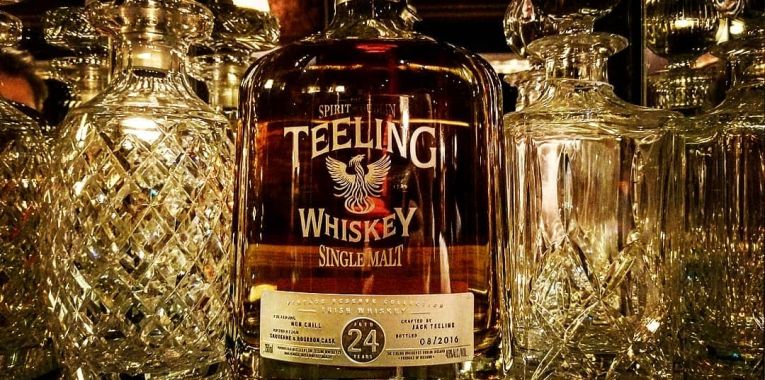
Whiskey Wednesday: Teeling’s 24 Year Old Single Malt Award

Awards are a fickle thing. Being the “best” is an arbitrary construct that essentially says that something followed the rules really well. Without a larger context the sentence “an Irish Whiskey wins best single malt in the world for the first time” doesn’t carry any meaning even if it is 100% factually accurate. Which it is. 

In March of 2019 the World Whiskey Awards, presented by the thedrinksreport.com, announced the Teeling 24 Year Old Irish Single Malt whiskey as the Best Single Malt in the world. Much of the conversation after this announcement was how Ireland had won an upset victory over Scotland, the home of Malt Whisky. Especially since an Irish Whiskey had never won this award before.  

But the World Whiskey Awards have only been handed out since 2012. Meaning there haven’t been many opportunities for an Irish Whiskey to make the list. Also, in 2014 the same awards selected a Taiwanese whiskey as the best single malt so there was already precedent for Scotland not being the top dog. 

It’s easy to see the headlines as mere clickbait but there’s a deeper story. Ireland isn’t traditionally associated with Single Malt whiskey, for a wealth of historical reasons, so they’re not going to traditionally win single malt whiskey awards. And while Irish Single Malt has been made for centuries if anyone was going to win an award it was probably going to be the Teeling’s.

The Spirit of Dublin

The Teeling family first got into the Irish Whiskey game in 1782 when Walter Teeling established a distillery on Dublin’s Marrowbone Lane, an epicenter of distilling at the time. This original distillery was eventually purchased by William Jameson & Co., cousins of the more famous John Jameson. This original distillery was shuttered in 1923 as economic woes began to systematically destroy the Irish Whiskey industry. In fact, by 1976 every single distillery in the city of Dublin had shut its doors. Then in 2015 Teeling reestablished itself in Market Square, not far from the family’s first distillery.  

Now, if you’re paying attention you’re probably asking, “How does a four year old distillery win an award with a 24 year old whiskey?” and the answer reveals another layer.

The new Teeling Distillery was founded by John Teeling and his sons, descendants of good ol’ Walter, and it was not his first time starting new Irish Distillery. In 1985 John purchased an old industrial alcohol production plant in Cooley and began converting it to an actual whiskey distillery. It reopened in 1987 as the Cooley Distillery and was the first “new” distillery in Ireland in at least a decade. 

Over the next several years the Cooley Distillery gained a reputation for quality and excellence in style. One of those being a distinctly Irish style of single malts. The Tyrconnell has always been one of my favorites, winning the International Wine and Spirits (IWSC) Gold Medal in 2004. They also gained a cult following with the Connemara, a peated Irish Single Malt, and the distillery quickly became a go to source for the slowly growing segment of drinkers looking for Irish Single Malt. After winning “Distillery of the Year” from the IWSC in 2008 and then the same award from Malt Advocate Magazine in 2010 the distillery was sold to Beam, now Beam Suntory, in 2011. 

With all of this old Cooley whiskey I assumed that this bottle was old Cooley malt but after talking with people who know more about these things than I do it turns out that this is actually old Bushmill’s Single Malt.

As part of the sale Teeling kept 16,000 barrels worth of whiskey from Cooley and used that stock to establish the new Teeling brand in 2012, quickly followed by the new Dublin distillery three years later.

With all of this old Cooley whiskey I assumed that this bottle was old Cooley malt but after talking with people who know more about these things than I do it turns out that this is actually old Bushmill’s Single Malt. This adds yet another layer to the story as trying to pick apart who distilled, blended, aged, and otherwise had a hand in this whiskey over the years.

Here is a family, accustomed to winning awards winning another award on a whiskey that seems to have a foot in almost every part of the active Irish Whiskey world.

Whatever its providance the whiskey itself is a 24 Year Old Single Malt Irish Whiskey distilled in 1991. It was first aged in ex-Bourbon barrels before being married and further aged in ex-Sauternes casks. How much time it spent in each barrel type is unknown. Only 5000 bottles of 92 proof (46% ABV) non-chill filtered whiskey were produced, meaning that even if it wasn’t the best it’s still one of the rarest and oldest Irish whiskies on the market.

NOSE: Orange Zest, apricot, a slight nuttiness, and a bittersweet chocolate 

PALETTE: Honey and malt, bright stone fruit, leather, caramel and a sprinkle of saltiness 

FINISH: A long mellow finish that leans into the saltiness and the Sauterne finish 

After all that, is this the best Single Malt in the world? I have absolutely no idea. It certainly falls into the rich flavors that I expect from old, indulgent malts yet it also presents a few flavor curve balls and is surprisingly alive which helps it stand out. 

This is a malt that is relying on the past while building a future. It’s caught between multiple worlds and you can almost taste the journey it’s been on. Best may be a matter of opinion meant to generate buzz but the more I’ve learned about where this whiskey comes from the more interesting it’s become.

Whiskey Wednesday: O.F.C. 1985 Vintage Bourbon

Spontaneity is not my strong suit. 

Example A: my girlfriend swears by the deals emailed out daily by Scott’s Cheap Flights. Yet every time a deal lands, I have to ask about time frame, logistics, check on available vacation days, and generally stressed about the fact that booking this trip means that we won’t be able to book some other hypothetical trip that doesn’t yet exist and just like that the deal, and the moment, is gone. 

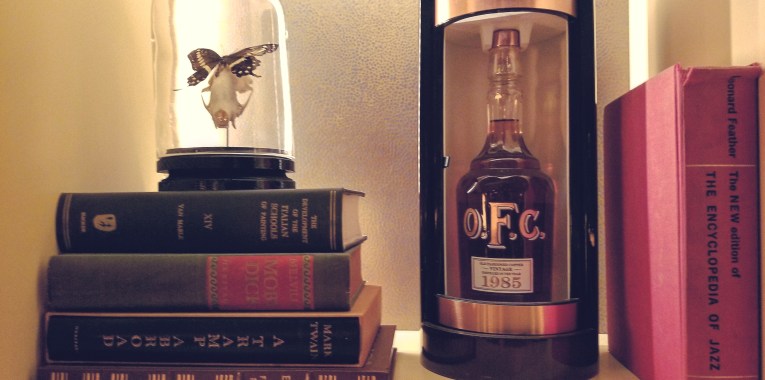
Example B: We received a bottle of the O.F.C 1985 Vintage Bourbon a year ago and I’ve been planning to write about it ever since. So, what the hell is O.F.C. and why has it been on my mind for literally a year? 

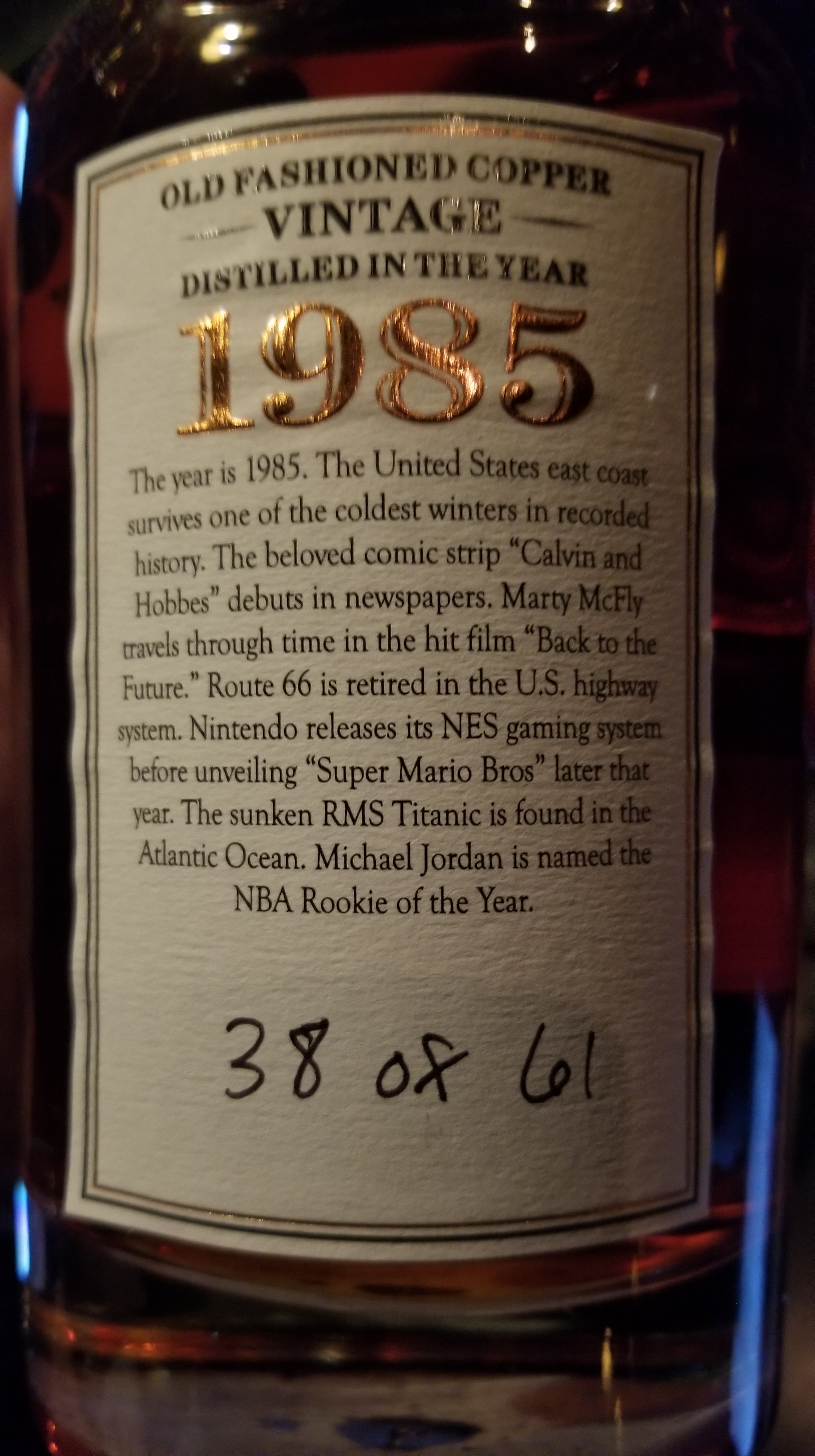
O.F.C. stands for Old Fashioned Copper and is the original name for the distillery founded by Col. E.H Taylor in 1869. Col. Taylor was an expert marketer and helped establish the concept of a Bourbon “brand” as well as being one of the major figures behind the passing of the Bottled In Bond act of 1897. 

The distillery itself was sold to another legend, George T. Stagg, in 1878. There’s an apocryphal story that one of the conditions of the sale was that Stagg could keep the initials O.F.C. but he had to change at least one of the words it stood. This is why the distillery is sometimes called the “Old Fire Copper” distillery. Regardless of the veracity of this claim the distillery’s name was officially changed to the George T. Stagg Distillery in 1904. It was the first distillery to utilize climate-controlled aging warehouses when Stagg installed steam heaters in 1886 and was one of only four Kentucky Distilleries granted a license to continue distilling throughout Prohibition.

The distillery changed hands a few more times in the 20th century before finally being purchased by the Sazerac Corporation in 1992 and its named changed once again. Now known as Buffalo Trace it arguably produces some of the most sought after American Whiskey on the market, including bottles named after both Taylor and Stagg as well as the much desired Pappy Van Winkle line. 

The distillery clearly has experience with special releases but even amongst the plethora of rare bottles the O.F.C. stands out. 

 The O.F.C. is less a special release and more of a time capsule. These are all single barrel, vintage dated Bourbons. Each bottle is sourced from a single barrel and marked with the year of distillation. This makes each vintage completely unique with the mashbill and age varying depending on the bottling. Another intriguing fact is that this line up was originally produced only for charity. 

A literal Time Capsule.

The team at Sazerac and Buffalo Trace are just as savvy marketers as Col. Taylor was back in the day. I have to imagine that when they see bottles of their whiskey selling for thousands of dollars on the secondary market that they looked for a way to capitalize on that market value yet still offer an added bonus. The original three releases were only made available to 200 charities, at no cost, to auction off and help raise money for their cause. It was a great way to turn the image of limited whiskey auctions on its head and raise $1.2 million dollars for charity. It also immediately established the O.F.C. line as a super limited, ultra premium bottle. I was silently jealous of the fact that I would never see one of these bottles yet still applauded the move to raise money for worthy causes. But when the second round of releases was made available for retail purchase I leapt at the opportunity. Especially with the vintage being offered was the 1985. It’s not often you have a shared birth year for your whiskey. 

The 1985 Vintage is one of only 61 bottles to come from a barrel which was stored on the second floor of Warehouse Q. Buffalo Trace says that all of the barrels were tasted over time and removed from the barrel before becoming over oaked and since there is no age statement listed on the bottle it’s hard to tell the precise age of the bottle. This isn’t an uncommon practice, Buffalo Trace has done similar things with Eagle Rare 17 and Sazerac 18 so the whiskey isn’t as much as an oak bomb as you might expect. It is certainly old but there’s no official word on if it was a full 33 years in oak before being bottled. With that in mind let’s dive into the glass: 

NOSE: Rich oak, Dried fruit, and vanilla 

PALATTE: Rich vanilla, dark cherry, prune, oak, and a dark earthiness 

FINISH: Bitter chocolate, a touch of tobacco, and a coating lingering sense of time 

Overall this is an excellent example of old American Bourbon whiskey. It is still alive without being over oaked and has a power of flavor to match up to the power of the years it spent asleep in the barrel. The issue, as always, is the price. The bottle comes in at a staggering suggested retail price of $2,500. When the proceeds were going to charity this number wouldn’t have raised peep from me but now it changes the talking points. 

Is this good whiskey? Yes. Is it for everyone? Absolutely not. It is a special occasion, made so by the fact that it is a living time capsule. You are paying for the time and history as much as the whiskey itself. I will argue that experiences are more important than money but  the value is certainly subjective. I for one am going to savor the fact that I get to experience this bottled moment of time and not take it for granted. 

Drinking Poetic (on a Wednesday): The Los Angeles Sour

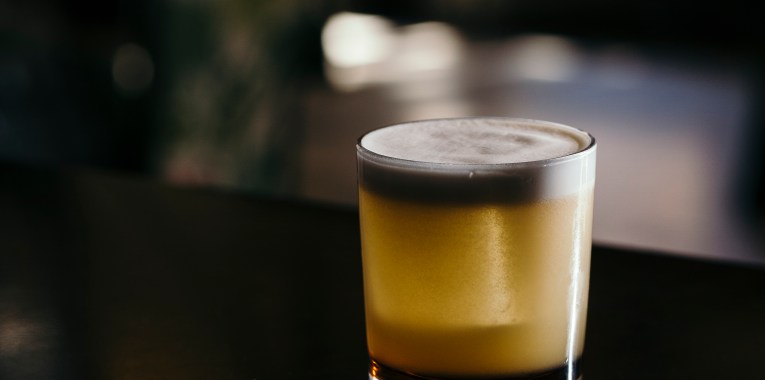
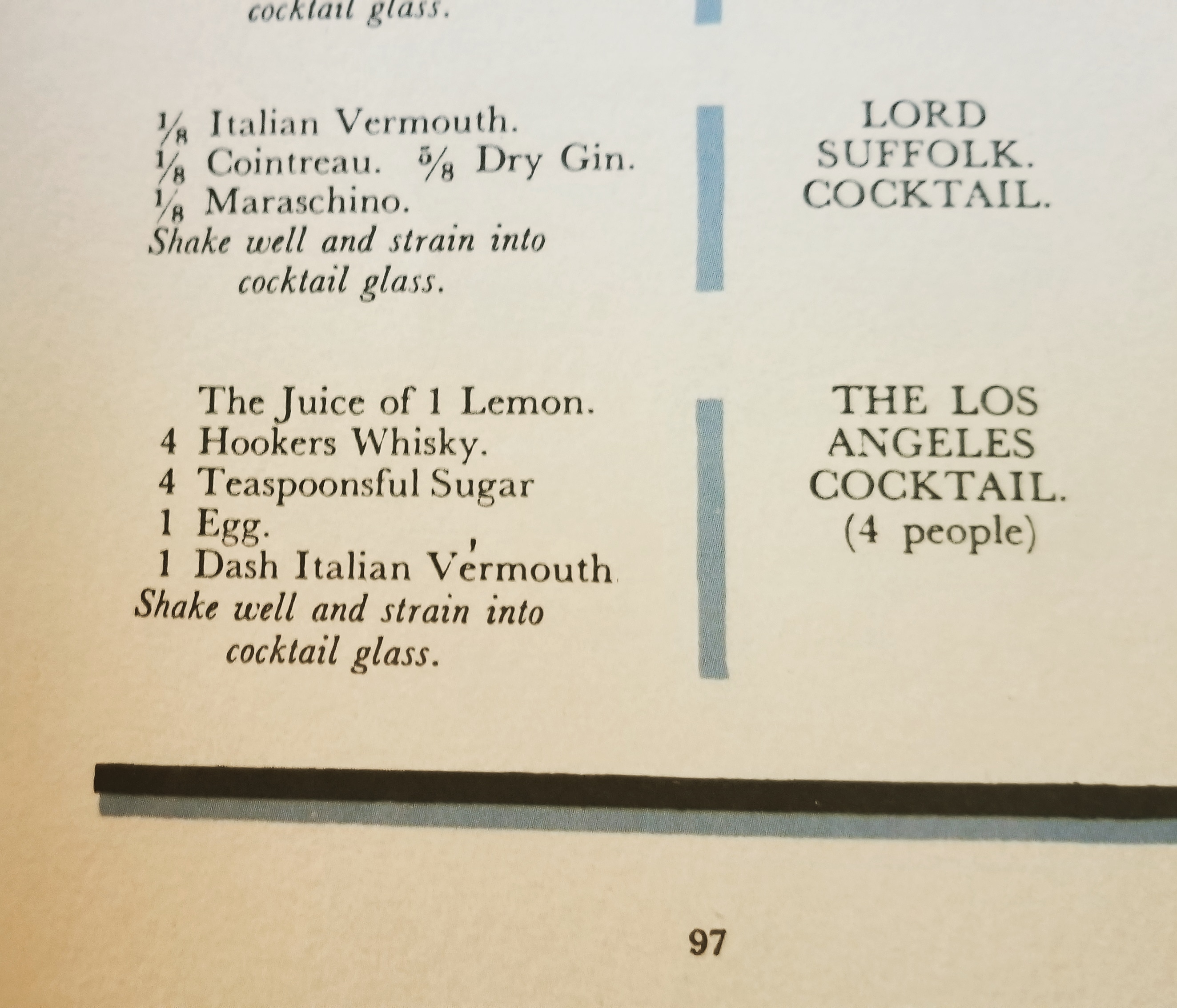
The Los Angeles Cocktail is terrible and is a perfect example of a bad drink that survives because it’s old. 

Buried within the pages of the Savoy Cocktail book, one of the quintessential drink tomes of the Golden and Modern cocktail age, is a drink that reads like a New Yorker describing their “totally real” visit to L.A. There are so many things that irritate me about this drink, the very first of which is that it’s not a damn cocktail!

A irreparably irritating recipe

Despite being listed alphabetically in the “cocktail” section there’s nothing about this drink that ties it to the traditional “cocktail” family of drinks. It contains no bitters and has enough citrus to dilute the base spirit beyond recognition. Apart from that the drink is described as serving four people, uses blended whiskey, powdered sugar, a whole egg, and only a “splash” of vermouth. It’s just a worse version of a New York Sour. While L.A. may have once been the subpar New York City that is certainly not the case any more and I think that’s what makes this drink stick in my craw.  

There are so many little things that are off about this drink that it’s stuck in my head for years. I’ve lived in LA for a decade now and I feel like I’ve earned the right to call myself an Angeleno, so if a drink is going to be named after our city it should be damn good drink. 

The first thing that I wanted to do to adapt this drink was scale it down. A drink designed for only four people is not efficient for service, though considering that L.A. often rolls twelve deep I can’t blame them for trying. Scaled down from four hookers (a measure of 2.5 ozs) to the standard 2 oz jigger of booze, a classic proportion of sour to sweet, and using an egg white instead of the whole egg creates a palatable, if completely forgettable, sour.  

This adjusted recipe reads: 

  • 2oz Whiskey 
  • 1 oz Fresh Lemon Juice
  • .75 oz Simple Syrup
  • 1 Egg White
  • 25 oz Vermouth 
  • Combine all ingredients in a mixing tin. Dry Shake. Shake With Ice. Double Strain. 

The next sticking point is that there’s nothing about this drink that actually says “L.A.” And while the same can be said about the New York Sour, which may have actually originated in Chicago, if we’re going to improve a drink why not make it more representative? With this in mind the inoffensively mediocre powdered sugar was swapped out for a 50 brix Piloncillo syrup. Pilconcillo, or panela, is an unrefined, whole cane sugar typical of Latin America. It is made from the boiling and evaporation of sugar cane juice. It is commonly used in Mexico and has more flavor than brown sugar which is often white sugar with a little added molasses. This gives the drink a richer texture while also tying it into the Latino heritage of Los Angeles. 

Elijah Craig and Dubonnet Improved Los Angeles Sour

Next up was the spirit base. The richer piloncillo syrup completely overwhelmed lighter whiskies so I turned to my trusty baseline: Elijah Craig Straight Kentucky Bourbon. This added a delightful tannin and vanilla note but was not playing nice with the vermouth and lemon. So, I traded the vermouth for the recently reconstructed American version of  Dubonnet Rouge. Served over a large rock with a float of the Dubonet the flavors were able to develop over time and the extra bitterness from the quina in the Dubonet helped tie the drink together. I actually used this drink for the regionals of the Heaven Hill Bartender of the Year competition this year and it’s absolutely delightful.

L.A. Sour: 

  • 1.5 oz Elijah Craig Small Batch 
  • .75 oz Piloncillo Syrup (50 Brix) 
  • .75 oz Fresh Lemon Juice 
  • 1 Egg White 
    • Dry Shake. Double Strain over one large ice cube. 
  • Float .75 oz Dubonnet Rouge  

There’s no practical need to go further than this. The drink is delightfully crowd pleasing, recognizable, and recreateable. I highly recommend making this version of the drink yourself.I couldn’t set the drink down though. It kept burrowing through my brain begging for attention. 

I have a natural disregard for “blended” whiskies. I find them light and forgettable but that doesn’t have to be the case. There are some beautiful blended malts  and grain whiskies on the market, and not all of them are Japanese. So, I broke down the components and built up a house whiskey blend to complement the flavors.  

It starts with an ounce of Bushmill’s 10 Year Single Malt. Irish Malt is lighter and fruiter than the more familiar Scotch malts while being more affordable than the Japanese counterparts. The Bushmills 10 also grants a solid barrel note and the vanilla that was coming from the Elijah Craig. Next, I wanted some spice and proof without overwhelming the delicate Irish malt so I added a half ounce of Old Overholt Bottled In Bond Rye. This added an oiliness, viscosity, and tannin that helped dry out the drink. 

Finally, to lengthen out the blend, a half ounce of grain whiskey was added. The Nikka Coffey Grain would have worked wonderfully, but the pricing and recent announcement that it was being discontinued shut that experiment down. Though I have recently heard that it is only discontinued in Japan with plenty of stock in the U.S. remaining so it may be worth revisiting. In the mean time I headed back to the Emerald Isle where the Teeling Single Grain offered a compliment to both the Bushmill’s Malt and the Overholt Rye bite.

This house blend was delightfully robust but the Dubonnet, instead of being a unifying factor, was now coming across as thin, just like the vermouth in the original spec. The drink needed something richer while still maintaining that vermouth bitterness and acid. It needed to be concentrated. With that in mind I turned to my favorite toy, the rotovap. Running Dolin Rouge through the rotovap produced two wonderful products.  

First a clear, concentrated vermouth flavored distillate. Second, a concentrated vermouth syrup that was left behind as the more volatile compounds were syphoned off. Both of these products are lovely, especially the syrup. However, I couldn’t imagine using this process to produce enough to maintain the volume of service that we do at NoMad LA so I went back to the drawing board. 

With this concentrated Vermouth reduction as a benchmark we found that a traditional stove top reduction with 50% sugar by weight produced a vermouth syrup that was, as my father would say, “Good enough for government work.”  

All the elements were now in place. Here was a drink that payed homage to its vintage roots, added in elements of the city it’s named for, and incorporated modern techniques, culinary thoughtfulness, and contemporary palettes and drinking styles. I’m also incredibly proud of the fact that this is the only drink I’ve ever put in front of our Bar Director Leo Robitschek that he had no tweaks for.  

The Los Angeles Sour now reads on the menu at NoMad LA as: 

  • 1 oz Bushmill’s 10 Year Single Malt 
  • .5 oz Old Overholt Bottled In Bond Rye Whiskey 
  • .5 oz Teeling Single Grain Irish Whiskey 
  • .75 oz 50 Brix Piloncillo Syrup 
  • .75 oz Fresh Lemon Juice 
  • 1 Egg White 
    • Dry Shake. Shake with Kold Draft Ice. Double Strain over one large Ice Cube
  • Float .75 oz Dolin Rouge Vermouth Reduction 

I do have to admit I’m cheating for the sake of a story. Leo did have one critique. I originally pitched the drink with aquafaba, (a vegan egg white substitute made from beans), instead of egg white because lord knows L.A. loves its dietary restrictions. Both versions of the drink past muster but the egg white variation felt more robust. But because of this original thematic pitch, and aa cheeky nod to L.A. drinkers, the Los Angeles Sour will always available “vegan upon request.”

Whiskey Wednesday: Dry(ish) January

On January 16th, 1919 Nebraska became the 36th of the 48 states that composed these United States of America at the time to ratify the 18th Amendment thus beginning the “noble experiment” that was Prohibition. While Congress didn’t ratify the Amendment until January 29th, and the sale of alcohol wasn’t made fully illegal until January 20th, 1920, it was this date and this vote that set us inexorably down the dry path. And every “Dry January” I’m reminded why I so fundamentally disagree with that decision.

This year over 4 million Americans, including myself, are participating in Dry January, a self inflicted month long Prohibition. After the often booze soaked holiday parties, family visits, and New Year’s parties it makes sense that many people would be feeling the hangover and want to start the New Year with a clean slate. Advocates of Dry January point to increased energy and better sleep, as well as claims that a month long absence of drinking can help reverse some of the damage done by long term drinking. Yet despite these benefits I find myself nearly every day saying “Dry January is dumb.”

I grew up Catholic. Once a year, during Lent, everyone I knew would give up one “vice.” It was usually something absurdly innocuous like candy or soda, but there were a fair amount of people in my community that would go sober for the season. However what I noticed about myself and the people around me, was that this was less of a sacrifice or abstinence but more of an obligation. We weren’t giving up these habits because we were looking for change but rather the illusion of self gratification.

It is self reflection, rather than self prohibition that I would argue for.

As the days ticked down the forbidden substance became more alluring until finally on Easter there was an explosion of indulgence. Children who had been starved of sugar for a month were given literal baskets of candy, those on diets were treated with a feast at Easter Brunch, bottles of wine were cracked, beers were popped, and the spirits did flow.

Now don’t misunderstand, I fully support the idea of self improvement and of examining one’s own personal relationship with their vices and habits, especially when it comes to alcohol, but the self reflection needed for true understanding and growth always seemed lacking from these yearly rituals. People were controlled by the absence of their vices nearly as much as they were beholden to those vices.

I’ve noticed this in my own experimentation with Dry January, which if I’m being honest is really just more of a “Drier” January. This isn’t from lack of will power either, it simply because life is complex, which has always been: a much needed long weekend in Palm Springs with the girlfriend called for a few martinis over a steak dinner, a celebratory dinner at a cocktail competition deserves a communal toast, a complimentary upgrade to first class on a flight cross country nearly demands a glass of wine, and that’s just the first two weeks of the year.

I’ve found myself in these situations actively denying myself from participating in moments of community because of a hardline rule about that is ostensibly about improving my life. And I have learned from my time sober. Particularly, I enjoy realizing how much casual drinking I participate in, and noticing how much even a single drink effects my body. It’s also thrown into focus those times where a drink feels warranted and I’ve deliberately made decision to partake in those communal experiences without feeling like I’m betraying the ideals of my time sober. Yet I have remained dry on more days than I’ve been wet, and it’s a choice I want to make every day.

It is this self reflection, rather than self prohibition that I would argue for.

Instead of “Dry January” might I suggest the “Deliberate Year”

The proponents of Prohibition argued that it would reduce violence, organized crime, promote public health, and generally improve the morals of the country. History proved them pretty drastically wrong primarily I believe because people had no choice. People were not choosing to reduce their consumption to increase their “overall moral character” but were being forced into it, in the same way my family and friends felt obligated during Lent, and over 4 million American’s feel locked into a New Year’s resolution.

I’ve always argued that going dry is untenable because there’s this dinner coming up, or this trip happening, or a myriad of other excuses but that paints a picture to starkly in black and white. It’s what happens in the grey spaces between where change can happen, because there is nothing wrong with raising a glass for a thoughtful reason. So, instead of “Dry January” might I suggest the “Deliberate Year” where we take the time to examine why we want something, why we derive pleasure from it, and adjust our relationship with ourselves rather than our vices.

Sounds exhausting doesn’t it? I think I need a drink…

Whiskey Wednesday: Repeal Day

With all the excitement, food, and celebrations that are crammed into the space between Thanksgiving and New Year’s Day you can be excused for not noticing that noted scoundrel and always bartender Jeffrey Morgenthaler managed to squeeze a completely new holiday in there: December 5th, Repeal Day.

Repeal Day is the Hallmark Card Holiday of the booze world.

Repeal Day marks the anniversary of the passing of the 21st Amendment to the U.S. Constitution on December 5th, 1933. The 21st Amendment acknowledged that the previous 13 years of alcohol prohibition were in fact a terrible idea. It reinstated the constitutional right of every man and woman (of legal drinking age) in these United States to raise a glass in celebration, in mourning, or simply because its Happy Hour damn it. Wander into any “serious” cocktail bar on December 5th and odds are you’ll find a whole Repeal Day cocktail menu.

But here’s the thing, Repeal Day is the Hallmark Card Holiday of the booze world.

Hindsight, even when drinking, is still 20/20. Through the lens of history it is easy to see that Prohibition was an outright failure but its repeal brought its own host of issues that still reverberate 85 years later.

According to proponents like Molly Hatchet, Prohibition was going to reduce drinking, reduce domestic violence against women and children, reduce crime AND cut government spending. That’s a tall glass that never got filled.

Spending, taxes, and crime, especially organized crime, all took an uptick. People actively flaunted their lawlessness to the point that a wealthy Prohibitionist by the name of Delcevare King sponsored a contest to create an appropriate word to describe these “lawless drinkers.” The winning word was independently submitted by two different people and the term Scofflaw was born followed shortly thereafter by a mixed drink of the same name.

Prohibition broke bartending…And then even worse for the profession of bartending, Prohibition ended.

Prohibition also indirectly gave birth the Federal Income Tax. Before Prohibition 30-40% of the Federal budget was generated from taxes on alcohol. A Federal Income Tax was technically un-Constitutional and needed a Constitutional Amendment to make it legal. The 16th Amendment legalizing the Federal Income tax was passed in 1913 with direct help from Prohibitionists.

I also feel like it caused a cultural disconnect. Every civilization has learned to ferment and distill eventually developed their own native spirit and their own drinking traditions to go with that spirit. These traditions are passed from parent to child and a respect for alcohol becomes a part of everyday life. Prohibition pushed alcohol into the dark, demonized it yet also made in alluring. You can still see this destructive relationship play out in our modern binge drinking habits.

On the other hand, we are a nation of immigrants. A hodgepodge, mish mash of different cultures and booze. Maybe Prohibition just sped up the naturally occurring separation. The Italians know how to drink amaro, the French know how to drink brandy, and the Scandinavians know how to drink aquavit but what the hell does the English colonist do with any of those? The art of mixing drinks is a distinctly American art and I’ve always believed it had it’s roots in the Irish barman having no idea what to do with the Dutch Genever and the French Vermouth so fuck it, let’s mix it together until it’s delicious.

Which leads naturally into Prohibitions effect on the craft of tending bar. Prohibition broke bartending. While popular culture glorifies the idea of the speakeasy and the great mixed drinks of Prohibition the truth was that while people drank gallons at speakeasies what they drank was terrible.

Before Prohibition bartending was a skilled and respected trade. Bartenders would apprentice and learn their craft just like any other skilled tradesman. Now and entire profession was made illegal and those that knew how to bartend moved overseas and taught the rest of the world how to mix drinks.

For 13 years the trade languished with no one to train the next generation and basic skills and knowledge was lost. And then even worse for the profession of bartending, Prohibition ended.

Scofflaw:

2 oz Rye Whiskey

.5 oz Dry Vermouth

.5 oz Grenadine

.5 oz Lemon

2 Dash Orange Bitters.

Shake with Ice, Double strain into a Sour Glass

The moment selling booze was legal again everyone wanted to open a bar, which means you need bartenders. The old skilled tradesman had moved on. There were no young professionals so it became a job for amateurs. The end of Prohibition was arguably the worse thing that could have happened to the American “mixology” tradition. 80+ years later and the professionalism that was taken for granted is still viewed as aloof or fussy today.

And all of this is before we even get into the how the disruption in alcohol production eventually to lead watered down, blended whiskies and eventually the rise of gin and then vodka over the US’s own native spirit: Bourbon. A cascade effect that changed how an entire culture drank. Prohibition and the compromises that needed to be made to for its repeal still shape how, where, and what we drink to this day. (Not to mention the abhorrent three-tiered system.)

Yet, because of Repeal Day I’ve had steady, good employment for most of my adult life and have gotten to travel the world all because I can but booze in a glass in a way that makes other people want to drink it.

So, should we be celebrating? Absolutely. But when you find yourself saddled up to the bar this December 5th ask yourself, are you celebrating some mythological golden age through boozed tinted glasses? Or are you celebrating the triumph of personal freedom and rational thinking? Either way, once you’re done with the inevitable brand-sponsored Old Fashioned throw the barkeep a curve ball and see how good a Scofflaw they can make.

Open Bottle: Nineteen Eighty-Four JURA

“Who controls the past controls the future. Who controls the present controls the past.”

Released in 1949 George Orwell’s masterpiece Nineteen Eighty-Four often feels as alive and resonant as it must have when it was first published. Reading the headlines it feels like doublespeak, Big Brother, and New Speak have leapt from the lexicon of the theoretical into the mundanely of reality.

What was once meant as a cautionary tale has instead become the blueprint for how entire organizations operate.

The world has become vastly interconnected since 1984 and people are starting to realize how small a piece of the global whole they actually are. Some have risen to the challenge and sought to make their corner of that cold, distant expanse warm and welcoming. The seek to grow their communities.

Others, however, have become jealous of their small portion and rather than growing they shrink. They shrink from responsibility, from compassion and not only do they personally shrink they seek to diminish the world around them. To force the world to be smaller, leaving no room for those that are different or for those who seek an equal share in the world in which we must cohabitate.

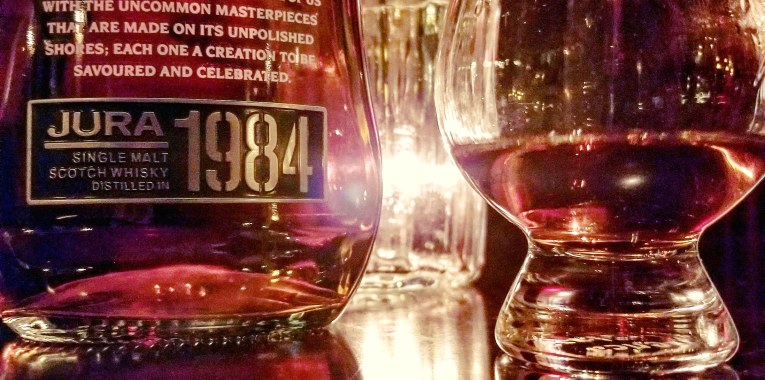
Not exactly light, whisky sipping, thinking but these are thoughts that are constantly on my mind these days and were brought into sharp focus when presented with a dram of Jura’s 1984 Edition.

The Isle of Jura lies off the North-East shore of Islay, has one road, one pub and one distillery, the eponymous Jura. Orwell described the island as “extremely unget-at-able” which remains very true to this day. It was at the “unget-at-able” locale that Orwell wrote the bulk of Nineteen Eighty-Four while incredibly ill with tuberculosis fro 1947-1948. It’s this act of creative output that Jura is honoring with the 1984 Edition.

Casked in 1984 and bottled in 2014 this 30-year-old single malt was aged in ex-Bourbon, Amoroso (cream) sherry, and Apostoles Oloroso sherry casks. Only 1,984 bottles were released world wide making it a rather limited release. This is a lot of attention to detail to pay homage to an event that happened when the distillery didn’t exist.

The distillery was built in 1810 but fell into disrepair at the end of the 19th century. It wasn’t rebuilt and operational again until 1963. So there is clearly a bit of a marketing gimmick tied into this release, which is nothing new to the spirits world, and unlike most gimmicks this whisky is a phenomenal product.

NOSE: The nose is rich, redolent in those sherry aromas with nutmeg, dark dried fruit, raisins, and a noticeable touch of the sweet.

PALETTE: Deep cherry and candied orange peel. There’s also a hint of roasted peaches with a large dollop of honey and, of course, oloroso sherry.

FINISH: The dram has a medium finish that lingers with a surprising amount of spice for how sweet it starts, leaving the dry baking spices and a touch of dessert.

I don’t care what your marketing angle is as long as it’s true and the product is good. And this product is exceptional. The story being crafted is a bit forced but it is also clearly the result of a small community taking pride in its past and continuing to build for its future.

It is perhaps unfortunate that Orwellian thoughts float through my mind while sipping on this malt but then again the age that we live in requires us to be active participants in the world around us, even when just sipping on a whiskey.

Education is the best tool we have to enact change and I, for one, would not have known that George Orwell wrote Nineteen Eight-Four on Jura with out this bottle. With out this bottle I wouldn’t have spent a week researching and reflecting on the themes of a book I haven’t read since high school. Not only was I researching but I was also reexamining these themes in the light of the modern world and my adult experiences.

We must stand up, we must think for ourselves and not simply walk the party line. We must not become orthodox for, “Orthodoxy means not thinking–not needing to think. Orthodoxy is unconsciousness.”


P.S. VOTE

Drinking Poetic: The Old Fashioned

“I prefer things the Old Fashioned Way!” said every generation ever as things changed around them.

The Old Fashioned is my favorite cocktail. It appeals to me on such a deeply intellectual level that it rivals the psychic imprint that Lord of the Rings had on me in the third grade. And the imprint this simple drink has had on the world of cocktails is just as deep. But what exactly is an Old Fashioned?

Due to the past 15 years of the Cocktail Resurgence and the dissemination of information on the Internet, most bartenders outside of Wisconsin will tell you that an Old Fashioned is a basic cocktail comprised of Spirit, sugar, bitters, and water/dilution. If they’re particularly good they might ask if you have a preference on Bourbon or Rye but most would balk at the idea of making it with a different spirit or, god forbid!, serving it up instead of on the rocks. Yet all of these are part of the innumerable variables that are a part of the drink’s history.

Over the past 200 years the drink has survived, thrived, been basterdized, been reinvented, reimagined and misunderstood. But why does it work?

An Old Fashioned is quite simply the Ur-Cocktail. The original, OG, never to be replicated, cocktail. Once upon a time, when words and facts still meant something, a cocktail was just one of many mixed drinks families that each had their own rules and regulations for entrance to the family retreats.

The original definition of “cocktail” first appears in a newspaper in Hudson, New York on May 13th, 1806. In answer to the question, “What is a cocktail?” editor Harry Croswell responds, “Cock-tail is a stimulating liquor, composed of spirits of any kind, sugar, water, and bitters—it is vulgarly called bittered sling, and is supposed to be an excellent electioneering potion, in as much as it renders the heart stout and bold, at the same time that it fuddles the head. It is said, also to be of great use to a democratic candidate: because a person, having swallowed a glass of it, is ready to swallow any thing else.” Sounds familiar doesn’t it?

While later generations of bartenders would claim the drink was invented at The Pendennis Club in the 1880s the etymological roots of the drink have always been more believable to me. As you may imagine drinks were made very differently in the early 1800s from how they are now, no matter how “pre-Prohibition” a place claims to be deep down we know it’s not the same. Now imagine that you actually did know what it used to be like and all these new changes, changes like plentiful ice and clean water for making simple syrup, are ruining your favorite drink. So instead of getting it done with all these new age techniques you would ask for your cocktail “the old fashioned way.”

It all starts with that base spirit. Forevermore this drink will be linked to whiskey but it works with any base spirit, any at all.

Over the past 200 years the drink has survived, thrived, been basterdized, been reinvented, reimagined and misunderstood. But why does it work? Why has this drink lasted through the centuries why so many others have disappeared to never be drunk again? This is what triggers my intellectual arousal.

What this drink does is trick our brains. It takes basic tools, and basic culinary science, and polishes the rough edges off of a spirit allowing the heart and magic that is the core of it’s flavor. Unlike a sour or a daisy that seeks to fully incorporate a wide range of flavors into one cohesive whole, essentially masking the alcohol, this seeks to enhance the elements that are already there. It highlights the spirit.

n-POURING-WHISKY-large570.jpg

It all starts with that base spirit. Forevermore this drink will be linked to whiskey but it works with any base spirit, any at all. Into the glass goes a fiery, untamed, uncultured pour of pure unadulterated water of life in what ever form you please. The base is laid and everything that emerges from this drink is birthed from this primordial ethanol ocean.

Bitters.jpgNext is added a few short dashes of bitters. Bitter is an interesting flavor. Science still debates why exactly we taste bitter but the general consensus is that we evolved the capacity as a way to detect poisonous plants. This is also why a little bitter goes such a long way. Our brains are hardwired to recognize the bitter before anything else. It doesn’t matter how mouthwatering delicious something is if it’s going to ultimately kill you. Now couple this with the fact that pure alcohol is actually poison but doesn’t actually taste like anything. What we often recognize as “alcohol” is really just the upfront burn. This touch of bitter is a stage magician. We’re so focused on the bitter that we don’t notice the alcoholic burn that it just slipped past our taste buds.
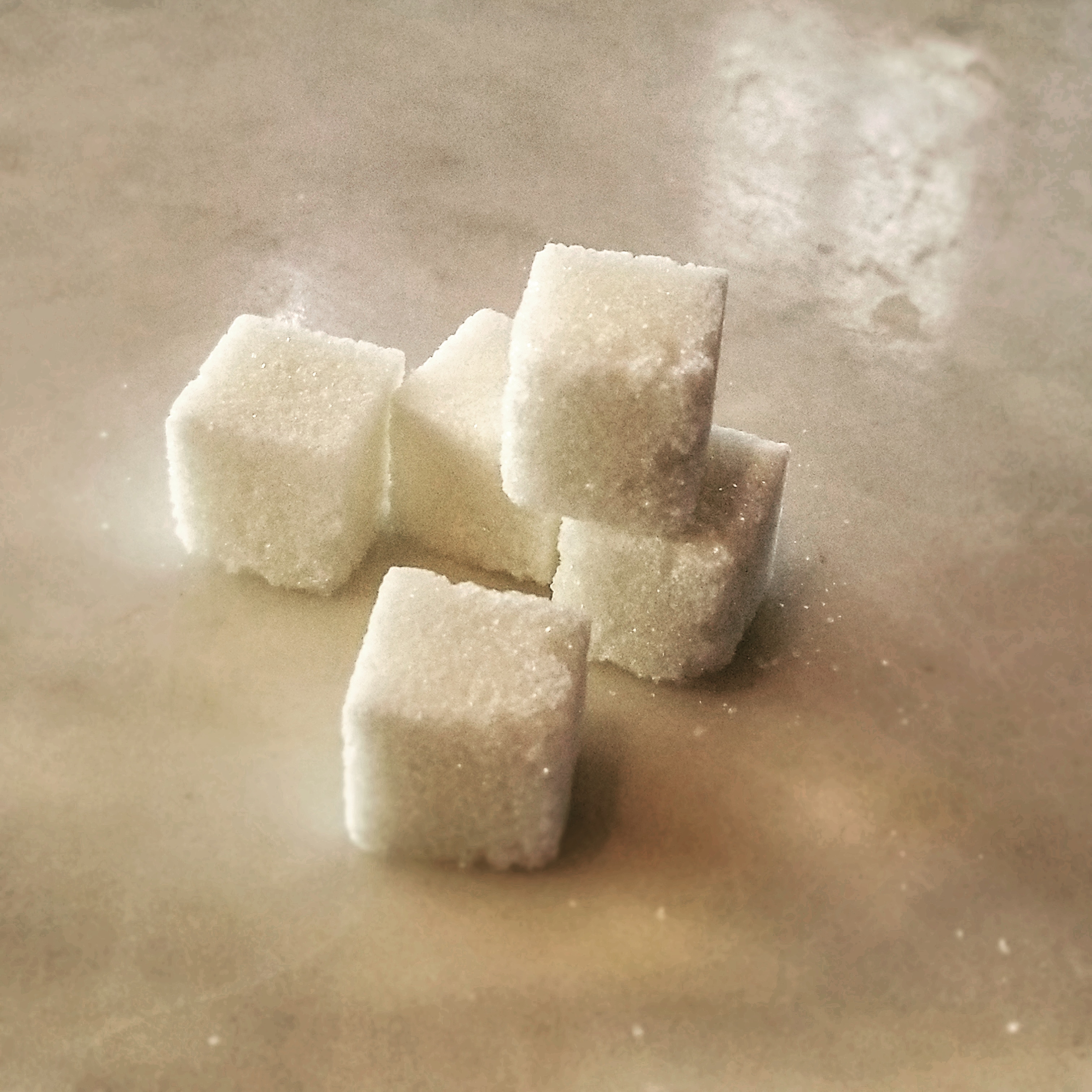
Sugar.jpg

But bitter tastes are unpleasant and while it only takes a splash to fool our monkey brains the end drink shouldn’t taste bitter. This is where a spoonful of sugar helps the medicine go down. A touch of sweetener rebalances the added bitter element. It should not be sweet, it should not be cloying, it should be just enough to balance the flavor scales.

Ice.jpgNext up is dilution. While alcohol itself has no flavor it acts as a great transport for flavor. Ethanol caries those flavors molecules in a magical solution but it keeps them locked up tightly. A little dilution opens those locks and lets the heart, the true flavor burst through.

Then the drink is finished the same way it’s started with a touch of aromatic, these days in the form of expressed citrus oils to enhance the newly awakened flavors but in the drinks proto-form nutmeg was also used. The idea is once again to sneak past that alcohol burn, except this time we’re pulling a fast one on our olfactory sense.

All of this combines for the perfect cocktail. All of the parts are interchangeable. Change the sugar for vermouth and you end up with a Manhattan or a martini. Swap the dash of bitters for a grand bitter like Campari, a bottled form of that bittersweet, and you end up with a negroni or a boulevardier. Or simply take the sugar, turn it into a simple syrup, fully dilute the cocktail and serve it up and you end up with a New Fashioned Cocktail. The very process and innovation that the first drinker shook their fist at and declared that they wanted an Old Fashioned with their muddled sugar cube and ice IN the glass.

So, after all that how do I drink my Old Fashioneds? Intellectually.

But also with a small brown sugar cube soaked with Angostura bitters, just enough to saturate the cube, then dropped into the bottom of a rocks glass. Add a splash of soda water, just enough to allow the bitters soaked sugar to be easily and fully muddled. Add two ounces of Bonded Rye whiskey, a large ice cube, stir, and then express the oil from a small slice of lemon and of orange over the top. Sip, drain, and repeat until the dawn comes.