
It’s a distinctly American thing to look at a creation of another group or country and say, “Yeah, I can do that.” We’re big fans of adopting ideas from others, filtering through our own cultural lens, and then exporting those back to the rest of the world. The cocktail is just that, and even our quintessentially American Bourbon whiskey has its roots in immigrant traditions being adapted to our local grain sources.
And it’s hard to scream about cultural appropriation of Japanese Whisky when Masataka Taketsuru lifted the blueprint straight from Scotch makers, even going so far as to be told he was to dogmatic about doing things “the Scottish way.’ But adapting and borrowing is exactly what St. George is doing with their Baller Single Malt Whiskey. And they’re totally aware of it. Distiller Lance Winters honestly describes the Baller as “a California take on the Japanese spin on Scotch whisky.” A California take on old world traditions is kind of the St. George trademark.
Jorg Rupf founded St. George Spirits as an eau de vie distillery in 1982 and in the 35 years since then has developed a massive reputation for quality and experimentation.  Although the eau de vies are still a major part of the distillery, the portfolio has expanded to include such wide sprawling products as a California Agricole Rum, an Absinthe Verte (which became the first commercially available American Absinthe after the lifting of the 1912 ban), as well as numerous gins and the Hangar One vodkas which were sold to Proximo in 2010. St. George first entered the whiskey game in 1996 when Jorg hired Lance Winters, a former nuclear scientist and brewer, for a one-month trial. Twenty years later Lance is still experimenting and Jorg is delightfully retired.
The following year, Jorg and Lance began distilling Single Malt Whiskey which had its first release in 2000. Back then no one knew would to do with a Scotch-style American made whiskey. Fast forward 17 years to Lot 16 of the Single Malt and drinkers are almost as confused as to what to do with an American Single Malt but the tide seems to be turning.
Distilleries around the country formed the American Single Malt Commission in 2016 with the goal to “establish, promote, and protect the category of American Single 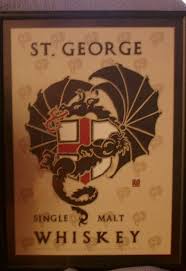 Malt Whiskey.” Technically, according to the American government there is no legal definition of what constitutes an ”American Single Malt.” However, this lack of consensus didn’t stop drink giant Remy Cointreau from purchasing the American Malt makers at Westland Distillery in December of 2016. Whether that speaks to a growing awareness of the category, or to an international audience more familiar and accepting of products labeled “Single Malt” remains to be seen.
The uncertainty also hasn’t stopped the whiskey from winning awards either. Both the Westland Malts and the St. George Malt are some of most awarded American Whiskies, with the St. George Malt even appearing in 1001 Whiskies You Must Taste Before You Die as what “might just be the best U.S. single malt available today.” But again, with the category being what it is that’s very nebulous praise.
People are clearly drinking it, and even reveling in the experimentation that this grey category has. And the St. George Baller is a prime example of this experimentation.
Distilled from 100% American barley and distilled on the eau de vie pot stills it is then aged for 3-4 years in ex-Bourbon and French oak wine casks. The whiskey is then filtered through maple charcoal and finished in casks used to aged St. George’s house made umeshu. Umeshu is a Japanese style of plum liqueur, and St. George being St. George they make their own in house entirely from California grown ume. About 1,600 bottles were released in 2016 with about the same on track for a 2017 release. It’s California identity clearly shines through, especially with it being a California only release. It’s certainly intellectually interesting.
The whiskey itself is bottled at 94 proof. The plum is incredibly noticeable on the nose with a touch of white pepper leading into a crisp, sharp taste on the palette with a massive dose of white pepper and spice before finishing with a fruitiness and the expected chocolaty, malt sweetness. Japanese whisky this ain’t. It’s more aggressive and while it’s certainly layered the edges are sharp and noticeable. It does really open up with the addition of water, which is what its makers had in mind. They designed this with whiskey highballs in mind, hence the name baller, which is yet another thing they have in common with their Japanese inspiration.
In the end, I think its label, which features the legend of St. George reimagined as a samurai based on an original watercolor made to emulate a woodcut style, best sums up this whiskey. It is an old tradition reimagined through multiple cultural lenses, that is artistically appealing but weather it’s a style that bears fruit is yet to be seen.
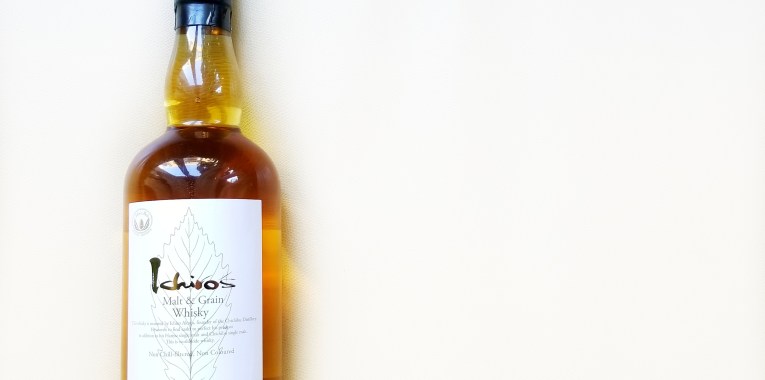
 Where most of the master blenders and distillers in the Japanese whisky world are rather unassuming and reserved, every interview and Google search for Ichiro is required to use the word ‘rock star’ to describe him. The Akuto family had been making sake in Chichibu since 1626 and transitioned into the sochu and whisky world in 1941 when Ichiro’s grandfather opened the Hanyu distillery. The distillery ended up enjoying considerable success during Japan’s postwar whisky boom.
 Nearly 10 years later there was a complete deck of 52 “Cards” complete with two Jokers. According to interviews Ichiro never meant to release a complete deck. The idea was to originally release four single casks and working with a friend of his, who was also a designer, they struck upon the idea that playing cards had four suits, and so a legend was born.(A legend that sold as a complete set at auction in 2015 for $400,000.) Not as impressive as the individual bottle price of the Yamazaki 50 but still amazing for a collection of whisky that was so unwanted a mere 15 before the sale that the distillery that produced it had shuttered its doors.
 The first Chichibu whisky debuted in 2011, a mere three years after the distillery started operation. Adding to his ‘Whisky Rock God’ persona every bottle that rolls out of Chichibu is labeled as an “Ichiro’s Malt Chichibu” with a sub name describing the release. This first release is appropriately dubbed, “The First”, and the whisky was aged in a combination of ex-Bourbon and Japanese Mizunara oak. Only 2,040 bottles were made available and it cemented Ichiro, and Chichibu, as a major player not just in the history of Japanese Whisky but also in its future. I remember drinking this whisky and being blown away by the delicacy and elegance it presented at a mere three years and at 118 proof. There were nectarines, vanilla, a touch of cinnamon as well as an earthiness, and green apple that fed into the maltiness.
 orange weaving through a light sweetness which leads into a large roasted nut, vanilla, white pepper feel, then a touch of tobacco and gingerbread on the tongue that leaves dried tropical fruit and vanilla as it disappears into a medium length finish.
 Suntory founder and first master blender, Shinjiro Torii and Masataka Taketsuru, “The Father of Japanese Whisky”, founded the Yamazaki distillery in 1923. Taketsuru had studied organic chemistry in Glasgow and was found by Torii after he made inquiries to Scotland looking for a whisky expert. Torii was told there was already one fully qualified in his own country and the two worked closely to build the Yamazaki distillery. However, the first whisky produced by the new company, dubbed the Suntory Shirofuda was a resounding failure. The Japanese drinkers preference for lighter, blended whiskies was blamed as well as Taketsuru’s fixation on doing things the “Scottish way.” Taketsuru was shunted away from the distillery to a beer factory where he served out the remainder of his ten year contract before leaving to start the Nikka distilling company, Suntory’s biggest rival.
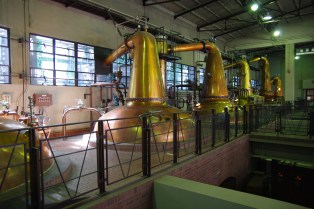 total to 12, which increased capacity about 40%. The added capacity didn’t prevent them from releasing the Non-Age Statement Yamazaki and Hakushu Distiller’s Reserve the following year just as talk of the worldwide whisky shortage began to surface. Also in 2014, Suntory purchased Beam, Inc. (home of the eponymous Jim Beam Bourbon) for $16 billion forming Beam Suntory, the third largest spirit producer in the world. This acquisition greatly expanded Suntory’s distribution lines spreading the already thin stocks of Yamazaki even thinner.
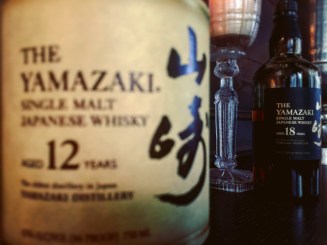 While the 12 year was once the perfect introduction to Japanese malt, before the price and the hype got in the way, it was the Yamazaki 18 year that always stirred my soul. This time roughly 80% Sherry casks with ex-Bourbon and Mizunara making up the other 20%. Here the promise of the 12 year has evolved into a stately elegance. The fruit dries out, turning to raison and apricot with dark chocolate and berries on the tongue with a touch of spice on the long march to the finish.

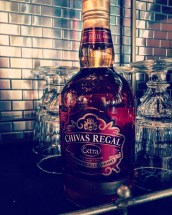 On a more approachable scale they’ve started producing the Chivas Regal Extra, a Non Age Statement blend designed to recreate the flavors of the original Chivas Regal 25 Year Blend that relies heavily on Olorosso Sherry aging. Then there is the new Mizunara.

 reflected the nature of the whiskey with a mellow, retro 70’s design. Simple. Clean, but not terribly exiting. And that’s where the change is happening to Pig’s Nose. The packaging is being aggressively overhauled to turn a few more heads. Nothing inside the bottle is changing, but with new liter bottles and a label that still looks classic yet undeniably more hip. It may seem like a small change but it is one that will get people to look past the outside to actually try the whiskey on the inside and ends up being the first label change in a long time that I actually enjoy.


 college not because it was phenomenal stuff, but because it was affordable. I moved on as a slight increase in disposable income allowed me to try other things yet here I am unabashedly keeping it in a decanter of honor on my back bar. And I’m not the only one, Ancient Age has a massive cult following for its affordability and quality, at least its quality in comparison to its price. But why?

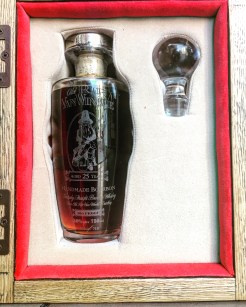 25 years old and 100 proof this Bourbon carries serious weight. The nose is of dried oak, dark coffee, and just a touch of stone fruit. The finish is almost nonexistent but it doesn’t matter because the mid-palette travels for hours. White pepper, caramelized oranges, deep ripe cherry, of course a vanilla and caramel note but what’s interesting is how well this walks the line massive oak flavor without being over oaked. Right when I was expecting it to dive into wet wood and raisins it instead let the pepper burn for another moment before evaporating completely on the tongue. This whiskey is better aged than the standard 23, and I’d say it’s at least as lively as the 20 year old.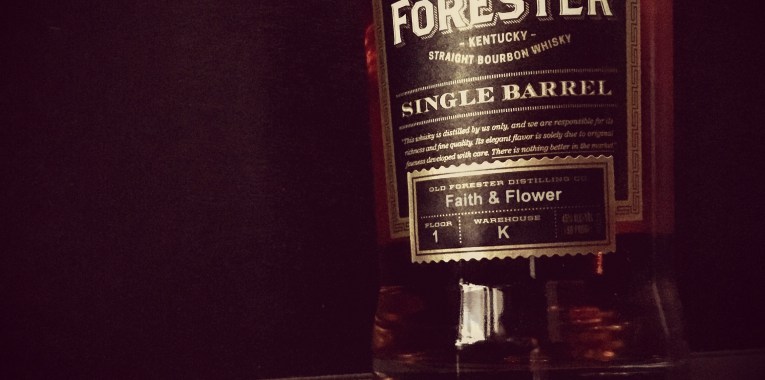

 The single barrel offerings are at a solid 90 proof, one of the things that set them apart from the standard bottles, but the color scheme on the new label is an almost complete palate swap. Where the normal Whiskey Row bottles harken back to the old white/cream style labels of the brands history the new single barrel is jet black with silver lettering. And clearly looking to scratch the whiskey intelligentsia’s need to know everything the rickhouse and floor where the barrel aged are large and center.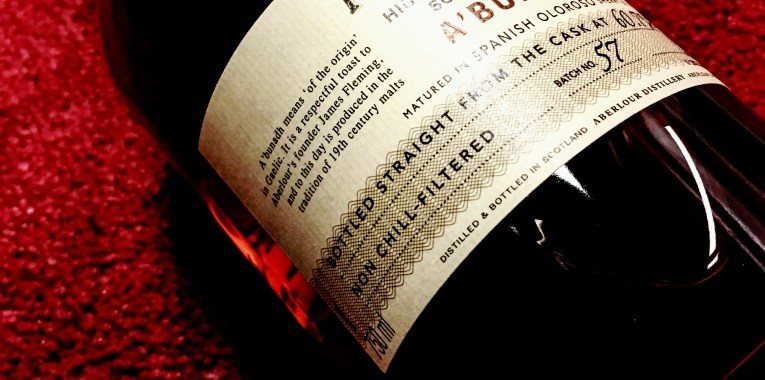
 Bottled In Bond LA