Whiskey Wednesday: Blood Oath Pact #5

A couple of months ago I was graciously sent a sample of the new release of Blood Oath Bourbon. Between competitions, menu flips, leaving a job, and much needed vacation travel after leaving said job the sample unfortunately fell by the wayside. But with Halloween nearly upon us I figure it would be appropriate to crack open a little Blood Oath and see what it was about. 

Blood Oath is a brand owned by Luxco, Inc. a beverage producer and marketer based out of St. Louis. In addition to Blood Oath Luxco also produces Ezra Brooks, Rebel Yell, and distributes Yellowstone for Limestone Branch Distillery. While Luxco has sold bourbon for years they’re personal bourbon distillery, Lux Row Distillers, didn’t start production until January of 2018. Although their first year of production outpaced projections none of the whiskey they’ve distilled is old enough to be used for any of their brands meaning the Blood Oath is a sourced whiskey. 

Now, sourced isn’t a dirty word and while I wish Luxco was open about where they sourced the whiskey they at least are open about the fact that Blood Oath is sourced and blended. In fact, Blood Oath boldly claims that they are “loyal to no one family, favoring no one distillery, and bound by no one philosophy.” The cynic in me wants to say that’s marketing speak for “we can’t guarantee a source” but blending is an art form that can produce some spectacular bottlings so let’s take the idea at face value. The Blood Oath isn’t trying to create a consistent bottling but rather a unique, limited, yearly offering. So, what’s in the Blood Oatch Pact this year? 

Pact 5 is a blend of three whiskies a 13 year old rye Bourbon, an 11 year old wheated bourbon, and an 8 year old rye bourbon finished in Caribbean rum barrels. Bottled at 98.6 proof (the temperature of the human body) we don’t know the distilleries or the proportions of the blend but given Luxco’s working relationships it’s not too much, of a leap to assume that a lot of the whiskey comes from Heaven Hill. Also, considering the current state of aged whiskey it’s probably also fair to assume the bulk of the blend is the 8 year. This is noteworthy because it is this rum finish that really sets the Pact 5 apart from the previous four releases of Blood Oath.  

NOSE: Vanilla, Red Apple, Cherry, Brown Sugar

PALETTE: Wet oak, molasses, earthy, candied citrus peel, clove, and a touch of hogo

FINISH: Short to medium, orange, pepper, and oak 

The rum finish is surprisingly apparent once your mind is keyed to look for it. There’s a hint of that funk and brown sugar but without knowing it was a rum barrel I would have thought this was a slightly over oaked release. 

It’s a touch sweet, a little aggressive, and surprisingly oaky all around. It’s a style that’s leaning into heavily oaked, older American whiskies which is certainly on trend. People are looking for flavors that are unique, big, bold, and a heavy barrel influence can make a spirit pop out of the more mellow distillates. 

While the blend is interesting, I personally couldn’t justify the price point. At a suggested MMRP of $99.99 but often appearing on shelves at north of $110 I don’t know that it’s interesting enough to justify the “special occasion” pour of the price tag. This is something I’d rather sip, compare, and enjoy rather than store and dole out during the justifiable times that a 100+ dollar bottle usually enjoys. 

I ultimately find myself wishing I had more context for the Blood Oath. There’s nothing bad with the Pact 5, aside from my hesitation on the price, but I don’t see a through line. I’ve had several of the previous Blood Oath’s and can’t connect the dots between the Pacts. While it’s all well and good to not have a “favorite” I would love to see a point of view that makes this whiskey more than an experiment. 
Drinking Poetic: Cascading Lines

This is the story of a drink that got away from me. 

As I’ve said before I tend to turn every drink into a brown, bitter, and stirred variation on a theme. It should therefore come as no surprise that I’ve been trying to play around with some version of a hopped Old Fashioned style drink for at least a few years. Long enough that the idea of using hops in a drink now seems cliché. 

The first iteration that almost made a menu was while I was the Bar Manager at Faith & Flower. Dubbed the “Whiskey Icarus” this drink combined a hopped honey, Bernheim wheat whiskey, and Riesling.

I remember the drink being refreshing and surprisingly crisp. With the memory of the drink in my head I brought it into the initial R&D sessions at NoMad. However, I was never able to recreate that remembered flavor. I’m not sure if it was the specific Riesling that was being used, a change in the hops, or a change in production method. This inability to replicate is a prime example of why you should keep detailed notes, especially with liquid R&D. 

I couldn’t put the idea down and when I was putting together the One Year Anniversary Menu for NoMad LA I dragged the drink back into the conversation.

It was a Frankensteined drink from the start. The original thread lost and reassembled using existing NoMad syrups and ingredients. I made a homemade apricot and barley tea bitters (which are still one of my favorite ingredients I’ve ever made) Verjus replace the wine, Lapsang Cacao instead of hops, and tried split base after split base. While the initial variations were some of the least liked ideas for the menu there was something about the drink that kept tugging at us. It was intriguing enough that we wanted to figure it out. 

The first think that needed to happen was stripping the drink back down to basics. What was the central premise of the drink? A hopped, old fashioned style drink reminiscent of mead.  

Once the basic concept was nailed down we started picking out the elements of the numerous variations that we had liked. 

The addition of the chocolate from the infused cacao was so nice that we decided to keep it and made a Cascade Hop infused cacao to replace the smoky Lapsang tea. 

The bitter, grapefruit notes from the hopes were now overwhelming the subtle stone fruit of the Apricot and Barley Tea Bitters, however the barley helped to reinforce the hop component so the bitters were replaced with a teaspoon of barley tea syrup and to get a touch of that fruit aspect back a quarter ounce of Grand Marnier was added. 

Next it was time to address the split base. Out of all of the combinations a split between bourbon and aged genever complimented the original base the best. We swapped bourbon after bourbon looking for something luxurious. The genever was the Boomsa Oude which was rich and malty but light on the barrel and the best bourbon pairing that wasn’t a limited release was the Henry McKenna Bottled in Bond. This was before its gold medal win so we stocked up once it started clearing out. 

Because of the split base it didn’t have as heavy of an oak presence and a teaspoon of vanilla was added to compensate. 

And then because it’s the NoMad we added aquavit and sprinkled a pinch of fluer de sel on top. 

At this point no one was leading the ship and the palate fatigue was strong but this was the most balanced of the new version. You could tell we weren’t quite satisfied with the drink but it made the menu. Renamed the “Cascading Lines” as play on the Cascade hops and the conflux over different threads that had to come together for this drink. 

As the drink rolled across the floor in the first week changes and tweaks were inevitable.  As we tasted it with fresh palates it quickly became clear that the Grand Marnier was completely unnecessary. The final change happened completely by accident. 

As a standard we use White Crème de Cacao. However, during our opening there was a delivery issue and we ended up with a case of Dark Crème de Cacao. After sitting on it for nearly 1.5 years this infusion seemed a perfect opportunity to clear some inventory space. What seemed like a nothing change actually lent a deeper note to the drink that actually let the hops shine in a more balanced way. 

The lesson I took away here was the importance of a directed focus and idea during the R&D process. This ended up being the best version of the Cascading Lines but is it the best version of this idea? I’m still hoping to see the Whiskey Icarus on a menu one day. 

Cascading Lines :
Tsp Vanilla Syrup (50 Brix)
.25 oz Barley Tea Syrup (50 Brix)
.25 oz Cascade hopped Dark Cacao
.5 oz Henry McKenna Bottled In Bond Bourbon
1 oz O.P. Anderson Aquavit
1 oz Boomsma Oude Genever

Combine all ingredients in a mixing glass.
Short stir with 1×1 ice cubes.
Strain over a large 2×2 ice cube in a large rocks glass and garnish with a pinch of fluer de sel. 

Hopped Cacao:
15g Cascade hop pellets
1 liter dark crème de cacao
Vacuum seal.
Let set for 25 minutes.Pass through a chinois and store in a clean glass bottle under refrigeration for up to two (2) weeks. 

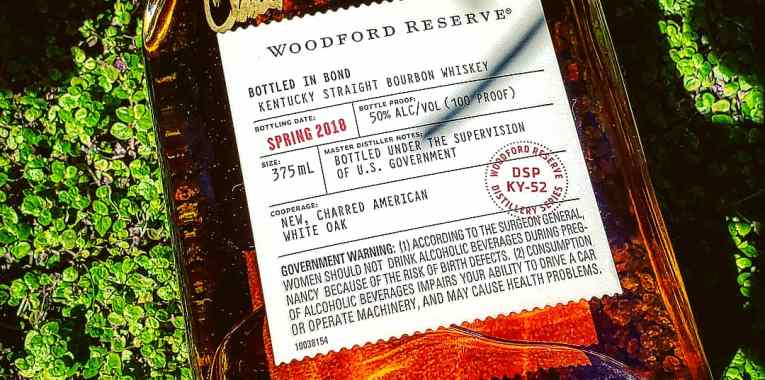
Whiskey Wednesday: Woodford Reserve Bottled-In-Bond

Let’s get meta. 

I run a blog, which you’re currently reading, called Bottled In Bond, LA. I write about bartending, cocktails and spirits, primarily whiskey but occasionally not. I’ve been doing this for a few years now and occasionally old articles will suddenly get a few more views because someone Googled a bottled in bond product that doesn’t exist. You would not believe how many people are looking for a bonded Chartreuse

About a year ago, I noticed a huge spike in an old article about Woodford Reserve. It was getting a Google search almost daily for a month. I became curious, did my own googling, and found a single Reddit post about a Woodford Bottled-In-Bond but not much else. 

After asking around with no clear answers my friend Luke Ford, who works for Woodford, returned from a visit to Kentucky with a .375ml bottle signed by Woodford Master Distiller Chris Morris. A distillery only release of Woodford Reserve Bottled In Bond. 

My natural hoarding instincts took over, it went on the shelf and remained unopened for the past year. But why? I’ve always maintained that whiskey is meant to be drank, to be experienced, and after all the curiosity that lead to me actually receiving a bottle shouldn’t I be curious about what the whiskey actually tastes like? So, I opened it. 

NOSE: Super oak, straw, light stone fruit
PALETTE: Caramel, cinnamon, baked peach pie, with a touch of the metallic pie tin
FINISH: Bright, quick, and surprisingly light for the extra proof 

This bottle tastes exactly like what I would expect a Bonded Woodford to taste like and that is incredibly interesting to me because by all right’s it shouldn’t. 

The Bottled In Bond Act of 1897 states that to be bottled in bond a product must be produced by one distiller at one distillery within in one 6-month distillation “season.” It must also be aged in a federally bonded warehouse for a minimum of four years and bottled at 100 proof. 

It’s the one distillery requirement that makes this interesting. The traditional bottle of Woodford is made up of spirit from two different distilleries. Column Still distillate from the Brown Foreman Distillery in Shively, KY and Pot Still distillate from the Woodford Distillery in Versailles, KY. This bottle only caries the DSP Number, essentially the distillery address, for the Woodford Distillery. Meaning this should legally be only the pot still whiskey. Which to me says there should be a bigger flavor difference. In a way it’s almost impressive that this really does just taste like Woodford. 

Part of what I love about Bonded whiskey is how clear cut it is. You always know the exact distillery, proof, and process whenever a product is bottled in bond. It strips out a lot of the mystery and marketing from a brand. It was an often overlooked mark of quality on affordable whiskey. And yes, the category is seeing a resurgence and premiumization in the past few years, however these are often just upscaled versions of existing brands. They aren’t bad but they are a sign of the times and they are familiar. 

This Woodford Bottled In Bond clearly falls into this ongoing trend but this bottle also raises questions for me. Is the labeling on this very small run inaccurate or have I always overestimated the impact of the column stills on the final Woodford profile? It’s made me think about Woodford in a way that I honestly haven’t in years. I don’t have an answer to these questions but at least it’s something to ponder over the next glass. 

Whiskey Wednesday: Four Roses’ New Selection

Conservatively, I would say that 87% of the Four Roses Single Barrel depletions at any bar I work at are due to it ending up in my mouth.

Conversely, my Partner-In-Bars, Dave Purcell, would rather sit in the pool with a bottle of the Four Roses Small Batch. I’ve sourced Four Roses Barrel Strength Single Barrels and have dived into the history of the distillery in the past. All of this is to say that I am a big fan of Four Roses and became very excited when they announced their first permanent product line extension in over 12 years. And immediately became wary when they announced that it would be called the Small Batch Select. 

Four Roses is one of the two great modern distilleries to emerge from the collapse of the old Seagram’s Empire. While Four Roses languished as a bottom tier blended whiskey for the later half of the 20th century it quickly became a staple of the new Bourbon Boom in the ‘00s when the distillery was purchased by the Japanese beverage conglomerate Kirin. Under the leadership of Master Distiller Jim Rutledge Four Roses became one of the most sought after Bourbon’s in the world. This was in part due to the process that Four Roses uses to make their whiskey.

Four Roses makes 10 different Bourbon recipes. And they’re all coded so you can tell what whiskey is being used in every bottle. For every code there are four letters, the first and the third will always be the same. The first letter will always be ‘O’, signifying that it was made at the Four Roses Distillery in Lawrenceburg, KY and the third letter will always be “S” meaning that it is Straight Bourbon. 

 The second letter will then signify that mash bill. Four Roses utilizes two different mash bills:

Mash bill E, which is 75% corn, 20% rye, and 5% malted barley
Mash bill B, which is 60% corn, 35% rye, and 5% malted barley. 

These mash bills are then fermented with one of five unique yeast strains, which is designated by the fourth letter: 

K – rich in spiciness, full bodied 
O – floral, spicy, medium bodied 
Q – slightly fruity, spicy, medium bodied 
F – herbal
V -delicate fruit 

The Single Barrel is always OBSV, high rye and delicate fruit. The Small Batch is a blend of four: OBSK, OESK, OBSO, OESO, and the standard Yellow Label is a blend of all ten. Special releases throughout the years have used different mash bills in different amounts. 

My initial hesitation upon hearing about the Small Batch Select was two fold. I’m just not as big of a fan of the Small batch as the Single Barrel and I didn’t know if it would be different enough from the Small Batch to warrant a new extension. So, what makes it different?

First up is the proof. Bottled at 104 Proof and Non-Chill Filtered the Small Batch Select is hotter than the Single Barrel which comes in at 100 Proof. Second, while there is no age statement Four Roses has said that it is a blend of 6-7 year old Bourbons. Lastly, that blend is a blend of six of the recipes: OBSV, OBSK, OBSF, OESV, OESK, and OESF. We still don’t know the proportions, but this brings in distinctly different flavors from the standard Small Batch. 

NOSE: Baking Spice, red fruit, and oak 

PALETTE: Vanilla, apricot, cinnamon, oak, and dark chocolate 

FINISH: Medium and dry, tobacco and leather 

This fourth Four Roses is truly distinct from its siblings. Enough to warrant its entry to the family. My initial skepticism came from the name yet upon further research and tasting its clear that this new entry is vastly different from the established small batch while still being a technical small batch. 

It’s also important to note that this is new Master Distiller Brent Elliott’s first permanent edition to the Four Roses line up since taking over in 2015.  Coupled with previous limited releases like the Al Young 50th Anniversary and the 130th Anniversary Small Batch I think we’re getting a sense of how Brent’s palette differs from Jim’s. 

While this won’t replace the Single Barrel for me it is a worthy addition that fans of Four Roses will love but is also a great introduction for new comers to the brand. 

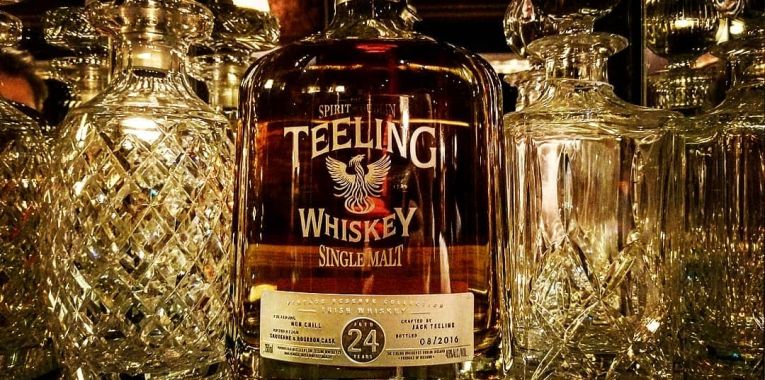
Whiskey Wednesday: Teeling’s 24 Year Old Single Malt Award

Awards are a fickle thing. Being the “best” is an arbitrary construct that essentially says that something followed the rules really well. Without a larger context the sentence “an Irish Whiskey wins best single malt in the world for the first time” doesn’t carry any meaning even if it is 100% factually accurate. Which it is. 

In March of 2019 the World Whiskey Awards, presented by the thedrinksreport.com, announced the Teeling 24 Year Old Irish Single Malt whiskey as the Best Single Malt in the world. Much of the conversation after this announcement was how Ireland had won an upset victory over Scotland, the home of Malt Whisky. Especially since an Irish Whiskey had never won this award before.  

But the World Whiskey Awards have only been handed out since 2012. Meaning there haven’t been many opportunities for an Irish Whiskey to make the list. Also, in 2014 the same awards selected a Taiwanese whiskey as the best single malt so there was already precedent for Scotland not being the top dog. 

It’s easy to see the headlines as mere clickbait but there’s a deeper story. Ireland isn’t traditionally associated with Single Malt whiskey, for a wealth of historical reasons, so they’re not going to traditionally win single malt whiskey awards. And while Irish Single Malt has been made for centuries if anyone was going to win an award it was probably going to be the Teeling’s.

The Spirit of Dublin

The Teeling family first got into the Irish Whiskey game in 1782 when Walter Teeling established a distillery on Dublin’s Marrowbone Lane, an epicenter of distilling at the time. This original distillery was eventually purchased by William Jameson & Co., cousins of the more famous John Jameson. This original distillery was shuttered in 1923 as economic woes began to systematically destroy the Irish Whiskey industry. In fact, by 1976 every single distillery in the city of Dublin had shut its doors. Then in 2015 Teeling reestablished itself in Market Square, not far from the family’s first distillery.  

Now, if you’re paying attention you’re probably asking, “How does a four year old distillery win an award with a 24 year old whiskey?” and the answer reveals another layer.

The new Teeling Distillery was founded by John Teeling and his sons, descendants of good ol’ Walter, and it was not his first time starting new Irish Distillery. In 1985 John purchased an old industrial alcohol production plant in Cooley and began converting it to an actual whiskey distillery. It reopened in 1987 as the Cooley Distillery and was the first “new” distillery in Ireland in at least a decade. 

Over the next several years the Cooley Distillery gained a reputation for quality and excellence in style. One of those being a distinctly Irish style of single malts. The Tyrconnell has always been one of my favorites, winning the International Wine and Spirits (IWSC) Gold Medal in 2004. They also gained a cult following with the Connemara, a peated Irish Single Malt, and the distillery quickly became a go to source for the slowly growing segment of drinkers looking for Irish Single Malt. After winning “Distillery of the Year” from the IWSC in 2008 and then the same award from Malt Advocate Magazine in 2010 the distillery was sold to Beam, now Beam Suntory, in 2011. 

With all of this old Cooley whiskey I assumed that this bottle was old Cooley malt but after talking with people who know more about these things than I do it turns out that this is actually old Bushmill’s Single Malt.

As part of the sale Teeling kept 16,000 barrels worth of whiskey from Cooley and used that stock to establish the new Teeling brand in 2012, quickly followed by the new Dublin distillery three years later.

With all of this old Cooley whiskey I assumed that this bottle was old Cooley malt but after talking with people who know more about these things than I do it turns out that this is actually old Bushmill’s Single Malt. This adds yet another layer to the story as trying to pick apart who distilled, blended, aged, and otherwise had a hand in this whiskey over the years.

Here is a family, accustomed to winning awards winning another award on a whiskey that seems to have a foot in almost every part of the active Irish Whiskey world.

Whatever its providance the whiskey itself is a 24 Year Old Single Malt Irish Whiskey distilled in 1991. It was first aged in ex-Bourbon barrels before being married and further aged in ex-Sauternes casks. How much time it spent in each barrel type is unknown. Only 5000 bottles of 92 proof (46% ABV) non-chill filtered whiskey were produced, meaning that even if it wasn’t the best it’s still one of the rarest and oldest Irish whiskies on the market.

NOSE: Orange Zest, apricot, a slight nuttiness, and a bittersweet chocolate 

PALETTE: Honey and malt, bright stone fruit, leather, caramel and a sprinkle of saltiness 

FINISH: A long mellow finish that leans into the saltiness and the Sauterne finish 

After all that, is this the best Single Malt in the world? I have absolutely no idea. It certainly falls into the rich flavors that I expect from old, indulgent malts yet it also presents a few flavor curve balls and is surprisingly alive which helps it stand out. 

This is a malt that is relying on the past while building a future. It’s caught between multiple worlds and you can almost taste the journey it’s been on. Best may be a matter of opinion meant to generate buzz but the more I’ve learned about where this whiskey comes from the more interesting it’s become.

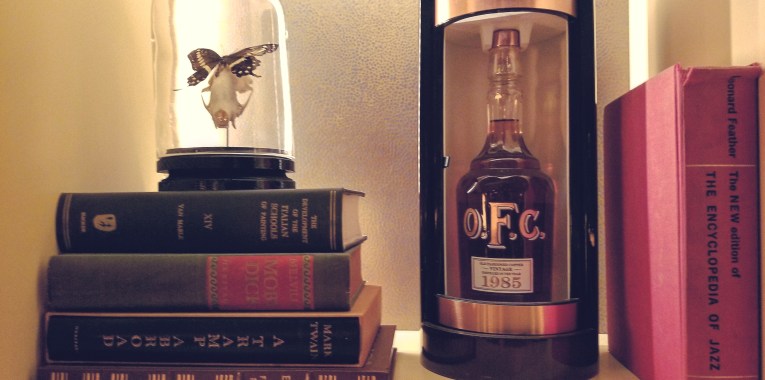
Whiskey Wednesday: O.F.C. 1985 Vintage Bourbon

Spontaneity is not my strong suit. 

Example A: my girlfriend swears by the deals emailed out daily by Scott’s Cheap Flights. Yet every time a deal lands, I have to ask about time frame, logistics, check on available vacation days, and generally stressed about the fact that booking this trip means that we won’t be able to book some other hypothetical trip that doesn’t yet exist and just like that the deal, and the moment, is gone. 

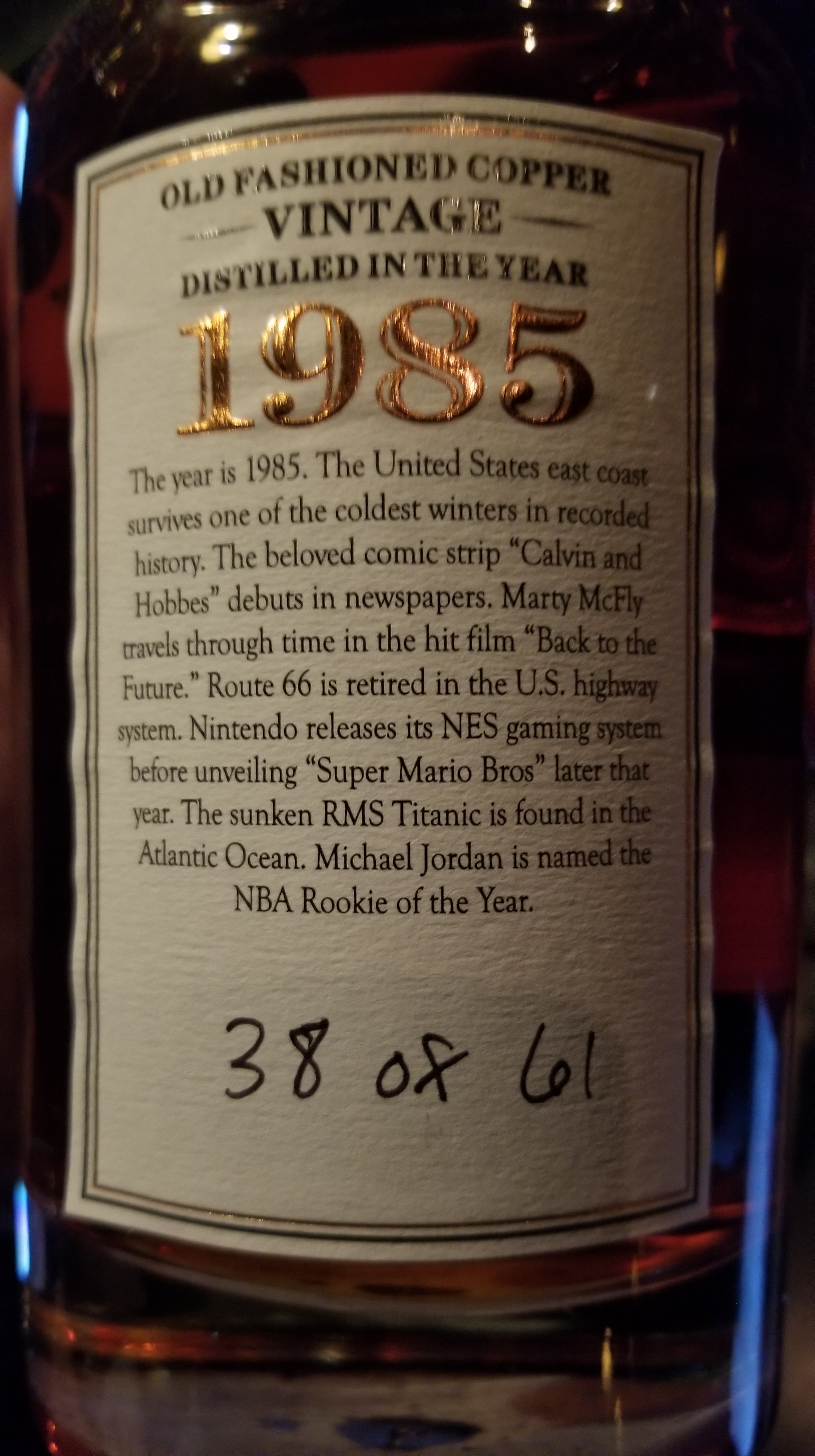
Example B: We received a bottle of the O.F.C 1985 Vintage Bourbon a year ago and I’ve been planning to write about it ever since. So, what the hell is O.F.C. and why has it been on my mind for literally a year? 

O.F.C. stands for Old Fashioned Copper and is the original name for the distillery founded by Col. E.H Taylor in 1869. Col. Taylor was an expert marketer and helped establish the concept of a Bourbon “brand” as well as being one of the major figures behind the passing of the Bottled In Bond act of 1897. 

The distillery itself was sold to another legend, George T. Stagg, in 1878. There’s an apocryphal story that one of the conditions of the sale was that Stagg could keep the initials O.F.C. but he had to change at least one of the words it stood. This is why the distillery is sometimes called the “Old Fire Copper” distillery. Regardless of the veracity of this claim the distillery’s name was officially changed to the George T. Stagg Distillery in 1904. It was the first distillery to utilize climate-controlled aging warehouses when Stagg installed steam heaters in 1886 and was one of only four Kentucky Distilleries granted a license to continue distilling throughout Prohibition.

The distillery changed hands a few more times in the 20th century before finally being purchased by the Sazerac Corporation in 1992 and its named changed once again. Now known as Buffalo Trace it arguably produces some of the most sought after American Whiskey on the market, including bottles named after both Taylor and Stagg as well as the much desired Pappy Van Winkle line. 

The distillery clearly has experience with special releases but even amongst the plethora of rare bottles the O.F.C. stands out. 

 The O.F.C. is less a special release and more of a time capsule. These are all single barrel, vintage dated Bourbons. Each bottle is sourced from a single barrel and marked with the year of distillation. This makes each vintage completely unique with the mashbill and age varying depending on the bottling. Another intriguing fact is that this line up was originally produced only for charity. 

A literal Time Capsule.

The team at Sazerac and Buffalo Trace are just as savvy marketers as Col. Taylor was back in the day. I have to imagine that when they see bottles of their whiskey selling for thousands of dollars on the secondary market that they looked for a way to capitalize on that market value yet still offer an added bonus. The original three releases were only made available to 200 charities, at no cost, to auction off and help raise money for their cause. It was a great way to turn the image of limited whiskey auctions on its head and raise $1.2 million dollars for charity. It also immediately established the O.F.C. line as a super limited, ultra premium bottle. I was silently jealous of the fact that I would never see one of these bottles yet still applauded the move to raise money for worthy causes. But when the second round of releases was made available for retail purchase I leapt at the opportunity. Especially with the vintage being offered was the 1985. It’s not often you have a shared birth year for your whiskey. 

The 1985 Vintage is one of only 61 bottles to come from a barrel which was stored on the second floor of Warehouse Q. Buffalo Trace says that all of the barrels were tasted over time and removed from the barrel before becoming over oaked and since there is no age statement listed on the bottle it’s hard to tell the precise age of the bottle. This isn’t an uncommon practice, Buffalo Trace has done similar things with Eagle Rare 17 and Sazerac 18 so the whiskey isn’t as much as an oak bomb as you might expect. It is certainly old but there’s no official word on if it was a full 33 years in oak before being bottled. With that in mind let’s dive into the glass: 

NOSE: Rich oak, Dried fruit, and vanilla 

PALATTE: Rich vanilla, dark cherry, prune, oak, and a dark earthiness 

FINISH: Bitter chocolate, a touch of tobacco, and a coating lingering sense of time 

Overall this is an excellent example of old American Bourbon whiskey. It is still alive without being over oaked and has a power of flavor to match up to the power of the years it spent asleep in the barrel. The issue, as always, is the price. The bottle comes in at a staggering suggested retail price of $2,500. When the proceeds were going to charity this number wouldn’t have raised peep from me but now it changes the talking points. 

Is this good whiskey? Yes. Is it for everyone? Absolutely not. It is a special occasion, made so by the fact that it is a living time capsule. You are paying for the time and history as much as the whiskey itself. I will argue that experiences are more important than money but  the value is certainly subjective. I for one am going to savor the fact that I get to experience this bottled moment of time and not take it for granted. 

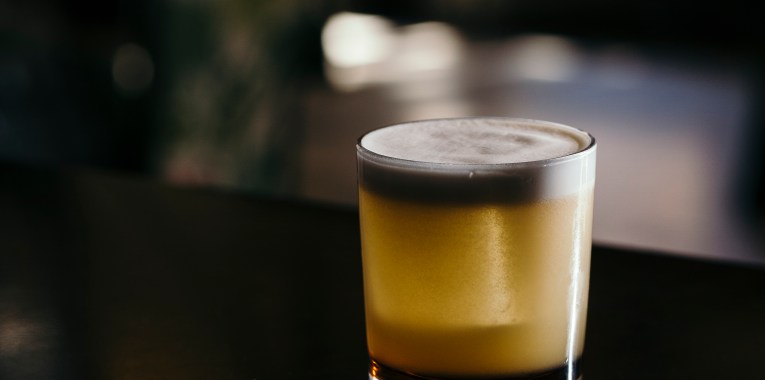
Drinking Poetic (on a Wednesday): The Los Angeles Sour

The Los Angeles Cocktail is terrible and is a perfect example of a bad drink that survives because it’s old. 

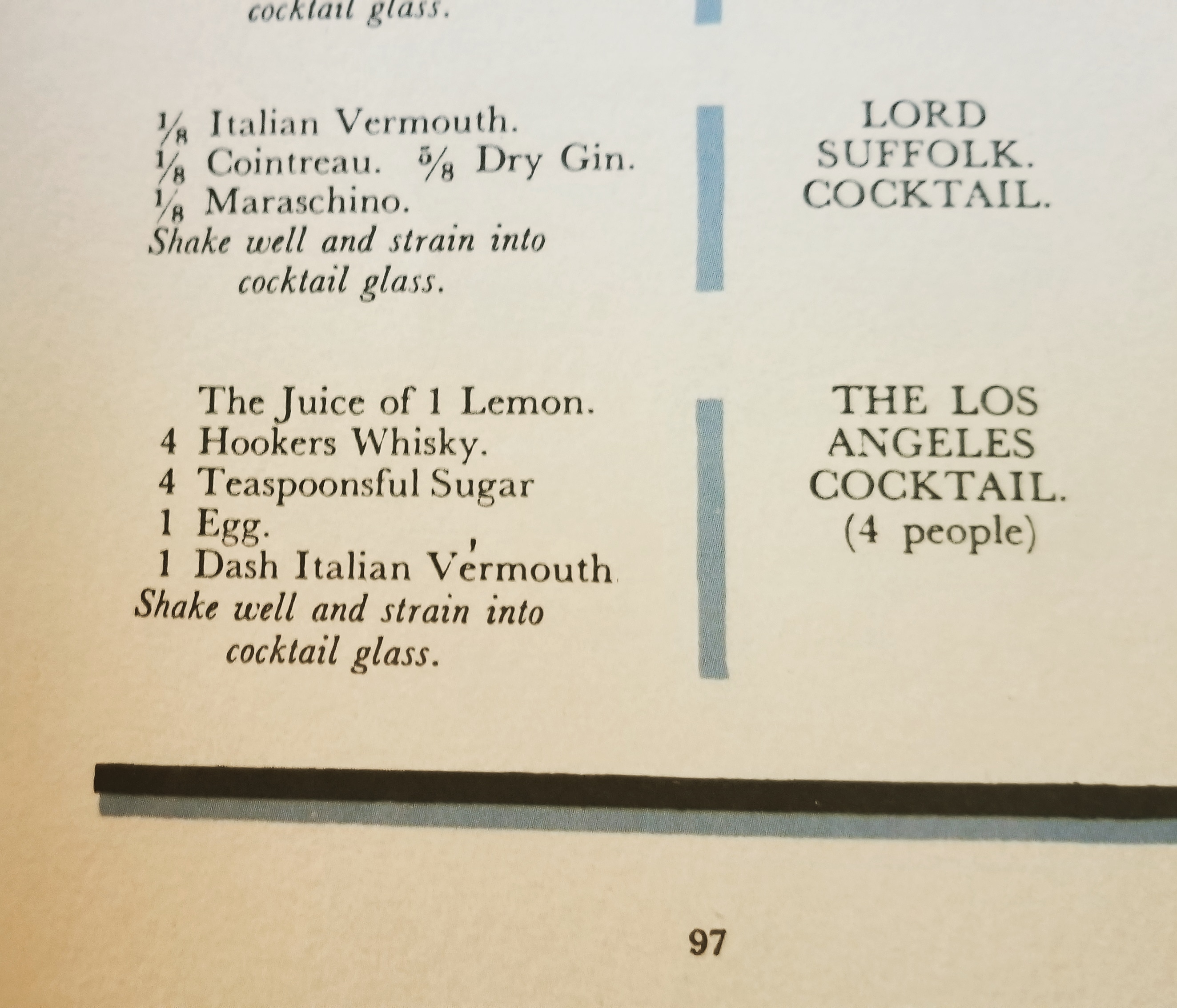
Buried within the pages of the Savoy Cocktail book, one of the quintessential drink tomes of the Golden and Modern cocktail age, is a drink that reads like a New Yorker describing their “totally real” visit to L.A. There are so many things that irritate me about this drink, the very first of which is that it’s not a damn cocktail!

A irreparably irritating recipe

Despite being listed alphabetically in the “cocktail” section there’s nothing about this drink that ties it to the traditional “cocktail” family of drinks. It contains no bitters and has enough citrus to dilute the base spirit beyond recognition. Apart from that the drink is described as serving four people, uses blended whiskey, powdered sugar, a whole egg, and only a “splash” of vermouth. It’s just a worse version of a New York Sour. While L.A. may have once been the subpar New York City that is certainly not the case any more and I think that’s what makes this drink stick in my craw.  

There are so many little things that are off about this drink that it’s stuck in my head for years. I’ve lived in LA for a decade now and I feel like I’ve earned the right to call myself an Angeleno, so if a drink is going to be named after our city it should be damn good drink. 

The first thing that I wanted to do to adapt this drink was scale it down. A drink designed for only four people is not efficient for service, though considering that L.A. often rolls twelve deep I can’t blame them for trying. Scaled down from four hookers (a measure of 2.5 ozs) to the standard 2 oz jigger of booze, a classic proportion of sour to sweet, and using an egg white instead of the whole egg creates a palatable, if completely forgettable, sour.  

This adjusted recipe reads: 

  • 2oz Whiskey 
  • 1 oz Fresh Lemon Juice
  • .75 oz Simple Syrup
  • 1 Egg White
  • 25 oz Vermouth 
  • Combine all ingredients in a mixing tin. Dry Shake. Shake With Ice. Double Strain. 

The next sticking point is that there’s nothing about this drink that actually says “L.A.” And while the same can be said about the New York Sour, which may have actually originated in Chicago, if we’re going to improve a drink why not make it more representative? With this in mind the inoffensively mediocre powdered sugar was swapped out for a 50 brix Piloncillo syrup. Pilconcillo, or panela, is an unrefined, whole cane sugar typical of Latin America. It is made from the boiling and evaporation of sugar cane juice. It is commonly used in Mexico and has more flavor than brown sugar which is often white sugar with a little added molasses. This gives the drink a richer texture while also tying it into the Latino heritage of Los Angeles. 

Elijah Craig and Dubonnet Improved Los Angeles Sour

Next up was the spirit base. The richer piloncillo syrup completely overwhelmed lighter whiskies so I turned to my trusty baseline: Elijah Craig Straight Kentucky Bourbon. This added a delightful tannin and vanilla note but was not playing nice with the vermouth and lemon. So, I traded the vermouth for the recently reconstructed American version of  Dubonnet Rouge. Served over a large rock with a float of the Dubonet the flavors were able to develop over time and the extra bitterness from the quina in the Dubonet helped tie the drink together. I actually used this drink for the regionals of the Heaven Hill Bartender of the Year competition this year and it’s absolutely delightful.

L.A. Sour: 

  • 1.5 oz Elijah Craig Small Batch 
  • .75 oz Piloncillo Syrup (50 Brix) 
  • .75 oz Fresh Lemon Juice 
  • 1 Egg White 
    • Dry Shake. Double Strain over one large ice cube. 
  • Float .75 oz Dubonnet Rouge  

There’s no practical need to go further than this. The drink is delightfully crowd pleasing, recognizable, and recreateable. I highly recommend making this version of the drink yourself.I couldn’t set the drink down though. It kept burrowing through my brain begging for attention. 

I have a natural disregard for “blended” whiskies. I find them light and forgettable but that doesn’t have to be the case. There are some beautiful blended malts  and grain whiskies on the market, and not all of them are Japanese. So, I broke down the components and built up a house whiskey blend to complement the flavors.  

It starts with an ounce of Bushmill’s 10 Year Single Malt. Irish Malt is lighter and fruiter than the more familiar Scotch malts while being more affordable than the Japanese counterparts. The Bushmills 10 also grants a solid barrel note and the vanilla that was coming from the Elijah Craig. Next, I wanted some spice and proof without overwhelming the delicate Irish malt so I added a half ounce of Old Overholt Bottled In Bond Rye. This added an oiliness, viscosity, and tannin that helped dry out the drink. 

Finally, to lengthen out the blend, a half ounce of grain whiskey was added. The Nikka Coffey Grain would have worked wonderfully, but the pricing and recent announcement that it was being discontinued shut that experiment down. Though I have recently heard that it is only discontinued in Japan with plenty of stock in the U.S. remaining so it may be worth revisiting. In the mean time I headed back to the Emerald Isle where the Teeling Single Grain offered a compliment to both the Bushmill’s Malt and the Overholt Rye bite.

This house blend was delightfully robust but the Dubonnet, instead of being a unifying factor, was now coming across as thin, just like the vermouth in the original spec. The drink needed something richer while still maintaining that vermouth bitterness and acid. It needed to be concentrated. With that in mind I turned to my favorite toy, the rotovap. Running Dolin Rouge through the rotovap produced two wonderful products.  

First a clear, concentrated vermouth flavored distillate. Second, a concentrated vermouth syrup that was left behind as the more volatile compounds were syphoned off. Both of these products are lovely, especially the syrup. However, I couldn’t imagine using this process to produce enough to maintain the volume of service that we do at NoMad LA so I went back to the drawing board. 

With this concentrated Vermouth reduction as a benchmark we found that a traditional stove top reduction with 50% sugar by weight produced a vermouth syrup that was, as my father would say, “Good enough for government work.”  

All the elements were now in place. Here was a drink that payed homage to its vintage roots, added in elements of the city it’s named for, and incorporated modern techniques, culinary thoughtfulness, and contemporary palettes and drinking styles. I’m also incredibly proud of the fact that this is the only drink I’ve ever put in front of our Bar Director Leo Robitschek that he had no tweaks for.  

The Los Angeles Sour now reads on the menu at NoMad LA as: 

  • 1 oz Bushmill’s 10 Year Single Malt 
  • .5 oz Old Overholt Bottled In Bond Rye Whiskey 
  • .5 oz Teeling Single Grain Irish Whiskey 
  • .75 oz 50 Brix Piloncillo Syrup 
  • .75 oz Fresh Lemon Juice 
  • 1 Egg White 
    • Dry Shake. Shake with Kold Draft Ice. Double Strain over one large Ice Cube
  • Float .75 oz Dolin Rouge Vermouth Reduction 

I do have to admit I’m cheating for the sake of a story. Leo did have one critique. I originally pitched the drink with aquafaba, (a vegan egg white substitute made from beans), instead of egg white because lord knows L.A. loves its dietary restrictions. Both versions of the drink past muster but the egg white variation felt more robust. But because of this original thematic pitch, and aa cheeky nod to L.A. drinkers, the Los Angeles Sour will always available “vegan upon request.”

Whiskey Wednesday: The Old Bushmill’s Story

Irish Whiskey is my least favorite category of whiskey.

To be fair that’s only because I think about Canadian Whisky so infrequently that I genuinely forget that it’s a thing. Yet, there are some true gems in the category. Redbreast should be a staple at any bar. Tyrconnell Madeira Cask is one of my favorites bottles of any category, and I can’t count the number of shots of Power’s I’ve had. The problem is that these don’t define the category of Irish Whiskey. Accounting for 82% of sales in the United States Jameson’s Irish Whiskey is essentially the entire category of Irish Whiskey. And Jameson’s just isn’t for me.

            Call me elitist, I’m sure part of my distaste for Jameson is it’s ubiquity, but it isn’t very interesting to me. It’s light, forgettable and honestly a little harsh. And while I might love the aforementioned bottles the first two aren’t affordable mixers and trying to convince a Jameson drinker to have a dram of Power’s instead is a lesson in futility. People aren’t cold calling high end Irish whiskey the way they are Japanese, Scotch, or Bourbon so it becomes an afterthought. Which brings me to Bushmill’s.

            I got a call from friends at Half Full, The Daily Beast’s Food and Drink section, asking me what I thought about Bushmills. And my answer was, “I honestly haven’t thought about it in a while.” They then asked if I’d be interested in coming on a trip to film a documentary and explore Bushmill’s and I said of course because who doesn’t want an excuse to go to Ireland?

            But beyond the boondoggle of a trip there was a genuine curiosity. Irish Whiskey is currently the fastest growing spirit category in the world. The industry went from a measly four distilleries on the whole island in 2013 to 16 distilleries in production today with another 13 on the way. While these numbers pale in comparison to the sales and production numbers of Scotch and Bourbon clearly many people with a lot of money feel that this is not just single brand growth but a reemerging category. I wanted to see what was giving these people such confidence.

Giant’s Causeway

We spent two days at the Old Bushmills Distillery and the surrounding countryside. The distillery takes its name from the River Bush and all the water used on site comes from the rivers tribute Saint Columb’s Rill. Although the date 1608, the year King James I granted a writ to distill whiskey to Sir Thomas Philips, is emblazoned everywhere, the Bushmill’s Old Distilling Company wasn’t establish until 1784. No matter which date you take as the distillery’s origin Old Bushmill’s is the only distillery in all of Ireland that was in operation before 1974 and was one of the three that kept production alive.

Irish Whiskey has always been deeply tied to the American market and American Prohibition tanked the industry. 400 brands made by over 160 distilleries became three distilleries all owned and operated by a single group, Irish Distillers, with their purchase of Bushmill’s in 1972. Irish Distillers was purchased by Pernod Ricard in 1988 with Bushmill’s then purchased by Diageo in 2005. They began a massive ad campaign to gain market share  but even the largest liquor company in the world couldn’t seem to boost the brand and it was sold to Jose Cuervo in 2014 after Bushmill’s sold 1.3 million liter cases in the U.S. compared to Jameson’s 18 million.

Everyone loves a good underdog story and while technically being in second place Bushmill’s was a very clear underdog. A part of me was hoping I’d find some spark that craft spirit authenticity or other such nonsense that would make it worth the uphill battle to recommend Bushmill’s White Label over Jameson’s iconic green bottle. What I found out is that the White label isn’t what you should be drinking.

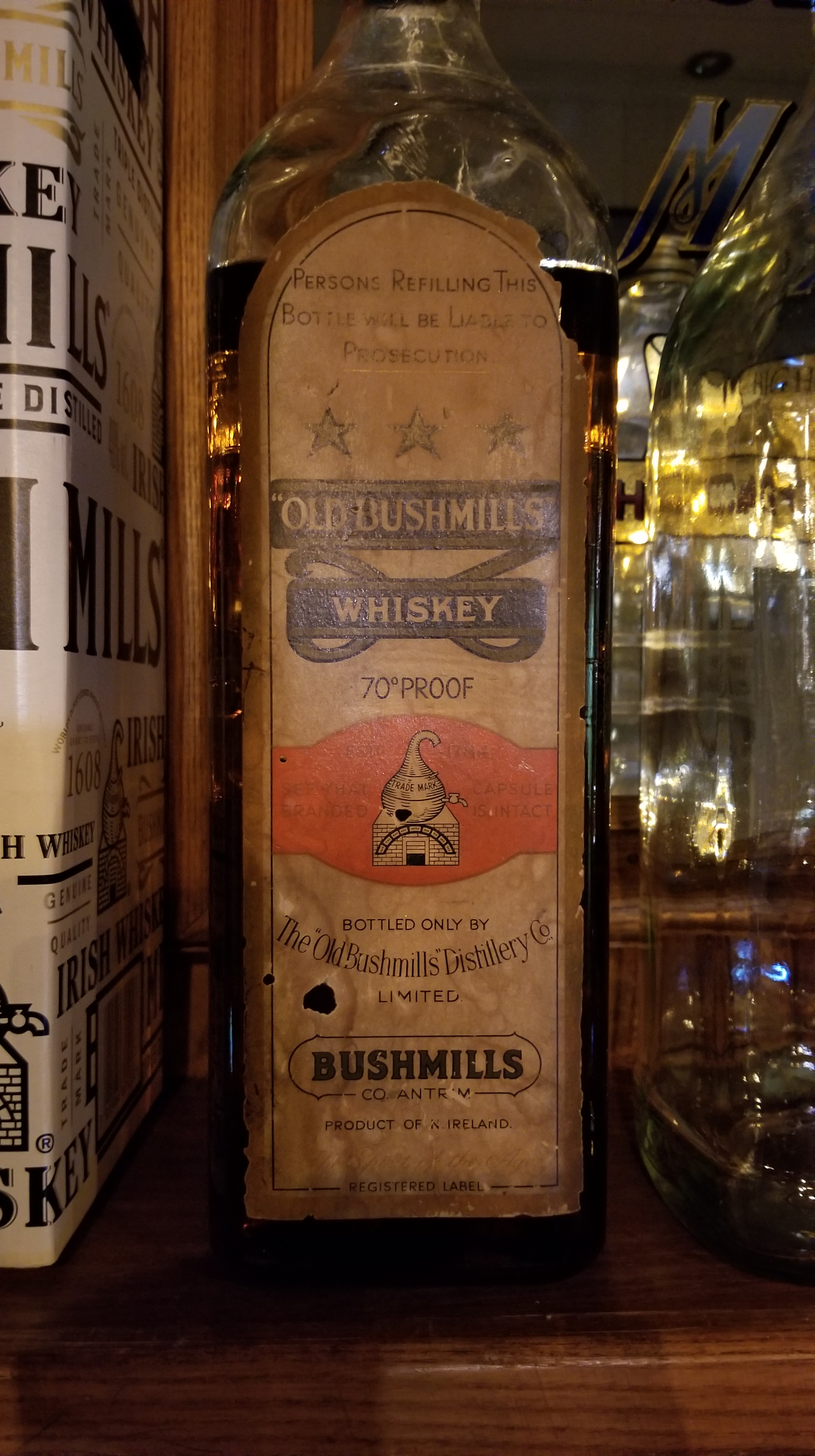
Old Bushmill’s bottle is old.

Bushmill’s is a single malt distillery. They age grain whiskey on site for blending but every drop of whiskey that’s distilled at the distillery is Irish Single Malt. This is unusual because most non-blended Irish whiskey is Single Pot Still, which is a distillate made up of  both Malted and Unmalted Barley. This style originated as a middle finger to the English who put a tax on malted barley in 1785. Despite the added expense Bushmill’s has only ever made Single Malt.  

Irish Single Malt is also distinct from (most) Scotch Single Malt in that it is triple distilled instead of double distilled. This creates a lighter whiskey as it’s gone through an additional set of cuts and stripping. This malt forms the base of all of the blends and single malt line at Bushmill’s . And every bottle of Bushmill’s is put together by the first female master Blender in all of Irish Whiskey history. She’s sitting comfortable with over 25 years of experience tripping across her palette and when she proclaims the 10 year old single malt to be her personal favorite there’s a weight that goes along with that statement.

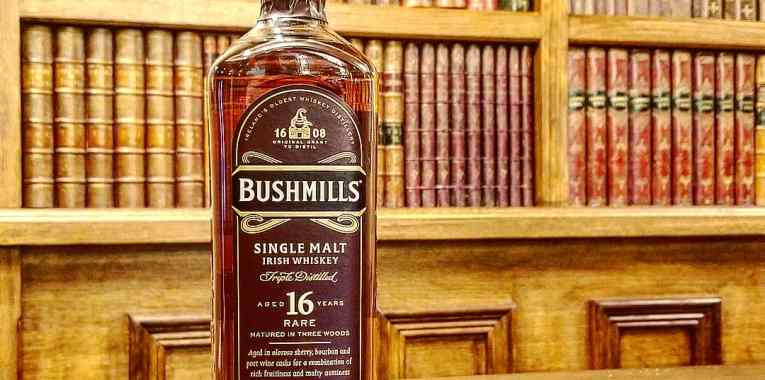
The 10 Year Old fills a very interesting place for Irish Whiskey. It’s affordable, mixable, and quaffable on it’s own it could honestly be that missing midpoint for Irish whiskey that bridges the shots and the Super Premium category. Yet from what I tasted it the true gem of the line is the 16 Year old Single Malt.

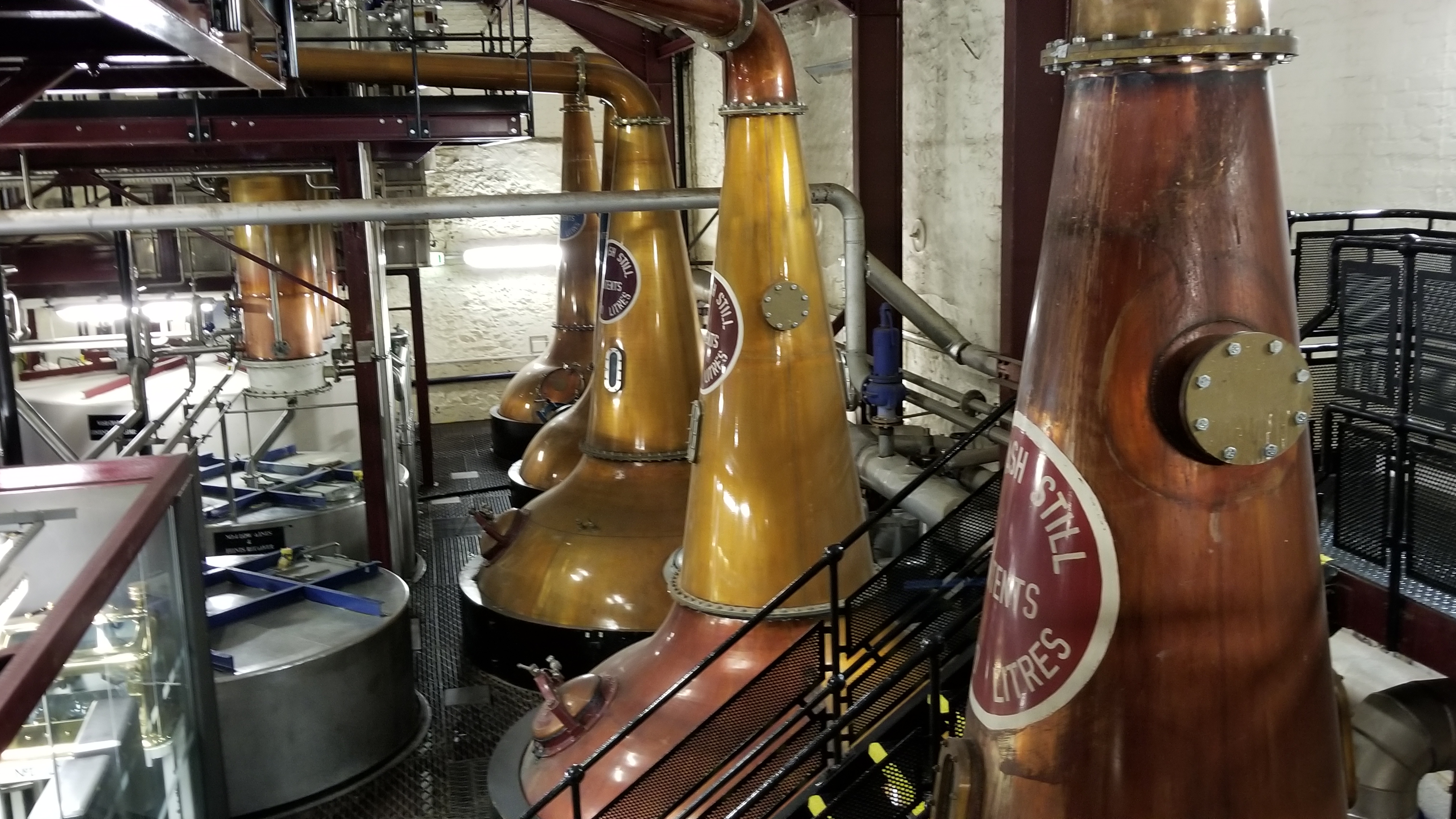
Pot Stills for days.

Aged for a minimum of 16 years a blend of ex-Bourbon and Olorosso barrel aged single malt is blended together and then further aged for an additional 6 months in used port barrels. It was the first thing I was poured after nearly 18 hours of travel and was one of those moments of surprise and disbelief at how good it was. In conversation with Noah Rothbaum, Senior Editor at Half Full, he expressed how it reminded him of the experience of discovering Hibiki 12 years ago before we drank it all-I had to agree with him. But not trusting my jetlagged senses I proceed drink at least a bottle over the next few days and to bring a bottle home for continued research.

NOSE: Dark Fruit, Raisin, Plum, and a touch of vanilla.

PALETTE: Dried Red Fruit, a slightly nutty undertone with a bright sherry through line to cut through the toffee, vanilla, and richness of the malt.

FINISH: Long and lingering, leaving the dried fruit and a slight amount of tannin and spice.

Ultimately I came away from Bushmill’s, and Ireland, with another story. A spirit is ultimately the distillation of the people who make it. A distillation of their culture, their taste, their landscape, and their time. Getting to know them, getting to experience them, ultimately opens doors to experience a spirit they way they do. In the end, Jameson is still my least favorite Irish Whiskey but, like life, whiskey is really shades of grey. A single dominant force can not define either. 

Whiskey Wednesday: A Tale of Two Elmer’s

            I received a text this week from a friend that without preamble said, “Did Elmer T. Lee get worse?”

            My gut reaction was, “Of course not! How dare you besmirch the name of the dearly departed father of modern Bourbon!?” After calming myself with a hefty dram I remembered that despite centuries of tradition whiskey making is a constantly evolving art and barrel aging is by no means an exact science. To add to that, there were claims of “cork taint” by members of the Reddit whiskey community in 2016.  The popularity of Elmer T. Lee has also exploded in recent years so the odds are that it’s younger stock than previous years. By the end of the glass the question was less of an attack and more of a probability.

Son, we’re not hiring today.”

            This could have remained a simple thought experiment but a recent trip to the Liquor Locker left me with a bottle of 2014 Elmer and the ability to do a little compare and contrast. But first a little context.

What exactly is Elmer T. Lee? Elmer T. Lee is both a Single Barrel Kentucky Straight Bourbon, and the deceased former Master Distiller of the distillery we now know as Buffalo Trace. 

“Son, we’re not hiring today.” Is how Col. Albert B. Blanton first greeted Elmer in 1949, but at the instance of his friend at the distillery he showed up to work the next week anyway.  Over the years Elmer grew from a maintenance engineer to the distilleries first Master Distiller. He officially “retired” in 1985 but not before releasing the world’s first Single Barrel Bourbon, Blanton’s, named after the man who didn’t hire him.

After Blanton’s became a hit the distillery honored its Master Distiller emeritus with his own namesake Single Barrel. Elmer was still heavily involved with the distillery and would come in every Tuesday to taste barrels and make selections for his namesake release.

Before Blanton’s, and Elmer, the concept of a “Single Barrel” Bourbon didn’t exist.  Remember, barrel aging isn’t an exact science. Every barrel ages differently depending on where in the rickhouse it sits, the quality of the barrel, the temperature swings over the years, all of these factors contribute to each barrel being a unique specimen But the whole idea of a bottled whiskey is consistency so generally barrels are blended, or batched, together to recreate a specific flavor profile. For a Single Barrel all of the whiskey in the bottle comes from one single barrel and has to stand on its own individual merits. While there will always be some variation, it is a sign of the skill of the distillery to be able to produce quality single barrels that are still consistent.

Both Blanton’s and Elmer share the same DNA. They’re both Buffalo Trace Mashbill #2 which is slightly higher in rye content (about 15%) and are both technically co-owned and produced with Age International. They’re both single barrels and they’re both non-age statement Bourbon’s so we know they’re at least older than four years. But two things separate them from each other: aging and proof.

Drinking is such an individual experience. It’s can be a social activity but the act of tasting is something intrinsically personal.

Blanton’s is always aged in Warehouse H, which was commissioned by Blanton himself. It  is a fully metal clad warehouse which allows for greater heat transfer and, supposedly, more rapid aging. Elmer has no such restrictions on what warehouse it must be aged in which theoretically allows for a larger variation in flavors.

Elmer is also bottled at 90 proof (45% ABV) where as Blanton’s is bottled at 93 Proof (46.5% ABV). While this difference seems small the alcohol is where the flavor is. A few extra proof points can make a world of difference and a whiskey can open up with just a few more drops of water. That isn’t to say that higher proof is always better, just like older doesn’t always mean better, it just means a different flavor profile. Interestingly, Elmer was said to drink his Bourbon at 60 Proof as he felt that was the point when he could taste all the flavor with out the alcohol getting in the way.

Now that all the intellectual foreplay is out of the way, how do they actually taste?

Four Years can really change a bottle.

2014

  NOSE: Oak and Clove

  PALETTE: Earthy, Dark Chocolate, Coffee, Tobacco

  FINISH: Long, slightly damp and musty

2018

            NOSE: Oak, Stone fruit, Vanilla

            PALETTE: Rye Spice, Stone Fruit, Tobacco, Coffee

            FINISH: Light, Spicy

Surprisingly, the 2014 is livelier in the glass, with a bigger spice on the nose and a more rounded midpalette. However, the 2018 carries a darker earthiness, more of the tobacco I associate with Elmer’s and a longer finish. Yet they are both still Elmer. In fact, pouring the two together creates an almost uber-Elmer that is exactly what I expect Elmer to taste like all the time.

Drinking is such an individual experience. It’s can be a social activity but the act of tasting is something intrinsically personal. Where you are at, what time of the year, and how much effort you put into finding the bottle all effects how the spirit tastes. So, back to my friends original question. Did Elmer T. Lee get worse? I’d say no, but it is different. But then again, so am I.

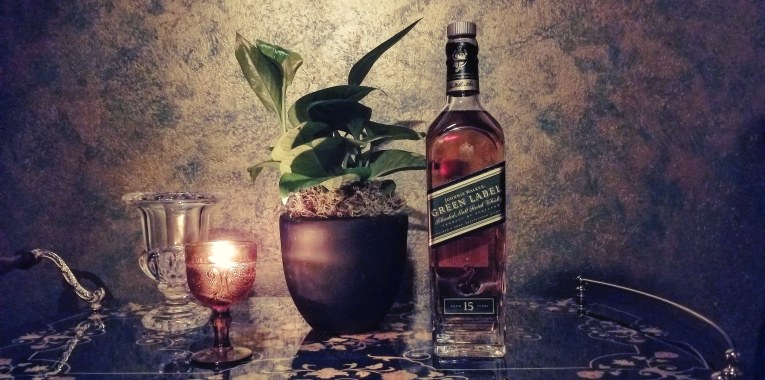
Whiskey Wednesday: Hitting Johnnie Green’s Stride

Johnnie Walker is a striding behemoth, straddling the world as the number one selling Scotch whisky brand. It’s so popular that “What makes Johnnie Walker Blue the best?” is a Google search autocomplete. It’s so popular that due to knockoffs and literal bootlegs there are more bottles of Johnnie Walker Black Label sold in India every year than are actually produced for the entire world.

            With this level of popularity the level of disdain and outright backlash for Johnnie Walker that abounds is almost inevitable. Something so popular could never actually be good. Yet, amongst its vast palette of labels there abides a quality and constancy that’s earned its place on back bars across the globe. It also contains one of my all time favorite colors and bottles: Green.

            Johnnie Walker, the Scotch Whisky, began its long walk in the 1819 when the father of John Walker, the actual Scotsman, died. The family sold their farm and invested in a grocery in Kilmarnock, Scotland in 1820. Grocery stores were a different breed in the 1800’s and many grocers would make their own house blends of whisky. This became much more prominent after the Excise Act of 1823 deregulated many of the laws on the distillation of whisky and more importantly greatly reduced the taxes on distilling and selling. In short order the teetotaling John Walker was selling his own blended malt whisky called Walker’s Kilmarnock Whisky. John passed away in 1857 leaving the company to his son Alexander Walker who would usher in the beginnings of the company’s global dominance.

This rise in popularity began with another act completely outside of Alexander’s control, the Spirit Act of 1860. For the first time it was now legal to blend malt and grain whiskies together, thus creating the blended whisky style that is the core of Johnnie Walker, as well as the vast majority of worldwide Scotch sales.

Alexander also took advantage of the newly arrived railroad to make connections with shipping captains to create a larger distribution network. This expanded shipping reach combined with a more approachable, lighter style of Scotch whisky literally made inroads with new drinkers.

            The increase in global shipping also led to the development of the iconic square bottle in 1860. The square shape allowed more bottles to fit in the standard shipping containers as well as greatly reduced breakage during transit. Alexander was also responsible for tilting the label at its jaunty angle across the bottle allowing for larger print as well as making the bottle more recognizable from a distance.

            It was the Third Generation of Walkers that added the final touch with a rebranding in 1909 that first saw the “Striding Man” added to the labels. They also had the companies three blended whiskies officially renamed to White Label, Red Label, and Black Label. The White Label was dropped during World War I but the Red and Black remain the core of Johnnie Walker to this day.

            With demand for Johnnie Walker Scotch spread across 120 countries the company began purchasing single malt distilleries to ensure  consistent supply and blends.  Beginning with Cardhu in 1893, they followed it up with the Coleburn Distillery, The Clynish Distillery and Talisker, before capping it off with the legendary Mortlach Distillery in 1923. Then in 1925 the company joined Distiller’s Company, which was purchased by Guinness in 1986, which then merged with Grand Metropolitan in 1997 to form Diageo, the largest liquor conglomerate in the world. 1997 is also an important year because it marks the reintroduction of Blended Malt Whisky to the Johnnie line up. Originally called Johnnie Walker Pure Malt my favorite bottle received its chromatic designation as Green Label in 2004.

            In a lot of ways the Green Label is a return to that very first John Walker blend. Being a blended malt it is comprised of completely single malt whiskies, which means none of the grain whisky that Alexander introduced and the helped spread the brand across the globe. Diageo is vague on the specific details, listing it as a blend of malts from the Speyside, Highland, Lowland, and Scottish Isle malts which is essentially saying it’s made up of Scotch from Scotland. But digging deeper you can find the names Cragganmore, Linkwood, Caol Ila and Talisker as the primary malts. It also carries a 15 year age statement, meaning the minimum age of every malt in the blend is at least 15 years old, making it one of the oldest constantly available Johnnie Walker blends.

            In a lot of ways this blend is at the root of Johnnie Walker’s history which is why it’s so surprising to me that it’s always felt like the redheaded stepchild of the family. It was “discontinued” in the Western markets around 2012 with plans to focus the brand in Asia. A massive shift in Chinese regulations brought the brand back globally in 2016. Yet it is still often passed over, ironically, because it isn’t as ubiquitous as the Black and Blue.

            Or maybe it’s a victim of Johnnie’s success. The sun never sets on the empire of Johnnie Walker yet it is an empire built on that addition of grain whisky to its single malt base. It’s a lighter style with more mellow flavor and the Green is rich and almost overly opulent in comparison. Someone who enjoys Black label might not find the Green to be their cup of tea. On the flip side the type of drinker that would truly love an aged-stated, blended malt is probably also the kind to turn up their noses at the mere mention of Johnnie’s name.

            Or maybe it’s that people still don’t truly understand what a blended malt is. It’s a misunderstood style just like Green Label is a misunderstood bottle. But the fact that it is so misunderstood and overlooked just makes it all the more endearing to me. I’ll gladly quaff a dram when I can find it.

NOSE: A light touch of seaside smoke, vanilla, dry oak and baking spices

PALETTE: Decadent and rich. Raisins, dried plums with a touch of that seaside air and a whiff of sherry. Slightly nutty, with a bright mid palette.

FINISH: A relatively quick, clean finish that leaves a lighter impression that the rest of the experience. It ends with lingering oaky sweetness mixed with a hint of smoke.