There’s a sense of static in the air these past few weeks of quarantine. Not of any sense of normal but certainly of familiarity. A sense of sameness and of the world outside the familiar walls drifting away. But also there’s that electrical charge like anything can and could happen at any moment.
The world seems to be looking for answers and I’m sitting here working my way through old booze and writing about it.
It is a way to help keep my sanity. Beyond it being something from the Great Before that I enjoyed it’s also been an avenue for self reflection and rumination.
It’s mental travel.
Placing myself in the place, time, and person that I was when this bottle joined the collection. No spirit allows me to check in with myself and chart my trajectory more than Elijah Craig.
Elijah Craig 12 Year Bourbon was my first true Bourbon love. I’m not going to say that it “got me into whiskey” but it certainly helped expand my understanding of what good Bourbon could be. When I started buying barrels for my program Elijah Craig was the first barrel I bought. And I kept buying barrels. Even after the aged statement was dropped. It is a benchmark Bourbon and the numerous barrels arriving over the years have given me an excuse to examine the years as they pass.
But as time goes on and the age has changed and after so many barrel selections I forgot what old school Elijah tasted like. Was it inflated in my mind? Was the memory of who I was when I discovered it altering the actual liquid? Am I drinking nostalgia flavored whiskey?
So how fortunate was I to discover a bottle of standard issue Elijah Craig 12 Year Old from 2012 hiding in my closet. This bottle is from when my career shifted from being a bartender to a Bar Manager and when so many of my early influences and opinions crystallized. Here is a liquid opportunity to examine the past.
NOSE: Caramel, Oak, Apricot, Tilled Soil PALETE: Toffee, Vanilla, Baked Apples, Baking Spices, Earthy and Deep FINISH: Long, clean, spicy with a hint of white pepper. Drying to a lingering woodyness
This dram is deep and powerful. It is what I have idolized for years. While the NAS Elijah Craig is a very good Bourbon this old 12 Year has a maturity, for lack of a better word, that its descendant does not.
And while the Elijah Craig Barrel Proof releases are still 12 Years old the much higher proof gives an edge that here is softer and more nuanced.
This is a dram for deep thoughts and late night conversations. It’s also a perfect example that things don’t stay static forever. Eventually all things change.
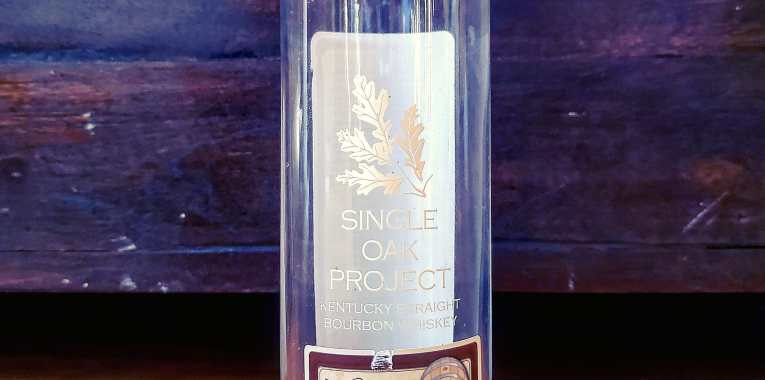
I’m trying to cut down on the quarantine drinking so today’s bottle is a single 375 of Buffalo Trace Single Oak Project.
The Single Oak Project was a massive Bourbon experiment that was begun by Buffalo Trace in 2011. The goal was to break down the very DNA of Bourbon and be able to catalogue exactly what element imparts what flavor on the final product. It was the Human Genome Project of American Whiskey.
As the name implies the major variable that affects the final flavor of a whiskey is the process of oak aging. And more importantly how the oak interacts with the spirit over time. Ever tree and every barrel is different so the first variable that needed to be controlled was the oak.
Buffalo Trace carefully selected 96 American Oak trees with special attention paid to the grain and growth rings of each tree. These were then turned into oak staves and separated into staves from the top of the tree versus the bottom of the tree. They then varied the seasoning time of the staves. Half were seasoned for 6 months the others for 12 months.
Barrels were assembled using only staves that had been prepared in the exact same way. This produced 192 unique barrels. These barrels then received either a #3 or a #4 char, the char essentially being how long the interior of the barrel was lit on fire and how deep it penetrated the staves.
They didn’t stop there though. Once the barrels were completed there were a few variables about what they were filled with. The mashbill of the whiskey varied (either a wheated or a rye Bourbon), the entry proof varied (105 or 125 proof) and then the style of ricks they were aged in varied (concrete or wood).
By their own calculations this produced 1,396 taste combinations spread between 192 bottles. And over the course of four years they released all of these bottles to the public and opened a website where everyone could catalogue their tasting notes. At the end of the project all of the ratings, scores, and tasting notes would be gathered and a “winner” would be declared. Seeing how the project saw it’s final release in 2016 we know that the “winner” was Barrel #80 which has gone into production and will be released after reaching proper maturity in 2025, if we’re all still around by then.
Barrel 80 was from the bottom half of the tree with an average grain size, seasoned for 12 months, and given a #4 char. The spirit was a rye Bourbon mashbill that entered the barrel at 125 proof and aged in a concrete rick. This is honestly very similar to traditional Buffalo Trace and it makes sense that a crowd source tasting would select something that is similar to an already popular flavor profile.
But of course the real winner of this project is the breadth of knowledge and flavor demonstrated by controlling the minutiae of every aspect of the whiskey making process. And with that in mind it’s still worth finding bottles and tasting through to see what those changes produce.
This bottle of Single Oak Barrel 156 has been on the booze shelf for years which completely defeats its purpose. So lets dive in.
This is another barrel from the bottom half of a tree with coarse grain, staves seasoned for 12 months, and given a #4 char. The spirit was a rye Bourbon base, entered the barrel at 105 proof and aged in a wooden rick. Now, after all that nerdiness here’s what it actually tastes like:
NOSE: Vanilla, Cherry, Heavy Oak, Pepper PALETE: White Pepper, Tobacco, Leather, Stone Fruit, Rye Spice FINISH: Dry, Spice, Medium, Earthy
I love the Single Oak Project because I love the minutia and variation.While I can wish that something on one of the more extreme ends of the bell curve had one out for wide production but the wealth of knowledge generated is worth a dram or a bottle.
Sheltering in place has led to a massive spike in booze sales across the United States a the days are now divided into “Coffee Hours” and “Alcohol Hours.” Being forcefully unemployed by the pandemic I’m unable to contribute to that spike and have had to reexamine my hoarding tendencies. My reluctance to open bottles, let alone finish them, has been overtaken by my belief that whiskey is meant to be enjoyed. And if not now, when?
So, join me as I work my way through my bar cart with the great Quarantine Bottle Kill of 2020.
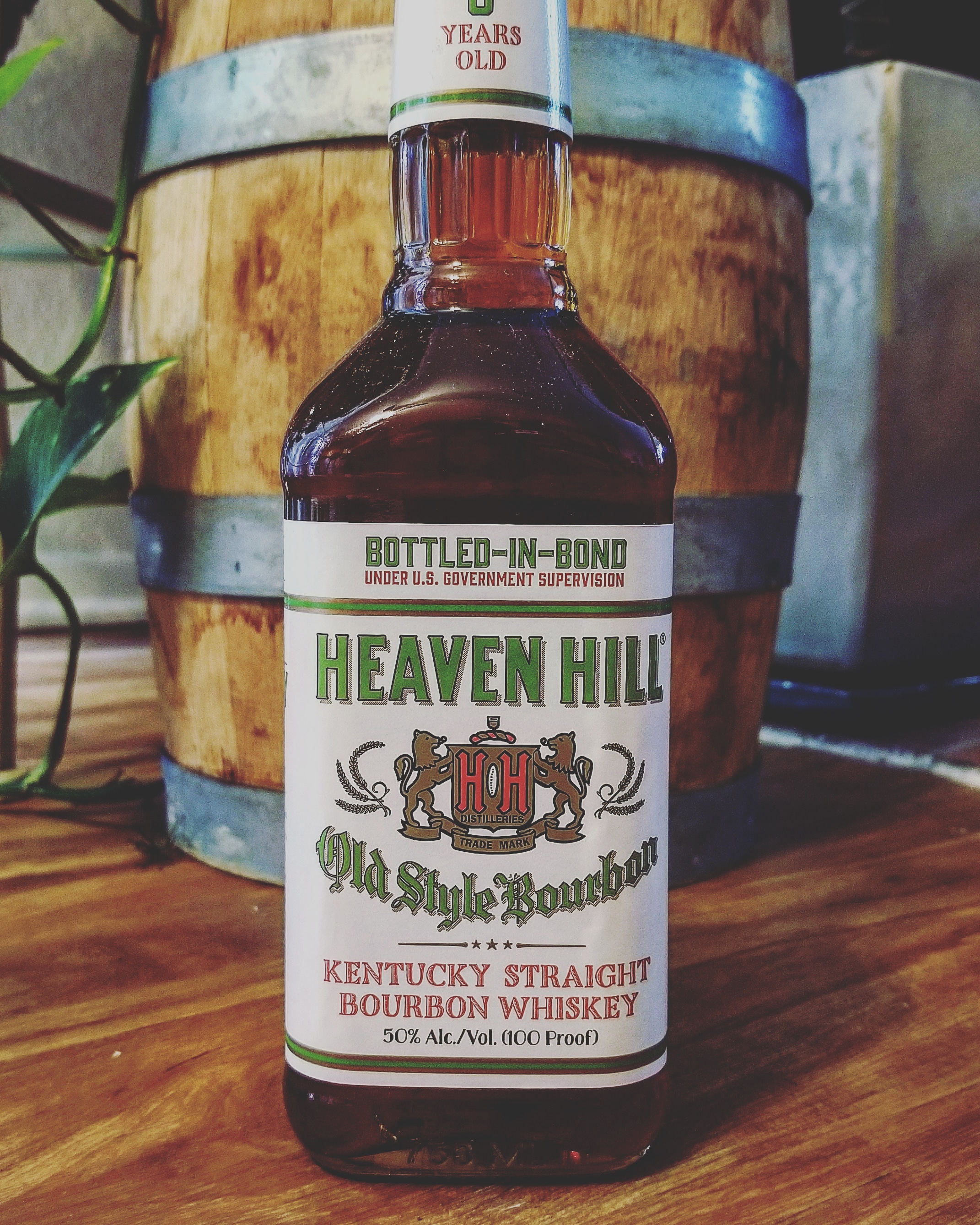
First up is a relative newcomer: Heaven Hill Bottled In Bond 7 Year Old Bourbon. Not to be confused with the Heaven Hill Bottled In Bond 6 Year Old Bourbon which was only available in Kentucky and was discontinued in 2018. One year later this 7 Year hit shelves with an updated label, an extra year of age, and a boosted price tag.
I’ve made no qualms about Heaven Hill being one of my favorite distilleries but their lack of an eponymous bourbon certainly means they have much less name recognition as a distillery than say Jim Beam. The old Heaven Hill 6 Year was one of my favorite bottles to bring back from a Kentucky trip and at $12 was an absurd steal.
Now, what exactly does an extra year and a new label and bottle taste like?
NOSE: Chestnut, dusty leather, vanilla, and oak
PALETTE: Earthy with a strong oak presence. A dusting of baking spices and a hint of tobacco. There’s a slight woodsy quality to it with a surprisingly light punch for a bonded whiskey.
FINISH: Medium and dry with a touch of stone fruit and capped with the oak and vanilla from the nose.
This is quintessential Heaven Hill. In fact, if you told me this was the 6 Year Old bottle I would believe you. Which makes sense as it’s the exact same mashbill only a year older and released a year after the 6 Year was discontinued. You can do the math. And that’s my only real con with this bottle: the math.
$12 would be an absurd price for any quality Bourbon these days. However, at $40 it enters a very crowded field of more household names like Eagle Rare, Woodford Reserve, and Knob Creek. While this is solid bourbon I’d personally pick up a bottle of Elijah Craig from the same distillery for a lower price tag.
I am happy to see it on the shelves though if only to help spread the Heaven Hill name. Though if it was still at the old price point I might have been able to stock up for the quarantine instead of having to finish the bottle.
A couple of months ago I was graciously sent a sample of the new release of Blood Oath Bourbon. Between competitions, menu flips, leaving a job, and much needed vacation travel after leaving said job the sample unfortunately fell by the wayside. But with Halloween nearly upon us I figure it would be appropriate to crack open a little Blood Oath and see what it was about.
Blood Oath is a brand owned by Luxco, Inc. a beverage producer and marketer based out of St. Louis. In addition to Blood Oath Luxco also produces Ezra Brooks, Rebel Yell, and distributes Yellowstone for Limestone Branch Distillery. While Luxco has sold bourbon for years they’re personal bourbon distillery, Lux Row Distillers, didn’t start production until January of 2018. Although their first year of production outpaced projections none of the whiskey they’ve distilled is old enough to be used for any of their brands meaning the Blood Oath is a sourced whiskey.
Now, sourced isn’t a dirty word and while I wish Luxco was open about where they sourced the whiskey they at least are open about the fact that Blood Oath is sourced and blended. In fact, Blood Oath boldly claims that they are “loyal to no one family, favoring no one distillery, and bound by no one philosophy.” The cynic in me wants to say that’s marketing speak for “we can’t guarantee a source” but blending is an art form that can produce some spectacular bottlings so let’s take the idea at face value. The Blood Oath isn’t trying to create a consistent bottling but rather a unique, limited, yearly offering. So, what’s in the Blood Oatch Pact this year?
Pact 5 is a blend of three whiskies a 13 year old rye Bourbon, an 11 year old wheated bourbon, and an 8 year old rye bourbon finished in Caribbean rum barrels. Bottled at 98.6 proof (the temperature of the human body) we don’t know the distilleries or the proportions of the blend but given Luxco’s working relationships it’s not too much, of a leap to assume that a lot of the whiskey comes from Heaven Hill. Also, considering the current state of aged whiskey it’s probably also fair to assume the bulk of the blend is the 8 year. This is noteworthy because it is this rum finish that really sets the Pact 5 apart from the previous four releases of Blood Oath.
NOSE: Vanilla, Red Apple, Cherry, Brown Sugar
PALETTE: Wet oak, molasses, earthy, candied citrus peel, clove, and a touch of hogo
FINISH: Short to medium, orange, pepper, and oak
The rum finish is surprisingly apparent once your mind is keyed to look for it. There’s a hint of that funk and brown sugar but without knowing it was a rum barrel I would have thought this was a slightly over oaked release.
It’s a touch sweet, a little aggressive, and surprisingly oaky all around. It’s a style that’s leaning into heavily oaked, older American whiskies which is certainly on trend. People are looking for flavors that are unique, big, bold, and a heavy barrel influence can make a spirit pop out of the more mellow distillates.
While the blend is interesting, I personally couldn’t justify the price point. At a suggested MMRP of $99.99 but often appearing on shelves at north of $110 I don’t know that it’s interesting enough to justify the “special occasion” pour of the price tag. This is something I’d rather sip, compare, and enjoy rather than store and dole out during the justifiable times that a 100+ dollar bottle usually enjoys.
I ultimately find myself wishing I had more context for the Blood Oath. There’s nothing bad with the Pact 5, aside from my hesitation on the price, but I don’t see a through line. I’ve had several of the previous Blood Oath’s and can’t connect the dots between the Pacts. While it’s all well and good to not have a “favorite” I would love to see a point of view that makes this whiskey more than an experiment.
I run a blog, which you’re currently reading, called Bottled In Bond, LA. I write about bartending, cocktails and spirits, primarily whiskey but occasionally not. I’ve been doing this for a few years now and occasionally old articles will suddenly get a few more views because someone Googled a bottled in bond product that doesn’t exist. You would not believe how many people are looking for a bonded Chartreuse.
About a year ago, I noticed a huge spike in an old article about Woodford Reserve. It was getting a Google search almost daily for a month. I became curious, did my own googling, and found a single Reddit post about a Woodford Bottled-In-Bond but not much else.
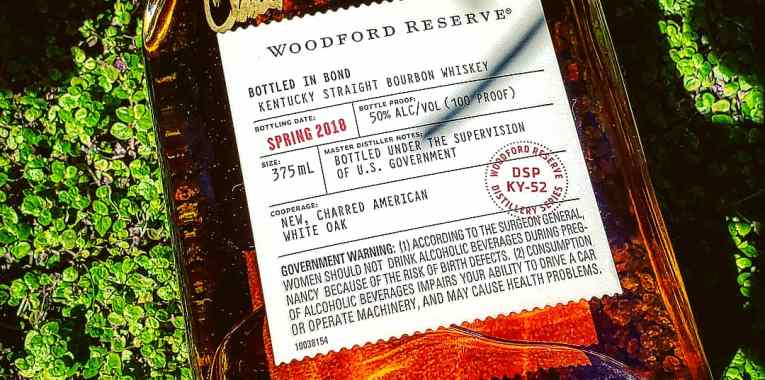
After asking around with no clear answers my friend Luke Ford, who works for Woodford, returned from a visit to Kentucky with a .375ml bottle signed by Woodford Master Distiller Chris Morris. A distillery only release of Woodford Reserve Bottled In Bond.
My natural hoarding instincts took over, it went on the shelf and remained unopened for the past year. But why? I’ve always maintained that whiskey is meant to be drank, to be experienced, and after all the curiosity that lead to me actually receiving a bottle shouldn’t I be curious about what the whiskey actually tastes like? So, I opened it.
NOSE: Super oak, straw, light stone fruit PALETTE: Caramel, cinnamon, baked peach pie, with a touch of the metallic pie tin FINISH: Bright, quick, and surprisingly light for the extra proof
This bottle tastes exactly like what I would expect a Bonded Woodford to taste like and that is incredibly interesting to me because by all right’s it shouldn’t.
The Bottled In Bond Act of 1897 states that to be bottled in bond a product must be produced by one distiller at one distillery within in one 6-month distillation “season.” It must also be aged in a federally bonded warehouse for a minimum of four years and bottled at 100 proof.
It’s the one distillery requirement that makes this interesting. The traditional bottle of Woodford is made up of spirit from two different distilleries. Column Still distillate from the Brown Foreman Distillery in Shively, KY and Pot Still distillate from the Woodford Distillery in Versailles, KY. This bottle only caries the DSP Number, essentially the distillery address, for the Woodford Distillery. Meaning this should legally be only the pot still whiskey. Which to me says there should be a bigger flavor difference. In a way it’s almost impressive that this really does just taste like Woodford.
Part of what I love about Bonded whiskey is how clear cut it is. You always know the exact distillery, proof, and process whenever a product is bottled in bond. It strips out a lot of the mystery and marketing from a brand. It was an often overlooked mark of quality on affordable whiskey. And yes, the category is seeing a resurgence and premiumization in the past few years, however these are often just upscaled versions of existing brands. They aren’t bad but they are a sign of the times and they are familiar.
This Woodford Bottled In Bond clearly falls into this ongoing trend but this bottle also raises questions for me. Is the labeling on this very small run inaccurate or have I always overestimated the impact of the column stills on the final Woodford profile? It’s made me think about Woodford in a way that I honestly haven’t in years. I don’t have an answer to these questions but at least it’s something to ponder over the next glass.
Conservatively, I would say that 87% of the Four Roses Single Barrel depletions at any bar I work at are due to it ending up in my mouth.
Conversely, my Partner-In-Bars, Dave Purcell, would rather sit in the pool with a bottle of the Four Roses Small Batch. I’ve sourced Four Roses Barrel Strength Single Barrels and have dived into the history of the distillery in the past. All of this is to say that I am a big fan of Four Roses and became very excited when they announced their first permanent product line extension in over 12 years. And immediately became wary when they announced that it would be called the Small Batch Select.
Four Roses is one of the two great modern distilleries to emerge from the collapse of the old Seagram’s Empire. While Four Roses languished as a bottom tier blended whiskey for the later half of the 20th century it quickly became a staple of the new Bourbon Boom in the ‘00s when the distillery was purchased by the Japanese beverage conglomerate Kirin. Under the leadership of Master Distiller Jim Rutledge Four Roses became one of the most sought after Bourbon’s in the world. This was in part due to the process that Four Roses uses to make their whiskey.
Four Roses makes 10 different Bourbon recipes. And they’re all coded so you can tell what whiskey is being used in every bottle. For every code there are four letters, the first and the third will always be the same. The first letter will always be ‘O’, signifying that it was made at the Four Roses Distillery in Lawrenceburg, KY and the third letter will always be “S” meaning that it is Straight Bourbon.
The second letter will then signify that mash bill. Four Roses utilizes two different mash bills:
Mash bill E, which is 75% corn, 20% rye, and 5% malted barley Mash bill B, which is 60% corn, 35% rye, and 5% malted barley.
These mash bills are then fermented with one of five unique yeast strains, which is designated by the fourth letter:
K – rich in spiciness, full bodied O – floral, spicy, medium bodied Q – slightly fruity, spicy, medium bodied F – herbal V -delicate fruit
The Single Barrel is always OBSV, high rye and delicate fruit. The Small Batch is a blend of four: OBSK, OESK, OBSO, OESO, and the standard Yellow Label is a blend of all ten. Special releases throughout the years have used different mash bills in different amounts.
My initial hesitation upon hearing about the Small Batch Select was two fold. I’m just not as big of a fan of the Small batch as the Single Barrel and I didn’t know if it would be different enough from the Small Batch to warrant a new extension. So, what makes it different?
First up is the proof. Bottled at 104 Proof and Non-Chill Filtered the Small Batch Select is hotter than the Single Barrel which comes in at 100 Proof. Second, while there is no age statement Four Roses has said that it is a blend of 6-7 year old Bourbons. Lastly, that blend is a blend of six of the recipes: OBSV, OBSK, OBSF, OESV, OESK, and OESF. We still don’t know the proportions, but this brings in distinctly different flavors from the standard Small Batch.
NOSE: Baking Spice, red fruit, and oak
PALETTE: Vanilla, apricot, cinnamon, oak, and dark chocolate
FINISH: Medium and dry, tobacco and leather
This fourth Four Roses is truly distinct from its siblings. Enough to warrant its entry to the family. My initial skepticism came from the name yet upon further research and tasting its clear that this new entry is vastly different from the established small batch while still being a technical small batch.
It’s also important to note that this is new Master Distiller Brent Elliott’s first permanent edition to the Four Roses line up since taking over in 2015. Coupled with previous limited releases like the Al Young 50th Anniversary and the 130th Anniversary Small Batch I think we’re getting a sense of how Brent’s palette differs from Jim’s.
While this won’t replace the Single Barrel for me it is a worthy addition that fans of Four Roses will love but is also a great introduction for new comers to the brand.
Example A: my girlfriend swears by the deals emailed out daily by Scott’s Cheap Flights. Yet every time a deal lands, I have to ask about time frame, logistics, check on available vacation days, and generally stressed about the fact that booking this trip means that we won’t be able to book some other hypothetical trip that doesn’t yet exist and just like that the deal, and the moment, is gone.
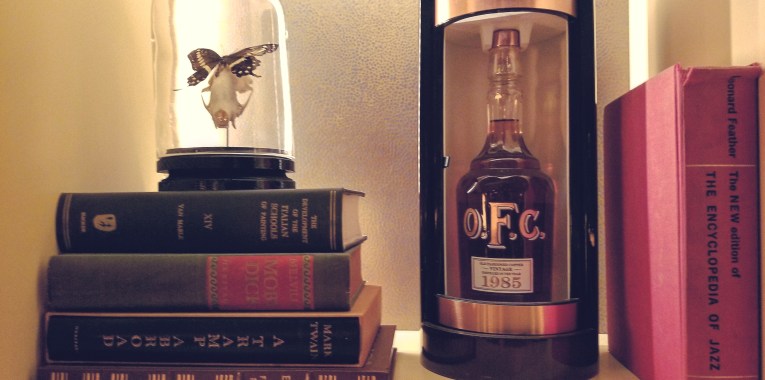
Example B: We received a bottle of the O.F.C 1985 Vintage Bourbon a year ago and I’ve been planning to write about it ever since. So, what the hell is O.F.C. and why has it been on my mind for literally a year?
O.F.C. stands for Old Fashioned Copper and is the original name for the distillery founded by Col. E.H Taylor in 1869. Col. Taylor was an expert marketer and helped establish the concept of a Bourbon “brand” as well as being one of the major figures behind the passing of the Bottled In Bond act of 1897.
The distillery itself was sold to another legend, George T. Stagg, in 1878. There’s an apocryphal story that one of the conditions of the sale was that Stagg could keep the initials O.F.C. but he had to change at least one of the words it stood. This is why the distillery is sometimes called the “Old Fire Copper” distillery. Regardless of the veracity of this claim the distillery’s name was officially changed to the George T. Stagg Distillery in 1904. It was the first distillery to utilize climate-controlled aging warehouses when Stagg installed steam heaters in 1886 and was one of only four Kentucky Distilleries granted a license to continue distilling throughout Prohibition.
The distillery changed hands a few more times in the 20th century before finally being purchased by the Sazerac Corporation in 1992 and its named changed once again. Now known as Buffalo Trace it arguably produces some of the most sought after American Whiskey on the market, including bottles named after both Taylor and Stagg as well as the much desired Pappy Van Winkle line.
The distillery clearly has experience with special releases but even amongst the plethora of rare bottles the O.F.C. stands out.
The O.F.C. is less a special release and more of a time capsule. These are all single barrel, vintage dated Bourbons. Each bottle is sourced from a single barrel and marked with the year of distillation. This makes each vintage completely unique with the mashbill and age varying depending on the bottling. Another intriguing fact is that this line up was originally produced only for charity.
A literal Time Capsule.
The team at Sazerac and Buffalo Trace are just as savvy marketers as Col. Taylor was back in the day. I have to imagine that when they see bottles of their whiskey selling for thousands of dollars on the secondary market that they looked for a way to capitalize on that market value yet still offer an added bonus. The original three releases were only made available to 200 charities, at no cost, to auction off and help raise money for their cause. It was a great way to turn the image of limited whiskey auctions on its head and raise $1.2 million dollars for charity. It also immediately established the O.F.C. line as a super limited, ultra premium bottle. I was silently jealous of the fact that I would never see one of these bottles yet still applauded the move to raise money for worthy causes. But when the second round of releases was made available for retail purchase I leapt at the opportunity. Especially with the vintage being offered was the 1985. It’s not often you have a shared birth year for your whiskey.
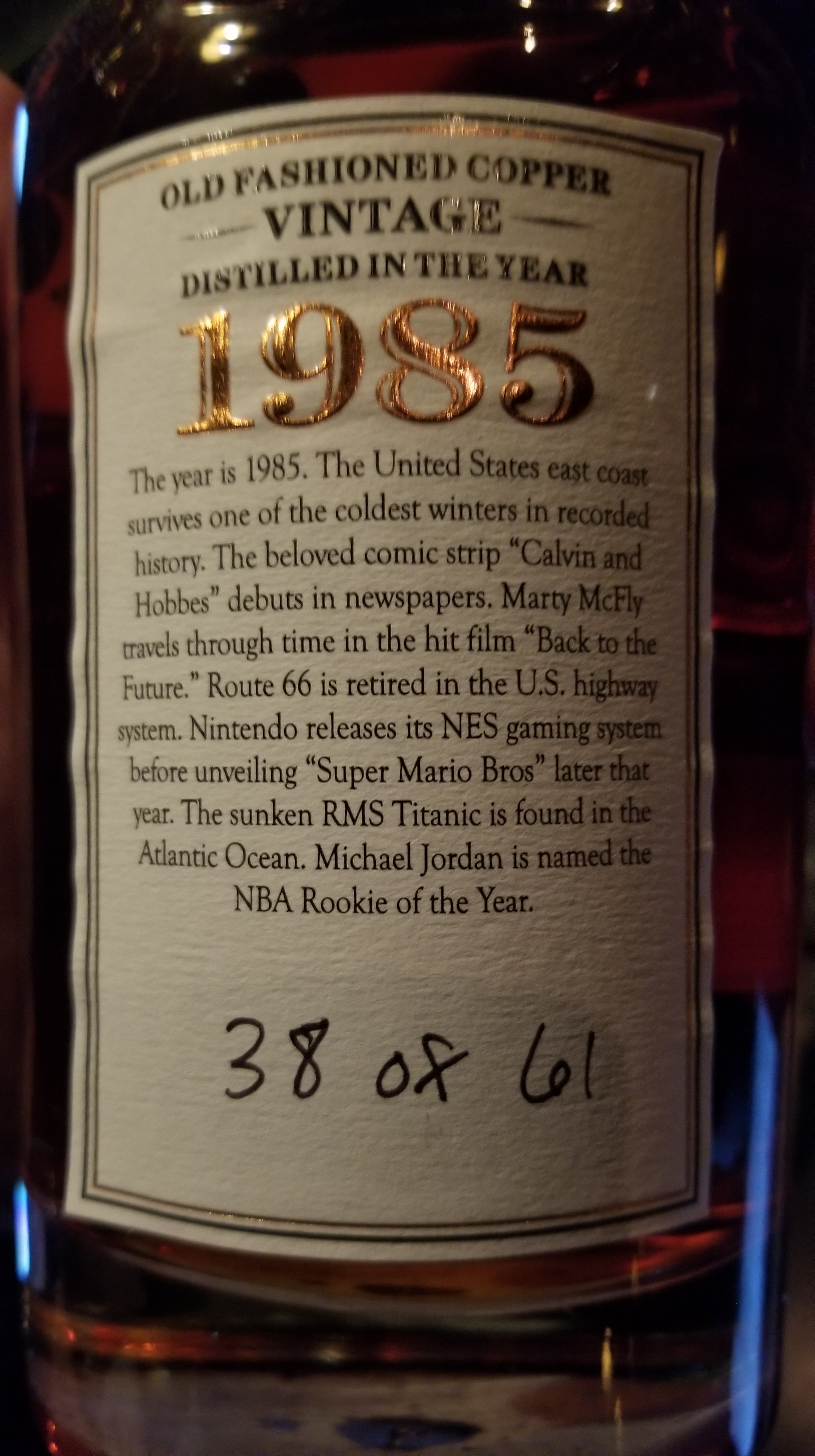
The 1985 Vintage is one of only 61 bottles to come from a barrel which was stored on the second floor of Warehouse Q. Buffalo Trace says that all of the barrels were tasted over time and removed from the barrel before becoming over oaked and since there is no age statement listed on the bottle it’s hard to tell the precise age of the bottle. This isn’t an uncommon practice, Buffalo Trace has done similar things with Eagle Rare 17 and Sazerac 18 so the whiskey isn’t as much as an oak bomb as you might expect. It is certainly old but there’s no official word on if it was a full 33 years in oak before being bottled. With that in mind let’s dive into the glass:
NOSE: Rich oak, Dried fruit, and vanilla
PALATTE: Rich vanilla, dark cherry, prune, oak, and a dark earthiness
FINISH: Bitter chocolate, a touch of tobacco, and a coating lingering sense of time
Overall this is an excellent example of old American Bourbon whiskey. It is still alive without being over oaked and has a power of flavor to match up to the power of the years it spent asleep in the barrel. The issue, as always, is the price. The bottle comes in at a staggering suggested retail price of $2,500. When the proceeds were going to charity this number wouldn’t have raised peep from me but now it changes the talking points.
Is this good whiskey? Yes. Is it for everyone? Absolutely not. It is a special occasion, made so by the fact that it is a living time capsule. You are paying for the time and history as much as the whiskey itself. I will argue that experiences are more important than money but the value is certainly subjective. I for one am going to savor the fact that I get to experience this bottled moment of time and not take it for granted.
I received a text this week from a friend that without preamble said, “Did Elmer T. Lee get worse?”
My gut
reaction was, “Of course not! How dare you besmirch the name of the dearly
departed father of modern Bourbon!?” After calming myself with a hefty dram I
remembered that despite centuries of tradition whiskey making is a constantly
evolving art and barrel aging is by no means an exact science. To add to that,
there were claims of “cork taint” by members of the Reddit whiskey community in
2016. The popularity of Elmer T. Lee has
also exploded in recent years so the odds are that it’s younger stock than
previous years. By the end of the glass the question was less of an attack and
more of a probability.
Son, we’re not hiring today.”
This could have remained a simple thought experiment but a recent trip to the Liquor Locker left me with a bottle of 2014 Elmer and the ability to do a little compare and contrast. But first a little context.
What exactly is Elmer T. Lee? Elmer T. Lee is both a Single Barrel Kentucky Straight Bourbon, and the deceased former Master Distiller of the distillery we now know as Buffalo Trace.
“Son, we’re not hiring today.” Is
how Col. Albert B. Blanton first greeted Elmer in 1949, but at the instance of
his friend at the distillery he showed up to work the next week anyway. Over the years Elmer grew from a maintenance
engineer to the distilleries first Master Distiller. He officially “retired” in
1985 but not before releasing the world’s first Single Barrel Bourbon,
Blanton’s, named after the man who didn’t hire him.
After Blanton’s became a hit the distillery honored its Master Distiller emeritus with his own namesake Single Barrel. Elmer was still heavily involved with the distillery and would come in every Tuesday to taste barrels and make selections for his namesake release.
Before Blanton’s, and Elmer, the
concept of a “Single Barrel” Bourbon didn’t exist. Remember, barrel aging isn’t an exact
science. Every barrel ages differently depending on where in the rickhouse it
sits, the quality of the barrel, the temperature swings over the years, all of
these factors contribute to each barrel being a unique specimen But the whole
idea of a bottled whiskey is consistency so generally barrels are blended, or
batched, together to recreate a specific flavor profile. For a Single Barrel
all of the whiskey in the bottle comes from one single barrel and has to stand
on its own individual merits. While there will always be some variation, it is
a sign of the skill of the distillery to be able to produce quality single
barrels that are still consistent.
Both Blanton’s and Elmer share the
same DNA. They’re both Buffalo Trace Mashbill #2 which is slightly higher in
rye content (about 15%) and are both technically co-owned and produced with Age
International. They’re both single barrels and they’re both non-age statement
Bourbon’s so we know they’re at least older than four years. But two things
separate them from each other: aging and proof.
Drinking is such an individual experience. It’s can be a social activity but the act of tasting is something intrinsically personal.
Blanton’s is always aged in Warehouse
H, which was commissioned by Blanton himself. It is a fully metal clad warehouse which allows
for greater heat transfer and, supposedly, more rapid aging. Elmer has no such
restrictions on what warehouse it must be aged in which theoretically allows
for a larger variation in flavors.
Elmer is also bottled at 90 proof
(45% ABV) where as Blanton’s is bottled at 93 Proof (46.5% ABV). While this
difference seems small the alcohol is where the flavor is. A few extra proof
points can make a world of difference and a whiskey can open up with just a few
more drops of water. That isn’t to say that higher proof is always better, just
like older doesn’t always mean better, it just means a different flavor
profile. Interestingly, Elmer was said to drink his Bourbon at 60 Proof as he
felt that was the point when he could taste all the flavor with out the alcohol
getting in the way.
Now that all the intellectual
foreplay is out of the way, how do they actually taste?
Four Years can really change a bottle.
2014
NOSE: Oak and Clove
PALETTE: Earthy, Dark Chocolate, Coffee, Tobacco
FINISH: Long, slightly damp and musty
2018
NOSE: Oak, Stone fruit, Vanilla
PALETTE: Rye Spice, Stone Fruit, Tobacco,
Coffee
FINISH: Light, Spicy
Surprisingly, the 2014 is livelier
in the glass, with a bigger spice on the nose and a more rounded midpalette.
However, the 2018 carries a darker earthiness, more of the tobacco I associate
with Elmer’s and a longer finish. Yet they are both still Elmer. In fact,
pouring the two together creates an almost uber-Elmer that is exactly what I
expect Elmer to taste like all the time.
Drinking is such an individual experience. It’s can be a social activity but the act of tasting is something intrinsically personal. Where you are at, what time of the year, and how much effort you put into finding the bottle all effects how the spirit tastes. So, back to my friends original question. Did Elmer T. Lee get worse? I’d say no, but it is different. But then again, so am I.
Reinvention is the key to longevity. No matter how often you hear something being touted as “Old Fashioned” chances are it’s actually an update on an old technique or just straight up marketing. We are constant victims of nostalgia, even the term “Old Fashioned” implies a dissatisfaction with the modern. Yet as much as we glorify the past the only way to truly stand the test of time is by constantly changing.
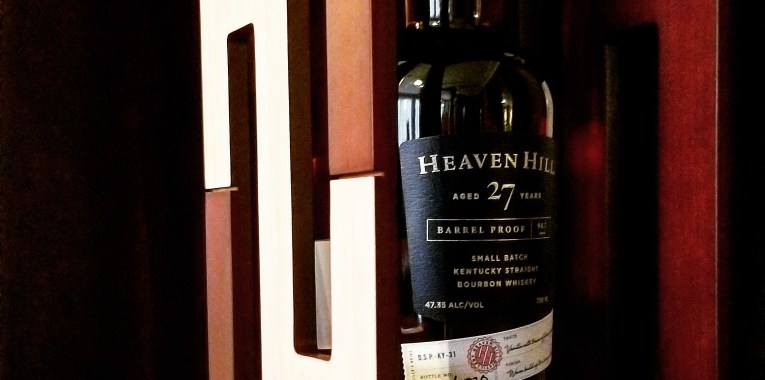
Take Heaven Hill’s new premium, limited edition release: the eponymous Heaven Hill 27 Year Old Barrel Strength Straight Kentucky Bourbon. Those are a lot of buzz words that add up to a lot of the old being new, just slightly different.
Let’s start at the top.
Unless you’re from Kentucky, Heaven Hill probably isn’t a brand you’re familiar with. But if you drink Bourbon it’s a distillery that permeates the very fabric of the category. Founded in 1935, Heaven Hill is the 7th largest alcohol supplier in the US, has the second largest inventory of American whiskey in the country, and is the largest, independent, family owned marketer and producer of spirits in the United States.
In an industry that’s built around the cult of personality and legends of the past (Jim Beam, Pappy Van Winkle, Jack Daniel’s, etc.) Heaven Hill built their name on other people’s legends: Elijah Craig, Evan Williams, and Henry McKenna. Hell, their master distiller since the founding of the distillery has always been a member of the Beam family.
However, they’ve never had that flagship, namesake bottle. Outside of a few specialty releases named after William Heavehill, the farmer who owned the land the distillery was built on, the only true bottling to carry the Heaven Hill name is a 6 year old, bottled in bond, Kentucky exclusive. And this bottle perfectly encapsulates the company in my mind.
Heaven Hill kept the bottled in bond designation alive when no one cared and can be directly credited to it’s resurgence with products like Rittenhouse Bottled In Bond Rye. It’s also a 6 year old, straight Bourbon whiskey that ran for $12 dollars a bottle. It is quality at an incredibly affordable price, which is something that Heaven Hill has done well for so long. It also isn’t what the whiskey world is about anymore. These days it’s all about limited, old and rare so it should be no surprise that this little gem has been discontinued in favor of creating a more premium line up.
Which brings us to the age statement.
American whiskies, almost as a rule, don’t get this old. The oldest, most consistent age statement caps out at the yearly release of the Pappy Van Winkle and Elijah Craig 23 Year Olds, the latter also being produced by Heaven Hill. Because of the law requiring Bourbon to be aged in brand new oak barrels Bourbon this old just doesn’t taste that good, because it’s often over oaked or overly tannic. There’s also the catch that the Angel’s Share steals a percentage every year meaning there’s less to sell and that’s not taking into account the unpredictable acts of nature. A lot can happen in 27 years.
At 27 Years Old this batch of a mere 41 barrels were all aged on the 1st or 2nd floors of the Heaven Hill rickhouses where the Angel’s Share is arguably at its most minimal; but with only 2,820 bottles produced that’s still a loss of 75% of the juice.
This whiskey can also never be replicated due to an act of god. In 1996, the Old Heaven Hill Springs Distillery burnt to the ground taking hundreds of barrels, and gallons upon gallons of aging whiskey with it. These 41 barrels were not only produced at a destroyed distillery, they survived an inferno that took much of its cousin spirit with it. This isn’t just rare because of its age, it’s both rare in addition to its age.
Heaven Hill goes up in flame.
The Barrel Strength designation is where things get really weird. There is no legal definition for what “barrel strength” means. In fact the TTB is currently working on a new set of regulations specifically about that designation, but in colloquial use barrel strength is generally expected to mean that the whiskey is bottled at the proof it comes out of the barrel at which is usually well north of 100 proof. It is shocking then to see this barrel proof listed at a measly 94.7.
This goes back to those 41 barrels on the 1st and 2nd floor. The lower flowers generally allow for more mellow aging that reduces the Angel’s share lost. However, it also creates a naturally lower ABV as the alcohol evaporates faster than the water. This literal loss of alcohol is another reason why you don’t see whiskey this old from Kentucky. One of the perks of not having a template though was that these barrels weren’t selected with the idea of creating consistent flavor profile like most standard bottling. Instead these were the barrels left standing. After everything that was over oaked, overly tannic, too harsh, too soft, etc only 41 barrels were left and when batched together the naturally occurring ABV was 47.35, resulting in a technical Barrel Strength whiskey at an incredibly drinkable 94.7 proof.
The rest of the words we know. Straight Kentucky Bourbon means that it’s legally 51% corn whiskey, made in the state of Kentucky, aged for a minimum of 2 year in brand new, freshly charred, white oak barrels with no added coloring or flavors.
That’s a lot to take in for a single bottle. And it’s surprisingly alive. Heaven Hill has released a lot of one-off older whiskies. They’ve got deep, deep store houses yet in my opinion a lot of them have fallen flat. There was always something just off about them whether they were over oaked, or they felt thin because of the proof point. Whatever that missing puzzle piece was they seem to have found it with this bottling.
And in the end this is less about of a single bottle and more a culmination of Heaven hill’s journey over the past three decades. Bourbon has gone from the unwanted step-child of the spirit world to a global commodity and the Heaven Hill brands have evolved to keep pace. They’ve gone from affordable work horse whiskies into some of the most awarded and sought after bottlings in the world. And with this pivot Heaven Hill may have finally found a brand to highlight the gems that are sleeping in those Kentucky hills. I just hope we don’t have to wait another 27 years to see them.
NOSE: The Oak leaps out of the glass, there is a seasoned cedar wood quality with only a mild hint of the vanilla often expected.
PALETTE: Tannic, with a dried orange, and deep baking spice note. The caramel takes a major back seat only slipping out towards the end while the mid a palette is all about that earthy, savory oakyness.
FINISH: Incredibly dry, and a lingering mélange of everything that reminds you of your grandfather: tobacco, cigars, and leather that lasts longer that it’s proof would suggest.
I sat down and did this almost exactly a year ago and it’s time again for the annual arrival of a privately selected Elijah Craig Barrel. This one, like all of them, is special because it is a 100% unique bottling but it’s also the culmination of an insane year.
Elijah Craig is the whiskey I’ve probably written about the most so I’ll skip the folklore and brand history, you can read about those here. Instead I want to get personal and talk about the time since the last barrel rolled into my hands.
I started buying single barrels of whiskey years ago. Elijah Craig was the first barrel I bought and it lit a fever in me. It was pretty easy to track where I had been working using this as a metric. As time went on as the list of “House Single Barrels” would balloon seemingly overnight. Last year was full of first for me. This year has been about constant change.
Training Tome
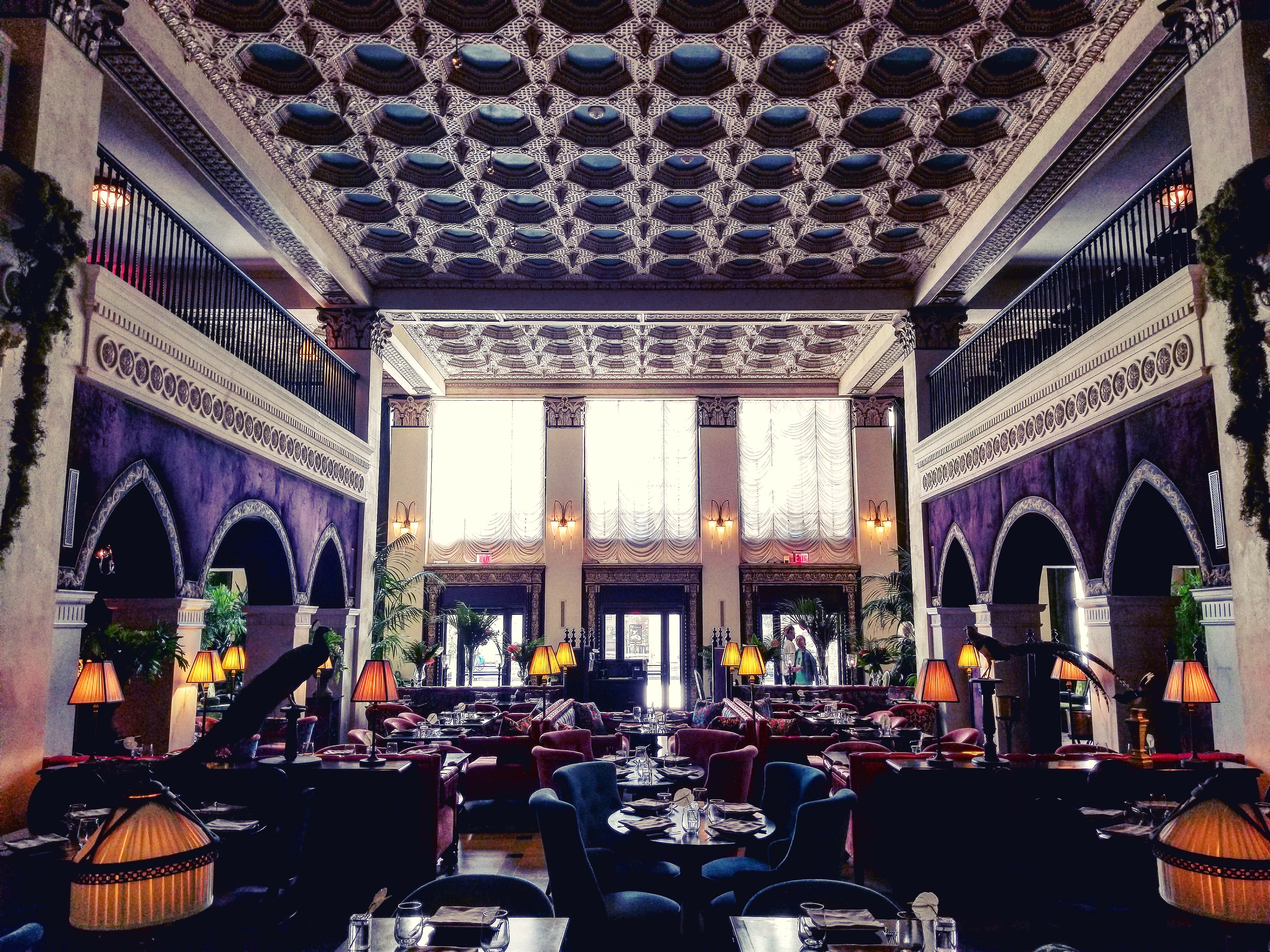
When the last barrel of Elijah Craig showed up to Faith & Flower I already new that in a few months I would be leaving it behind and traveling blocks away to the corner of 7th and Olive as one of the opening bar managers for NoMad Los Angeles. What I didn’t know was what that really meant.
I knew that I was joining a well-established,well-regarded, restaurant and bar team. I knew Leo Robitschek mostly by reputation and I knew the program; Pietro Collina, Nathan O’Neil and the rest of the team in NYC had built one of the most impressive bar programs not just in the country but the world. I knew it was going to be a lot of pressure and an immeasurable amount of work. What I didn’t know was how I fit into the equation.
My partner-in-bar Dave Purcell had already been a part of the team for months before I was brought on and given my crash course in everything NoMad. Three weeks after I started training I had pivoted learning to teaching. We were now training a barstaff that was 55 people large on an opening cocktail menu that was nearly 60+ drinks (not counting house specs on classic drinks) spread across four bars and not enough back bar space.
Every single member of that opening team was a goddamn rockstar and every member of our team, nearly a year later, is a member of that opening squad. It speaks to their professionalism and skill that they have risen above and beyond as the restaurant has constantly changed around them. Constant Reinvention is one of our guiding principles after all.
A lot of late night exits.
Our Head Bartenders, who moved across the country from to be a part of this project, are some of the hardest working, most dedicated hospitality professionals I have ever met and I couldn’t imagine a better crew to get this beast off the ground with.
But even after opening I still didn’t know where I fit in. I wasn’t behind the bar and the Head Bartenders embodied the program and the culture so much more deeply than I felt that I did. They had simply been living with it for longer then I had. As far as I could tell I was here to herd a pack of wild bartenders and to help make the NoMad more LA. The first inkling of what that might actually mean happened when the team at Heaven Hill approached me about buying another barrel this year.
I immediately leapt at the idea and pitched it to Dave and Leo. After some debate, and extended tasting sessions, we settled on this bottle that now sits before me. An Eight Year Old Elijah Craig Single Barrel aged on the 6th Floor of Rickhouse “S” outside the Heaven Hill bottling plant in Bardstown, KY.
It has a heavy caramel nose and an upfront sweetness yet also a delightful earthiness and tannic finish that allows it to be sipped on it’s own but also to be built into cocktails which are surely the lifeblood of any NoMad bar.
Elijah Craig has been an integral part of the history of NoMad. The only drink to have never left the menu at NoMad is the Start Me Up, a Whiskey Sour variation with ginger, honey, Strega, rum and of course Elijah Craig. Using this barrel really drives home those whiskey notes in this drink. Here was something that I could contribute to the NoMad lexicon that was still wholly the NoMad and also intrinsically me.
This year also had it’s fair amount of travel, back to Pennsylvania for my Grandmother’s 90th birthday, a trip to the Cook Island’s (look it up it’s a real place) and a chance to return to France with my always more intelligent than me girlfriend.
There were less competitions, opening four bars in less than three months eats up a lot of free time, but I now have a rotovap as part of my tool set and know more about working with sherry than I could have ever imagined. As I sit here sipping this whiskey I am incredibly proud to see the NoMad symbol on its label.
Last year I declared I hate change and this year I find myself wondering if the new norm is constant change. I don’t have an answer to the question but I do look forward to what next year’s barrel of Elijah Craig brings.








 Bottled In Bond LA