Whiskey Wednesday: Knob Creek 25th Anniversary

Bourbon is an old tradition, dating back hundreds of years to our rugged frontier forefathers and foremothers who proved their American spirit by making a distinct product using brilliant recipes and methods that they would pass down unchanged to us to be poured into a glass for our drinking pleasure today. At least according to the marketing materials  it is… the truth is a bit more complicated.

Although the term “Bourbon” is associated with whiskey as early as the 1820s, “Bourbon” was only declared the native spirit of the United States by Congress 53 years ago with the passing of a 1964 resolution. And the definition of “Whiskey” as a spirit distilled from grain, and Bourbon as a spirit distilled from 51% corn is only 108 years old. President William Howard Taft put the definition in place in 1909 as part of the Safe Food and Drug Administration Act of 1906. Yes, it took him three years to come up with the definition of “Bourbon whiskey.” But with the start of Prohibition a mere 11 years away its questionable how many people would have enjoyed whiskey that lived up to these new regulations. Think about that the next time someone tells you their whiskey is “Pre-Prohibition Style.”

All of this is to say that tradition is long and constantly changing and in the adjusted timeline some landmarks are bigger than they appear at first. Like, for instance, Knob Creek’s 25th Anniversary.

images

Knob Creek was the whiskey child of Booker Noe, grandson of Jim Beam who tookover as Head Distiller of his grandfather’s distillery in 1965. Booker, along with Elmer T. Lee and Jimmy Russell, is credited with the revitalization of the Bourbon market at the end of the 80s with the introduction of now iconic brands of Bourbon. Booker first released Booker’s Bourbon in 1988 to much acclaim, and this was quickly followed up with Baker’s, then Basil Hayden’s and Knob Creek in 1992. These are the heart and soul of the Jim Beam Small Batch collection, which led the way in many respects for the premiumization of Bourbon.  None of these have survived to their 25th year with out some alteration.

Knob Creek is named after the stream that ran alongside Abraham Lincoln’s childhood home in Kentucky and is Booker’s take on  “Pre-Prohibition Style” whiskey. A term that we can now see is as nebulous as those early definitions of whiskey.

In this case it meant a Bourbon whiskey bottled at 100 proof and carrying an age statement of 9 years. Traditional Knob Creek is a deep caramel color, with a nose that carries a lot of oak, along with a touch of maple and baking spice, a super vanilla, white pepper, and dark cherry palette with a earthiness and dustiness that I can only associate with Jim Beam yeast, and a gripping, dry finish that is a bit bracing at 100 proof. It’s iconic. Immutable.

Except it wasn’t. In 2001 Booker, who had continued to oversee the brand well into his 70’s, passed the torch to his son Fred. And shortly after the Bourbon boom that Booker had helped create hit full force.

Knob Creek expanded. In 2010 Knob Creek Single Barrel hit the market. It was a natural expansion, still 9 years old but bottled at 120 proof from a single barrel. Then they began releasing a non age statement Knob Creek Rye in 2012, followed in 2013 by ae008e3717aca1adfe229d4d561643efthe Knob Creek Smoked Maple, a bourbon flavored liquor bottled at 90 proof. Then camethe inevitable. In 2016, just shy of 25 years, Beam Suntory announced that Knob Creek would be dropping its age statement. That same year the Knob Creek 2001 was released; a 13 year, Cask Strength release comprised of the last barrel that Booker Noe laid down before passing the torch to his son.
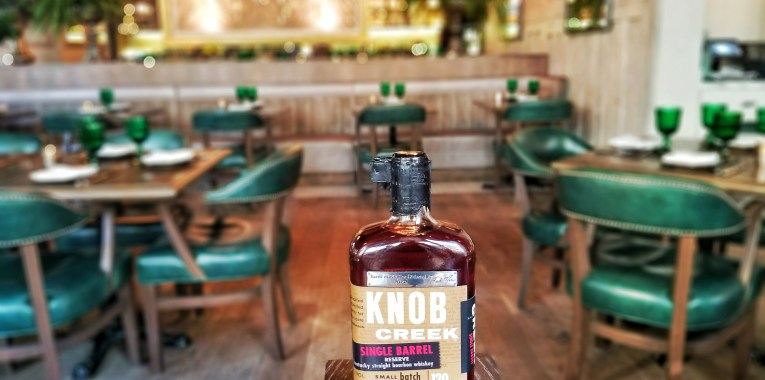
Jim Beam has followed up with a 25th Anniversary release appropriately named Knob Creek 25thAnniversary. It’s a limited release of 300 barrels, all between 12-13 years old and bottled between 120-125 proof that is exactly what it sounds like: bigger, more intense, Knob Creek.

Whether you’re going by the centuries old “traditional” definition or adhering  to a more modern practice twenty five years is still a milestone worth celebrating in the midst of so much change. Hell, maybe a few more milestones like this will help us truly appreciate that some change is as much a part of Bourbon heritage as all those pre-Prohibition style ways of making it are.

Whiskey Wednesday: Compass Box Directions

There are things that I love and there are things that I intellectually love. There’s a Venn Diagram where these two worlds merge but the edges are blurry and unscientific. Compass Box falls squarely in the grey area of these circles.

Over the past 17 years Compass Box has certainly marketed themselves as the hip, bad boys of the Scotch world while simultaneously pushing for greater education, transparency, and innovation in the category. As in so many things these days, the nerds have become the cool kids.

Founded in 2000 by former Johnie Walker marketing director and fellow American, John Glasser, Compass Box labels themselves as ‘whiskymakers’ a term the fully admit they made up. To them a whiskymaker is someone who “feels a need and an obligation to make things better – to ask questions, to challenge, to experiment.” In a traditional sense what they are is a blending house, not dissimilar to Johnnie Walker. They source whisky, both grain and single malt, from various distilleries throughout Scotland and then blend them together to create something, hopefully, unique and larger than the sum of its parts. Where Compass Box excels though is putting their own spin on the process. However, this personal spin often causes friction with the Scotch powers that be.

In 2005 they were forced to discontinue one of their “Signature Range” blends, the Oak Cross because of the aging process used to create it. Compass box was aging the blend with flat, French Oak staves placed inside the barrel to produce a different flavor, not dissimilar to what Maker’s Mark is doing with Maker’s 46. The Scotch Whisky Association, the trade organization that functions as the defacto Scotch whisky government, felt that this aging process

violated the Scotch Whisky Regulations and in the face of legal action the Spice Tree was discontinued. It was later revived by aging the blend in barrels that had be recoopered to included French Oak barrel heads, instead of barrel inserts. This helped give them an early reputation for innovation, and for standing up to the traditional, closed of Scotch makers.

getimage.jpg

This reputation was solidified in 2015 when they locked horns with the ScotchWhisky Association again, this time over transparency.  Compass Box had been shipping informational cards with their blends fully disclosing the source, style, age, and percentages of all of the component whiskies for their blends. The SWA felt that this violated both UK and EU laws, which state that a whisky may only list the age of the youngest whisky in the blend no matter the proportions. According to the SWA if you add a cupful of three year old whisky to a barrel of 50 year old whisky you now must label that as a three year old whisky. This is why blends like Johnnie Walker Blue will hint that there is 30 year old whisky in the bottle but you’ll never find that number actually on the packaging. Compass Box and John Glasser said, that fine will call it three year old whisky but drinkers want transparency and we want to be able to tell them exactly what makes up our bottle.

In another compromise, Compass Box has backed down from mailing out these images.jpginserts, but still makes them available online and they started the Scotch Whisky Transparency Campaign, which outlines their goals and what exactly they would like to see changed in the regulations.

None of this would be possible with out the whisky though. And John Glasser and Compass Box are excellent blenders. Take the Compass Box Asyla from their Signature Range. “Asyla” is plural for asylum and is a blended whisky, comprised of both grain and malt whiskey. Specifically, 50% Grain Whisky from Cameron bridge aged in first fill bourbon barrels, 5 % Malt whisky from Glen Elgin aged in refill hogshead, 23% malt from Teaninich aged in first fill American and 22% malt from Linkwood aged in First Fill American. Can you see how much the nerd it me loves having that information to pick apart?! The final product ends up leading with a light vanilla fruit from the predominant grain whisky with a floral, grassy, and stone fruit character added from the supporting malts. It’s an immensely approachable everyday whisky that I personally recommend for drinkers of Johnnie Walker almost every time I’m behind the bar and I have been for years. That’s part of the problem though, as I see it at least.

Despite years of bartenders recommending the product, and the whisky nerds geeking out I don’t know who’s actually drinking the whiskey. I can’t recall anyone ever calling for it by name. I often wonder if I’ve bought into what amounts to a marketing gimmick of transparency and rebel attitude. It comes into starker focus when you look at their limited releases. They’re clearly thumbing their noses at the SWA with their “Three Year Extravaganza” release which feature less than 1% of a three year old whisky blended into a malt whisky of “undisclosed age” and their recent “Double Single” flips the traditional blenders script of including only a single rain whisky and a single malt whisky blended together. They’re interesting experiments, and clearly push at limitations but it still feels like they’re exploiting the system.

Compass-Box-Header.jpg

They get to be the white night. Championing for greater transparency and new regulations while a vat amount of the whiskies for their blends from Diageo, the largest liquor conglomerate in the world who has a vested interest in the status quo. Brag to your customers that you’re fighting for their interests, knowing that it’ll probably never happen, and then thumb your nose at the establishment with cheeky releases while charging establishment specialty prices.

But none of this takes away from the fact that I genuinely enjoy their blends. But I’m still not sure where they fall on the Venn Diagram. Because when there’s so much to be said about a whisky company and a mere 5% of it is about the actual liquid in the bottle maybe that’s why I don’t experience calls for specific Compass Box whiskies. Maybe we’re having the wrong conversation.

Whiskey Wednesday: Traditional Yoichi Changes

After taking a look at what could be classified as one of the old school classics of Japanese Whisky, the new kid on the block, and the Americans jumping on the bandwagon I wanted to take a look at how things change.

            While the Japanese Whisky world is less than 100 years old it is still deeply rooted download-1.jpgin tradition, both its own and the Scotch Whisky tradition that gave birth to it, so change comes slowly. And while whiskey history is littered with mythological founding fathers modern Japanese Whisky owes it’s life and it’s tradition, to one man: Masataka Taketsuru.

     Born in 1894 Taketsuru was born the third son of a family of sake brewers in Takehara, a mere 60km outside of Hiroshima. The Taketsuru family trace their roots as sake brewers back to at least 1733 and Masataka was expected to take over the family business after his older brothers showed no interest, but like many young men Masataka became enamored with the magic of whisky. Specifically Scotch whisky.

            In 1918 Masataka seized on an opportunity to study abroad in Scotland andenrolled in the University of Glasgow to study organic chemistry. It is one of the truths of the world that no matter how hip marketing makes the booze you drink look it’s always being made by a chemist.

            In April 1919 he apprenticed at the Longmorn distillery in Speyside and not long after met Jesse Roberta “Rita” Cowan, a red headed Scottish beauty that he loved even more than whisky, and who would remain his muse for the rest of his life. The two supposedly fell in love when they sang Auld Lang Syne together and  married in 1920 rita-masataka-1.jpg(over objections from both families) and in May of that same year Taketsuru began an apprentice at Hazelburn distillery where he gained a greater understanding of blending whiskey as well as distilling. He and Rita returned to Japan that November with plans to help the Settsu Shozo Company set up the first Japanese Whisky distillery. These plans never came to fruition.
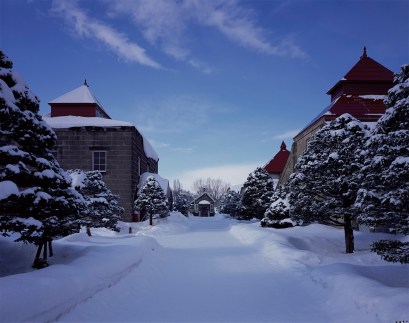
In 1923 Taketsuru entered a 10-year contract with Kotobukiya Limited, what we now know as Suntory, and along with Suntory’s founder and first Master Blender Shinjiro Torii helped found and build the Yamizaki Distillery. Torii had originally made inquiries for a “whisky expert” in Scotland but was told he already had one back home. The pair worked closely together to construct the Yamazaki Distillery but when their first whisky hit the market the Suntory Shirofuda was a massive dud. At the time blame was placed on the Japanese drinkers preference for lighter, blended whiskies as wells as Takesuru’s refusal to budge on doing things the ‘Scottish way.” Taketsuru was shunted away from the distillery he helped build over to a beer factory where he served out the remainder of his 10-year contract.

In 1934, finding himself free to pursue his own goals again, Taketsuru formed the Dainnippon Kajuu, Co. which roughly translates to ‘Great Japan Fruit Juice Company’ and while everyone was expecting him to make apple juice he constructed the Yoichi Distillery in Hokkaido.

yoichi_b1_2.jpg

Hokkaido was chosen because its climate reminded Takesuru so strongly of Scotland. It also gave him easy access to barley and peat and in 1940, despite the ensuing war, he released the first bottles of Nikka Whiskey. Unfortunately, the war caused all whisky to be labeled as a commodity critical to national defense and Taketsuru spent the rest of the war making cheap military ration whiskey for the troops. Another setback, but one that allowed the distillery to survive where many did not.

The company officially changed its name to the Nikka Whisky Distilling Co. in 1952 and quickly became the second largest producer of Japanese whisky, building a second distillery in Miyagikyo in 1969 and nipping at the heels of Taketsuru’s old employer’s and Suntory creating a lasting rivalry. That rivalry has in many ways led to the quality of product that is being seen in Japanese Whisky today.

But success has led to its own issues. Both Nikka and Suntory have been unable to keep up with global demand for whisky that was once merely the dream of a single man. Products that brought them to the international stage have lost their age statements or disappeared entirely.

It used to be said that if you truly wanted to get to the heart of the Suntory style you should drink Hibiki 17 and likewise if you wanted to get to the heart of Nikka pour yourself a dram of the Yoichi 15 Year single malt. Well, the former is now a unicorn of price and supply and the latter has been discontinued and replaced with a Non-Age Statement bottle simply called “Yoichi Single Malt.”

The pot stills at Yoichi are direct coal heated which are temperamental at best and the Yoichi style has always been at least slightly peated. The result is an aromatic nose that lets the smoke roll out of the glass. There’s a touch of sea salt and soot with citrus oils. On the palette the plum and apples lead, followed quickly by a salty, smoky tang reminiscent of a cold fire on a night time beach before being washed with a long, luxurious finish with the smoke becoming more savory.

It’s an elegant whisky but it doesn’t match up to the 15 year. There’s an element of time that can’t be replaced. This new Yoichi is aggressive where the old 15 year was confident and that’s a fine distinction at times.

This doesn’t mean it’s a bad whisky. It’s different. It’s a change. It’s another step in the evolution of an industry that is really just coming into its own, no matter how much tradition and expertise it draws on. And it’s a reminder that nothing, not even your 200 year old family whisky recipe, is permanent. So grab a glass, pour a dram, and contemplate the ephemeral nature of life while you can.

download-2.jpg

Whiskey Wednesday: Areal Origins

This morning I got off a plane in LAX coming back from Louisville,Kentucky where I was on a trip to Maker’s Mark helping design the next single barrel for Faith and Flower. At this point I’ve picked out over 30+ house single barrels of whiskey in the past five years and I was feeling a little jaded about the whole trip this time around if I’m honest. Well, not jaded, perhaps overly familiar is more accurate. But as I was walking of the plane and my phone regained its omnipresent internet access it promptly exploded in my hand.

Areal, the bar I had run for 4.5 years, that had been on the verge of closing when I was first hired, that I had helped grow into a million dollar a year liquor operation, that I IMG_2575.JPGhad spent more hours than I know how to count stressing over, had closed its doors over night. No warning. Just an email to the staff over their scheduling system.
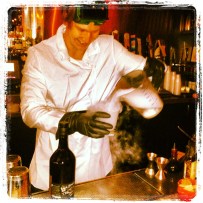
I left Areal about 6 months ago to take over the bar at Faith and Flower but this news still hit me hard. That place had been my home for years. To say I cut my teeth there would be disingenuous but I definitely developed and turned into the bartender, and person I am today in that building.

When I first started there in the long, long ago of 2013 the place was dying. The owners had taken a beloved main street Santa Monica party location called the World Café and turned it into a fine dining cocktail bar called Areal. The locals didn’t take kindly to it. The drinks were good, the program was put together by two Harvard and Stone vets, but resistance to change is strong on Main Street. I, of course, knew none of this walking in the door. I was young, cocky and was convinced I knew what I was doing despite this being only the second bar I had ever managed.

31F29162-9977-488D-B1FA-70F4E6E57118.JPG  I set to work and was miraculously given free reign from my GM Mark Becker to do whatever the hell I wanted. He liked that the bar was striving towards something different.  It also became clear to me that despite knowing a lot and being good with numbers there was still a lot I had left to learn. (Not the least of which was how to deal with people.) How do you win over someone who just wants a bud light to drink a craft pilsner, and how do you convince someone who wants a Jack and Coke that they might really like this Old Fashioned cocktail that’s on your Happy Hour? Whiskey Wednesday, and this blog, were born out of my struggles to learn that.

I love whiskey. I don’t think anyone would ever argue with me about that but what I really love is the ability to share it with people. To me it’s not just an intoxicant. Whiskey at its best is a bottled story. Whether that’s the story of the brand or the story that you’re telling your drinking partner there is something to be shared in every pour, in every cocktail, and in every spilt shot.

I made a lot of mistakes in those early days, expecting everyone to fall in line 0288118A-6853-48C1-A8EA-52F1186BE1EB.JPGsimply because I knew a lot and could make a drink. But I found that the more I shared stories, whether with regulars that sat alone at the bar because there were no other customers or with staff at 3:00 in the morning after the weekend warriors had swamped us, the more people were interested. So I started telling stories, and history through a bottle of whiskey and three featured drinks a week.

Eventually the stories grew, along with the back bar. When I handed back the keys to Areal’s liquor room the back bar had grown into arguably one of the best whiskey collections in the city of LA. It wasn’t  forced, it wasn’t planned, it just grew. And so did I. I remember once being asked by a sales rep how we came up with the concept for the bar at Areal and I remember responding, “What concept? This is just me.” Hell, I even managed to seduce my badass girlfriend with the cocktail menu and back bar before she ever met me.

That bar, and the people in it, allowed me to become a wordy, confident, whiskey barrel buying nerd and in turn I hope I helped support them and shared a few stories.

While it certainly wasn’t my bar anymore I’m very sorry to see Areal shutter its doors. It was a building made up of stories, and people, and whiskey and I cherish all of those things deeply. So tonight, I’m pouring one out for another door closing on the past.

L’Chiam.


groupshot.jpg

Whiskey Wednesday: Ichiro’s Global Plan

If the Yamazaki and Suntory represent the old school powers that be in Japanese Whisky, than the Chichibu and Ichiro Akuto represent the new guard.

The Chichibu Distillery is the brainchild of Ichiro Akuto and began operations in February of 2008. It sits just outside of Chichibu City about 100km north-west of Tokyo. And while the distillery is certainly a newcomer to the Japanese whisky scene Ichiro Akuto is anything but.

$.jpgWhere most of the master blenders and distillers in the Japanese whisky world are rather unassuming and reserved, every interview and Google search for Ichiro is required to use the word ‘rock star’ to describe him. The Akuto family had been making sake in Chichibu since 1626 and transitioned into the sochu and whisky world in 1941 when Ichiro’s grandfather opened the Hanyu distillery. The distillery ended up enjoying considerable success during Japan’s postwar whisky boom.

But as so many of these stories go the 90’s were incredibly unkind to brown spirits and the Hanyu distillery closed in 2000. With the distillery now closed and so little of the produced whisky being sold some hyper aged, delicious, and eventually legendary whisky was about to be bottled.

With  Hanyu whisky now a nonrenewable resource Ichiro began releasing the“Playing Card” series in 2005 with the release of the “King of Diamonds.” ichiros-malt-cards.jpgNearly 10 years later there was a complete deck of 52 “Cards” complete with two Jokers. According to interviews Ichiro never meant to release a complete deck. The idea was to originally release four single casks and working with a friend of his, who was also a designer, they struck upon the idea that playing cards had four suits, and so a legend was born.(A legend that sold as a complete set at auction in 2015 for $400,000.) Not as impressive as the individual bottle price of the Yamazaki 50 but still amazing for a collection of whisky that was so unwanted a mere 15 before the sale that the distillery that produced it had shuttered its doors.

The quality and care that went into these bottlings was evident but the supply was clearly limited. So, Ichiro took the funds from those early Playing Card releases and established the new Chichibu Distillery to rebuild his stock. And again he dove into tradition to establish his style. The staff routinely flies to Scotland to learn skills like floor malting, which they’re now doing onsite at Chichibu. They’re also doing their own cooperage on site. Once a year, Ichiro would take his staff to learn from one of two independent coopers in Japan. When the 86 year old cooper, who had no successor, decided to close the cooperage Ichiro purchased all of the machinery and set it up on site at Chichibu. But none of this would mean anything if the whisky was lacking and the bar was certainly set high with the Playing Card series.

food_liquiddiet4.jpgThe first Chichibu whisky debuted in 2011, a mere three years after the distillery started operation. Adding to his ‘Whisky Rock God’ persona every bottle that rolls out of Chichibu is labeled as an “Ichiro’s Malt Chichibu” with a sub name describing the release. This first release is appropriately dubbed, “The First”, and the whisky was aged in a combination of ex-Bourbon and Japanese Mizunara oak. Only 2,040 bottles were made available and it cemented Ichiro, and Chichibu, as a major player not just in the history of Japanese Whisky but also in its future. I remember drinking this whisky and being blown away by the delicacy and elegance it presented at a mere three years and at 118 proof. There were nectarines, vanilla, a touch of cinnamon as well as an earthiness, and green apple that fed into the maltiness.

From there Ichiro has moved on to more, I wouldn’t say standard, but more consistent releases. The flagships being “The Peated” utilizing, you guessed it, peated malt, then “The Floor Malting” making use of the afore mentioned on site floor malting, and finally the “On The Way” which is a blend of Chichibu Malts of various years that is ‘on the way’ to Ichiro’s goal of being able to consistently release a 5 year old malt. Which is already being replaced by his goal of being able to produce at 10 and 20 year old malt.

The Ichiro’s Malts show remarkable variety for such a young distillery but they do have a few things in common: a large price tag and limited availability. When you’re looking to introduce people to your brand and expand your clientele few things are larger roadblocks that price and availability. So what’s a young, hip distillery to do to expand stock?

Traditionally malt makers turn to blended whiskies. A small percentage of single malt whiskies blended with grain whisky, light column still whisky made of whatever grain is cheapest. It produces a lighter style whisky and while the Whisky Drinking Elite will turn their noses up at blended whisky this style still rules the Whisky Drinking World. But Ichiro’s Chichibu decided to go another route.

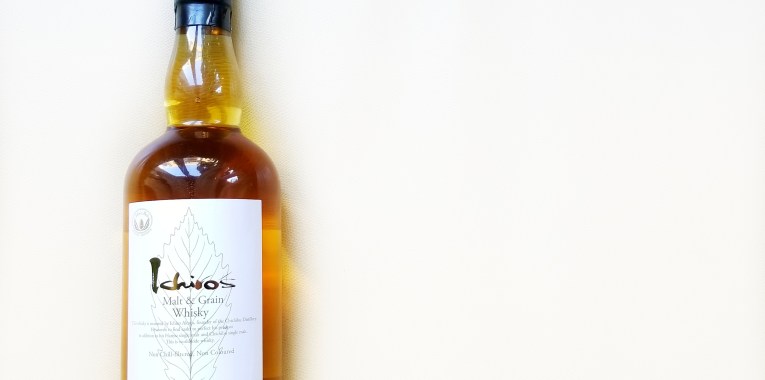
In an effort to produce what he calls, ‘an all world whisky’ Ichiro has built a whisky with a base of Chichibu Malt whisky blended with selections of whiskies from Scotland, Ireland, Canada, and America. All of these world whiskies styles are aged in their country of origin for 3-5 years before receiving an additional 1-3 years of aging on site at Chichibu.

The exact proportions and original distilleries for these other whiskies are kept under wraps but the result is an incredibly intriguing bottle, and not just intellectually speaking.

The nose has a surprising amount of citrus with apricot, meyer lemon, and a touch of 20170801_150840-02-01.jpegorange weaving through a light sweetness which leads into a large roasted nut, vanilla, white pepper feel, then a touch of tobacco and gingerbread on the tongue that leaves dried tropical fruit and vanilla as it disappears into a medium length finish.

This is the kind of innovation that intrigues me. It approaches an old problem in a new way and manages to produce something that I truly have not encountered before. For something that sounds like it could so easily devolve into a massively muddled mess it manages to hold on to that elegance and refinement that Ichiro’s bottles have become known for. And it’s affordable… by Chichibu standards at least. With a retail price of about $100 I can’t quit say it’s solved the approach-ability in terms of price. But on the flip side compared to many Compass Box releases it’s practically a steal.

In the end Ichiro Akuto and Chichibu represent a new paradigm in the whisky world. Drawing from tradition and past experience to produce something incredibly modern and specific while, hopefully, building towards the future. I just hope that all this innovation and quality eventually allows prices on many of these future whiskies to come back down. So that whiskey world doesn’t become the domain and hobby of just a select few but allows anyone who’s interested to dip their tongue into something more unusual without having to worry about selling their car to afford a bottle.

Whiskey Wednesday: The Yamazaki Price

What would you do with $130,000? Buy a house? A Tesla? Travel the world? Or maybe you decide screw it and go for the most expensive bottle of whisky ever sold: the Yamazaki 50 year old single malt 2005 release.

In October of 2016 one of the 250 bottles of Yamazaki distilled in the mid-1950s claimed the Guinness World record for the most expensive standard size bottle of whisky ever sold for $129,186. That’s a nearly 1300% increase over the original sticker price of $9,500. That’s a massive return on investment, even for 50 year old whisky, but it’s made even more impressive when you consider that the Yamazaki distillery itself is less than 100 years old and the first Yamazaki single malt wasn’t released until 1984.

caption.jpgSuntory founder and first master blender, Shinjiro Torii and Masataka Taketsuru, “The Father of Japanese Whisky”, founded the Yamazaki distillery in 1923. Taketsuru had studied organic chemistry in Glasgow and was found by Torii after he made inquiries to Scotland looking for a whisky expert. Torii was told there was already one fully qualified in his own country and the two worked closely to build the Yamazaki distillery. However, the first whisky produced by the new company, dubbed the Suntory Shirofuda was a resounding failure. The Japanese drinkers preference for lighter, blended whiskies was blamed as well as Taketsuru’s fixation on doing things the “Scottish way.” Taketsuru was shunted away from the distillery to a beer factory where he served out the remainder of his ten year contract before leaving to start the Nikka distilling company, Suntory’s biggest rival.
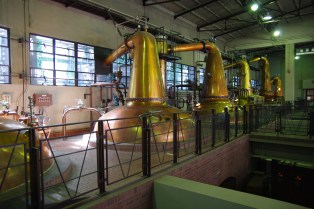
Despite these early set backs the Suntory company pressed on, releasing the Kakubin in 1937 and after being postponed by WWII, the Suntory Old Whisky in 1950. In 1961 the company send the first Japanese Whisky imports to the United States and Torii’s son Keizo Saji took over as president and Master Blender. The next few years were full of experimentation including opening the Chita Distillery in 1972, the Hakushu Distillery in 1973, and the release of Midori in the United States in 1978. The next big shift for the company comes in 1984 when Saji moved the company away from it’s focus on blends with the very first release of Suntory Single Malt Whisky Yamazaki.

The 80’s proved to be a pivotal time for Suntory not only because of the new focus on single malts but because the other distilleries opened in the 70s allowed them to produce more varied styles of whisky culminating in the first release of the Hibiki Blended Whisky in 1989. The Suntory Single Malts may be carry the highest price tags but Suntory still considers themselves to be a blending house and the Hibiki’s are what they consider to be the pinnacle of their art.

All the pieces were in place yet as you may have heard the 90’s were not the most hospitable of decades to brown spirits. It took a new millennium as well as a series of rapid-fire rewards to rocket Japanese whisky from niche good to internationally coveted whisky.

The Yamazaki is caught between a rock and a hard place; soaring success chased by the rising struggle to support the base of that success.

In 2003 Suntory’s Yamazaki Single Malt 12 year won it’s first Gold Award at the International Spirits Challenge in the UK followed relatively quickly by Suntory becoming the first Japanese whisky producer to be awarder “Distiller of the Year” by the same ISC in 2010.

The Yamazaki Distillery expanded in 2013 with the addition of four stills, bringing the imgp9795.jpgtotal to 12, which increased capacity about 40%. The added capacity didn’t prevent them from releasing the Non-Age Statement Yamazaki and Hakushu Distiller’s Reserve the following year just as talk of the worldwide whisky shortage began to surface. Also in 2014, Suntory purchased Beam, Inc. (home of the eponymous Jim Beam Bourbon) for $16 billion forming Beam Suntory, the third largest spirit producer in the world. This acquisition greatly expanded Suntory’s distribution lines spreading the already thin stocks of Yamazaki even thinner.
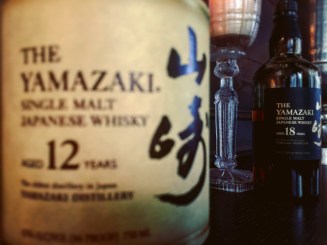
The final nail in the Japanese Whisky hype train was also driven home in 2014 when the Yamazaki Sherry Cask 2013 won the coveted Jim Murray “World Whiskey of the Year” award. With that the path is set and we’re barreling towards the inevitable $130,000 bottle.

Yet with all this focus on the mythical, never to be seen bottles that dominate the headlines, what has become of the mythical, occasionally glimpsed bottles that built the reputation of Yamazaki and Suntory in the first place?

The Yamazaki 12 Year is still liquid gold in a bottle. The whisky is aged in a combination of American ex-Bourbon, Spanish Sherry, and Japanese Mizunara oak cask. It is, you guessed it, a minimum of 12 years old and bottled at 86 proof. What has always struck me about this whisky is the amount of fruit on the nose. Ripe peach, with a touch of grapefruit and orange, followed by a rich lingering mid palette that leaves an almost toasted bread note before disappearing into a long finish that is edged with dark baking spices.

IMG_4145.JPGWhile the 12 year was once the perfect introduction to Japanese malt, before the price and the hype got in the way, it was the Yamazaki 18 year that always stirred my soul. This time roughly 80% Sherry casks with ex-Bourbon and Mizunara making up the other 20%. Here the promise of the 12 year has evolved into a stately elegance. The fruit dries out, turning to raison and apricot with dark chocolate and berries on the tongue with a touch of spice on the long march to the finish.

In the end these spirits are deserving of every award they’ve had draped around their bottles necks, yet I can’t help but feel like they are victims of their own success. The price on these bottles has steadily climbed while availability has dropped. Drinkers are driven to seek these “more available” bottles every time a headline splashes a story bottle of Yamazaki selling for more than the median household income of a small family only to be disgruntled when they turn up empty handed. Products like the Yamazaki Distillers Select, the Hibiki Harmony, or the Nikka Pure Malt may help bridge that gap in the category, but no matter how vehemently the companies talk about these products being “different” and “not replacements for age stated products” seasoned drinkers can’t help but feel that their old toys are being taken away while they’re charged more. It’s a story they see time and time again as the trend sweeps through whisk(e)y brands across the globe.

The Yamazaki is caught between a rock and a hard place; soaring success chased by the rising struggle to support the base of that success. It’s a good problem to have and one without an easy answer but it is a debate that certainly is helped with a glass of liquid gold in hand while you have it.

Whiskey Wednesday: The Chivas Brothers

Some things seem so ubiquitous, so omnipresent that they become nearly invisible. All of the work, all of the marketing, but most importantly all of the quality that must be present to get them to that pervasive point becomes overlooked and it all just fades into the background. That had been my experience of Chivas Regal until recently.

images.png

No matter how much we preach the gospel of Single Malt Scotch, Blended Whisky is the true king. And if Johnny Walker sits upon the Iron Throne, Chivas Brothers is the King in the North. With the now iconic 12 year blend the market leader in Europe and Asia and over 4.4 million cases of Chivas Regal shipped world wide it’s easy to see how Chivas can be lost in the whisky sea. When everyone is clamoring for the rarest, the newest and the most unique bottlings how could something that sits on nearly every back bar in the world be anything special?

However the history of the brand shows one of evolution, experimentation, massive growth and success.

Chivas traces its roots all the way back to 1801 and small grocery store started by John Forrest in the town of Aberdeen. The Chivas family first became involved in 1836 with James Chivas joining the growing company and by the 1850’s they had responded to demand for luxury whiskey and were bottling their first blends under the name Royal Glen Dee.

Chivas Regal first found a home and an identity in the United States in 1909 with the launch of Chivas Regal 25 year old. The blend became the world’s first true luxury blended whiskey and it was an immediate hit with the New York high society. The brand rode high for several years until WW1 which limited shipping and then the disaster that was Prohibition struck. Almost more devastating to the brand than these events was the selling of the company and offloading its massive whisky stocks, in 1936.

When Chivas Regal was relaunched in the US in 1939 it was introduced as a 12 Year old in an attempt to preserve stocks. The company was then sold again, this time to Seagram’s in 1949. The next year Seagram’s purchased the Milton distillery, renamed Strathisla, which remains the primary malt and spiritual home of Chivas to this day.

Seagram’s took over the Glenlivet Group in 1977 and when Seagram’s went under in 2001 Chivas and the Glenlivet were purchased by Pernod Ricard which consolidated all of their whisky interests, including the Aberlour distillery that was already in their portfolio, under the Chivas Brother’s banner.

The brand has massive stocks to draw on and throughout it’s history hasn’t shied away from experimentation and innovation. For instance, The Royal Salute line was introduced in 1953 to celebrate the coronation of Queen Elizabeth II and is the only line of blended Scotch whiskey that starts at 21 years of age. I’ve been fortunate enough to have the 38 Year Old ‘Stone of Destiny’, named after the legendary coronation stone of the Scottish Kings. It’s full of dark chocolate, dried fruit and a rich finish that rivals many of the high end malts that I’ve had.

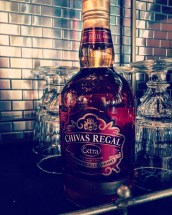
IMG_4029.JPG     On a more approachable scale they’ve started producing the Chivas Regal Extra, a Non Age Statement blend designed to recreate the flavors of the original Chivas Regal 25 Year Blend that relies heavily on Olorosso Sherry aging. Then there is the new Mizunara.

The Mizunara is a 12 Year Old blend, but not THE Chivas 12 Year blend, that is finished in Japanese Mizunara Oak. It’s currently a Japanese exclusive but the Chivas Brothers have plans to take it to the global market. Think about that for a moment. Mizunara is some of the most sought after wood in the world right now and Chivas has enough clout and influence to be able to age enough whisky in mizunara casks that their biggest problem with getting into the United States is the difference in bottle sizes between the US and the rest of the world. With all this innovation and history why does it seem to fade into the background of the whiskey drinking consciousness?

download-1.jpg

In a way I think their own history is getting in their way. The whiskey nerds and “trend setters” are all fighting to battle for transparency and in depth disclosure of aging and blend components. Just look at John Glasser and how often Compass Box is chastised for disclosing too much information. Finding information on what actually goes into a bottle of Chivas Regal is impossibly frustrating. And while this lack of information might keep that bottle of Chivas from standing out in an increasingly crowded forest, but it doesn’t stop the liquid in the bottle from being of a quality and taste that has earned its iconic place on that back bar.

Whiskey Wednesday: Ancient Age

I tend to live my life with a fair amount of snark and irony wrapped around the place where most people keep an actual personality. As such it sometimes becomes hard for me to tell when I stopped ironically appreciating something and start genuinely liking it. Or if that change ever happened.

Example A: Ancient Age.

Ancient Age is a low level or “value” brand. I remember drinking handles of it inAncient-Age.jpg college not because it was phenomenal stuff, but because it was affordable. I moved on as a slight increase in disposable income allowed me to try other things yet here I am unabashedly keeping it in a decanter of honor on my back bar. And I’m not the only one, Ancient Age has a massive cult following for its affordability and quality, at least its quality in comparison to its price. But why?

The brand is relatively old as far as Bourbon brands go. The brand was first introduced in 1946 by Schenley Industries, and has been made at the same distillery for the brands entire life. Both the brand and the distillery have changed hands many times but Ancient Age has always been made at what we now know as the Buffalo Trace Distillery. It is not, however, owned by Buffalo Trace. It is owned by a company known as Age International which is one of those incredibly interesting corners of the Bourbon world that is rarely talked about.

In the 80’s things were not good for brown spirits. Consolidation, shut downs, and sell offs were happening everywhere. Especially if you weren’t really a booze company, like say Nabisco. At the time Nabisco had a subsidiary called Standard Brands, which included Fleischmann’s Distilling. In 1983 Standard Brands was sold to Grand Metropolitan, which a few years later would merge with Guinness to become the behemoth Diageo.

Knowing that Grand Metropolitan already had a successful drinks arm Ferdie Falk and Bob Baranaskas, the CEO and President of Fleischmann’s respectively, resigned and started their own company. Having previous relation with Schenley, Falk approached them and the pair were soon the proud owners of the Ancient Age brand and its home distillery.

The new company was dubbed Age International and they believed that the future success of Bourbon lay outside the U.S., hence the ‘international’. Their interest in foreign markets led them to work with Elmer T. Lee to create Blanton’s Single Barrel, which was originally designed for a Japanese market and just happened to be released in the States as well. This focus on over seas markets is also why there are so many variations of Blanton’s available around the world that aren’t available here at home.

In 1992 Falk and Baranaskas sold the remainder of their shares in the company to their Japanese partners, Takara Shuzo who immediately turned around and sold the distillery to Sazerac while maintaining control of Age International and its brands.

Sazerac continues to distill Blanton’s, Ancient Age, and the other Age International Brands which lead them to develop a separate mashbill to create their own proprietary brands, like the distilleries eponymous Buffalo Trace. So while Buffalo Trace does distill Ancient Age the two Bourbons sit on different branches of the Bourbon Family Tree.

Over the decades there have been several different variations of Ancient Age, my personal favorite being Ancient Ancient Age 10 Year Old for the name alone, but the whiskey shortage has even effected value brands so you’re most likely to come across just standard 80 proof Ancient Age these days.

images.jpg

The bourbon itself is fiery. Despite its name it is a young whiskey where the grains are more predominant that in many of its older siblings. It’s more cereal with the vanilla and caramel taking a backseat with the barrel presence being much less refined. Honestly, this is the kind of whiskey an Old Fashioned Cocktail was designed for. It’s a whiskey that benefits from having its edges softened and it’s hot heart rounded.

In the end, I just like this whiskey. It is what it is and I just have to accept that it’s essentially the Pabst Blue Ribbon of the Bourbon world. Except people aren’t proudly drinking Ancient Age at their back yard hipster BBQs. Though to be fair I can’t remember the last time I actually saw someone drink a Pabst these days. Everything is cyclical. So I’m going to circle it back around and keep pretending I’m fancy even if it’s just Ancient Age in my decanter.

The Beast Arises

Open Bottle: Old Rip Van Winkle 25 Year Old Straight Bourbon Whiskey


Pappy Mania has struck early this year and for the first time in years even I’m feeling a bit of hype.

The early onset of this yearly bourbon malady is the amazing limited release of an Old Rip Van Winkle 25 Year Old Kentucky Straight Bourbon. What makes it hype worthy is that fact that like the A.H. Hirsch 16 Year Special Reserve this bottle is a piece of history. A gussied up, fancy decanter of liquid history.

My feelings on Pappy and the bottle hunting that surrounds it are pretty well documented,  but unlike the yearly release of what you could now call the standard Van Winkle’s this bottle is something different. This is actual Stitzel-Weller Bourbon.

Distilled in the Spring and Fall of 1989, the 11 barrels that comprise this release were aged on the lower floors of the metal clad warehouses at Stitzel-Weller that shut

download.jpg
No one has ever seen him look to the right.

down in 1992. But just because the distillery stopped making spirit doesn’t mean the whiskey stopped aging. Leftover stocks continued to rest at the warehouse with some being sold off and some being bottled for various brands but these barrels stayed in the family. In 2002 they were transferred to Buffalo Trace where they aged for another 12 years on the lower floors of one of Buffalo Traces brick warehouses. In 2014 the whiskey was dumped into steel tanks. This isn’t an uncommon practice with older whiskies, the past few releases of Sazerac 18 Year Old Rye have been steel tanked, and it simply halts the oak aging process.  Oxidation can still happen but this is certainly not an aging experiment, nor can it legally be considered aged in steel tanks. It is simply an attempt to keep the whiskey from becoming over oaked and undrinkable.

So what were they doing with the whiskey for the next 2.5 years? They were figuring out how to sell it. Whiskey this old is a massive expense in time, labor, and lost product so it needs to have an appropriate price tag, but you also need to convince people that it’s worth the price tag. It doesn’t seem like that would be a problem with a bottle of Pappy Van Winkle but they pulled out all the stops for this release.

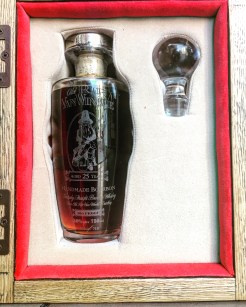
The massive box each of the 710 bottles comes in is made out of the oak staves from the 11 barrels the whiskey aged in. The Glencairn Crystal Studio designed a bespoke decanter, every bottle is signed by Julian Van Winkle, III and it comes with a parchment sheet with the short version of the whisky’s story. It’s a production.

At a mere 710 bottles, the secondary market for this bottle is literally drooling. But what’s interesting to me is that Buffalo Trace, and the Van Winkles, seem to be making steps to try and curb the flipping of this bottle. From what I’m told 9 bottles hit Los Angeles with maybe 30 for the whole state of California. But not a single bottle of those went to an Off Premise Liquor store. Every bottle was sent to a bar, with each bottle number being carefully recorded so that if a bottle does emerge on the Secondary Market they’ll be able to track it back to its source and supposedly punish the seller. While I appreciate the attempt to keep the bottles from becoming mere commodity trading with the secondary market already willing to pay $15,000 I can’t see these bottles actually staying on the shelves of all the bars they were allocated to.

But that’s the story ABOUT the whiskey, what about the whiskey itself? Bottled at IMG_3766.JPG25 years old and 100 proof this Bourbon carries serious weight. The nose is of dried oak, dark coffee, and just a touch of stone fruit. The finish is almost nonexistent but it doesn’t matter because the mid-palette travels for hours. White pepper, caramelized oranges, deep ripe cherry, of course a vanilla and caramel note but what’s interesting is how well this walks the line massive oak flavor without being over oaked. Right when I was expecting it to dive into wet wood and raisins it instead let the pepper burn for another moment before evaporating completely on the tongue. This whiskey is better aged than the standard 23, and I’d say it’s at least as lively as the 20 year old.
I think bottling at 100 proof made a huge difference on the final product. The burn and the massive presence of the mid-palette flavors solved almost all of the complaints I had with the Old Fitzgerald 20 Year Old, which was also Stitzel-Weller whiskey that finished it’s aging at Heaven Hill. There were 12 barrels for that release and the finish was also nonexistent but in comparison the Old Fitz just seemed flabbier. Those extra proof points and the Van Winkle name come with a much heftier price tag though.

In the end, it’s hard for me to separate the whiskey from the history. When I pick up this bottle, when I sell this bottle at the bar, when I manage to sneak a sip of this bottle it’s not the whiskey I’m talking about. It’s the history. The liquid time that is carried over the tongue adds volumes to the value but is it enough added value? I’m not sure, but for the first time in a long time I find myself agreeing with a massive price tag on a massive whiskey. At least at the retail level. But if you have a spare $15,000 hanging around I know someone who might be accepting bribes…

Whiskey Wednesday: The Old Forester’s New Clothes

It’s time for the same old song and dance but with a brand new look. The first entry in a new chapter of house single barrels with the first Faith and Flower edition single barrel of Old Forester.

download.jpg

Old forester is an old brand, introduced by Gavin Brown in 1870 as the first bourbon brand sold exclusively in sealed bottles. Being sealed gave consumers assurance that the product hadn’t been tampered with or adulterated which made it the fan favorite of pharmacists who stocked it for its “medicinal qualities”. This reputation probably helped with Old Forester being granted one of six legal licenses to produce medicinal whiskey throughout Prohibition.

Unfortunately, over the century and a half of its existence Old Forester has been over shadowed by the Brown-Forman corporations other whiskies, like Jack Daniels or Forester’s mashbill twin Woodford Reserve. But recently the company has been trying to inject some new life into the old horse.

To kick things off the new Old Forester distillery is slated to open in downtown Louisville this year, And a few years back Old Forester was made the official bourbon for mint juleps at the Kentucky Derby (replacing Brown-Forman’s Early Times whiskey which is not technically a Bourbon) and around the same time they started rolling out their Whiskey Row Collection. The Whiskey Row is a series of Old Forester Bourbons meant to highlight milestones in Old Foresters history and the style of whiskey being made at that point in time. The Whiskey Row series are hence named with a date and a style like the 1870 “Original Batch” or the 1920 “Prohibition Style” and they also came with fancy new bottles and labels that set them apart from the classic Old Forester bottlings. And now all that fancy bottle and label goodness has found its way to the single barrel.

The Old Forester Single Barrel has always been a bit of a rare breed and been at least marginally separated off from the main bottles so it makes sense to align it more closely with its Whiskey Row brethren. The bottle is sleek, black, and just a little sexy.

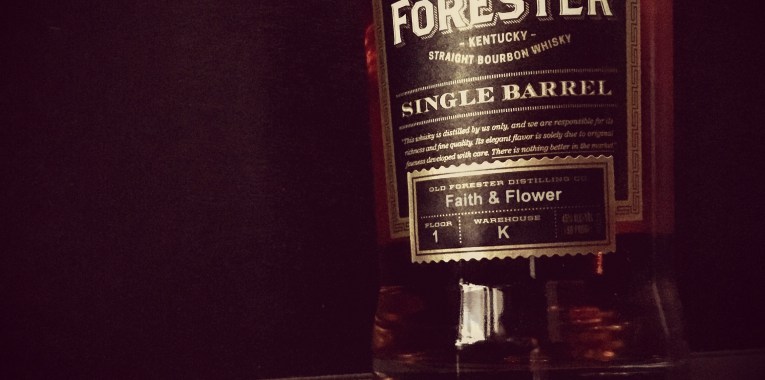
510BA05C-43B6-4957-BAD0-F3DB91AEA44B.JPG  The single barrel offerings are at a solid 90 proof, one of the things that set them apart from the standard bottles, but the color scheme on the new label is an almost complete palate swap. Where the normal Whiskey Row bottles harken back to the old white/cream style labels of the brands history the new single barrel is jet black with silver lettering. And clearly looking to scratch the whiskey intelligentsia’s need to know everything the rickhouse and floor where the barrel aged are large and center.


But packaging doesn’t improve the whiskey in the bottle. So what about the actual whiskey? This inaugural Faith and Flower barrel comes from the first floor of Warehouse K. It’s the classic Old Forester/Woodford

mashibill 78% corn, 12% Rye, 10% barley that can too easily come off as a sweet corn bomb, but here it’s taken on a darker tone. Deep, red, ripe cherry winds its way through the middle of the palette while cinnamon, nutmeg, and woody sweetness lingers on the nose. The finish is medium yet weighty leaving the rough edge of the barrel mingled with the caramel sweetness.

Seeing this single barrel dressed up and tasting like this is like seeing a old friend the you’ve long felt to be predictable suddenly dressed to the nines and just dripping with an heretofore unseen sex appeal. The bones are the same but it’s a reminder that everything, and everyone, has a unexpected side that can make you sit up and take notice.