Whiskey Wednesday: The Open Story of Uncle Nearest

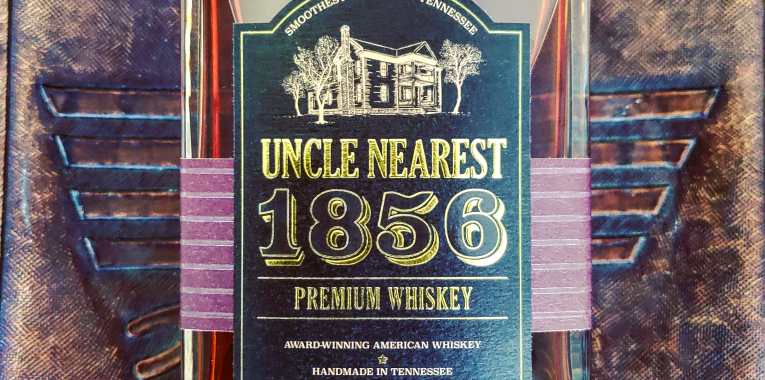
Today is not about depleting old bottles but celebrating something relatively new that honors something very old. A story that was an open secret yet like all open secrets unacknowledged. And being unacknowledged also means it’s a story not told. This is the story of Uncle Nearest.

Nathan “Nearest” Green was a slave in Tennessee during the Civil War. In the 1850’s he was, as horrible as it is to say, owned by a firm that leased him out to a preacher, grocer, and distiller named Dan Call. Now, back in those days to say someone was a distiller often meant that their slaves were distillers. And Nearest was one of the best. In fact, he was so good that when a young Jack Daniel’s came to work for the preacher, Call took him to Nearest reportedly saying that, “Nearest is the best whiskey maker that I know.” Only a few years older than Jack, Nearest is the one that taught him how to distill.

It was also while distilling at Call’s Distillery  in 1856 that biographer Fawn Weaver believes Nearest perfected the Lincoln County Process that became the trademark of Jack Daniel’s Whiskey.

While there are report of small scale charcoal filtration in whiskey distillation in the 1800’s there was nothing like the large scale, deep vats that make up the Lincoln County Process of filtration. This timeline is enshrined in the name of their flagship whiskey.

In 1963 the Emancipation Proclamation took effect and freed exactly zero slaves in Tennessee, The Proclamation only applied to states in open rebellion against the Union and although Tennessee had seceded it was now under Union control with Andrew Jackson as Military Governor. Jackson did free all of the slaves in Tennessee on October 24, 1864. One year later the 13th Amendment to the Constitution of the United States was passed finally abolishing slavery in the United States.

Once he was finally freed Green continued to distill for Call and now Daniel as well. Call and Daniel having founded a distillery venture together in either 1866 or 1875 depending on which documentation you believe. Shortly after, Call retired from the whiskey business for religious reasons leaving Jack in sole control and Uncle Nearest as the first Master Distiller of Jack Daniel’s Tennessee Whiskey.

In the years that followed three of Green’s sons and four of his grandsons worked at the distillery making the Green family instrumental to the early years of Jack Daniel’s. These open secrets finally began to be discussed with a 2016 article in the New York Times. This article, and the lack of real information about Nearest Green, inspired Fawn Weaver to dig deeper into Green’s story. She published a book on his life and much of the information about Green that has been incorporated into the Jack Daniel’s Distillery tours comes from Weaver.

She also founded the Nearest Green Foundation, a non profit dedicated to Green’s legacy and providing scholarships for Green’s descendants. She’s also been instrumental in helping create Uncle Nearest Whiskey which is a fully minority owned venture.

While there are plans underway to construct a distillery in the old farms of the Call distillery the whiskey is currently sourced from around 5 distilleries in Tennessee. Exact sources aren’t revealed but as everyone involved has stated that none of the whiskey is coming from the Jack Daniel’s Distillery we can assume that a fair portion of it is coming from the George Dickel Distillery. I also wouldn’t be surprised if there’s some whiskey coming from Popcorn Sutton

The whiskey then undergoes the Lincoln County Process on a proprietary filtration rig designed by Sherrie Moore, the former Director of Whiskey Operations at Jack Daniel’s who came out of retirement to assist with the Uncle Nearest Project. Uncle Nearest is also working with the Corsair Distillery to distill New Make to their own specifications and recipe for future release.

In a landscape where it often feels like a story is crammed on top of a whiskey to create some sort of marketing narrative it truly is wonderful to see a story leading to the creation of a brand instead of the other way around. Nearest Green is one of the fathers of American Whiskey and it is phenomenal to finally see history truly being told, drank, and winning major awards including most recently 2019 World’s Best from Whisky Magazine’s World Whiskies Awards

NOSE: Grassy, banana, caramel, oak
PALETE: Baking SPice, bready, ripe fruit, a sweet apple and hay
FINISH: Medium with a green burst and a touch of molasses

Quarantine Bottle Kill #6: Tanqueray #10 and the 5:00 Martini

It’s not all about whiskey over here. Just like this weekly bottle talk isn’t just about drinking. It’s a mental check in with myself and an attempt to connect with my community as we shelter and wonder what our industry will look like once we start hosting happy hours outside of digital boxes again.

When this all started I wrote about my experience with illness that led me to the hospitality industry, how it created a new normal for me, and how this pandemic was going to create a new normal for all of us. 

This became clear almost immediately as people across the country who are sheltering in place found daily rituals to help mark the daily passage of time. I for one am not at all surprised by the resurgence of the cocktail hour under quarantine. Everyone has their rituals and for us it’s Martini’s.

The 5:00 Martini became an easy metronome to mark the days. The idea of a “weekend” or even a definitive “work day” may have slipped away but the silvery liquid pouring from the mixing glass into its chilled chalice was the sign post that marked the end of another day. It immediately became a daily comfort of the quarantine.

While I am a great lover of libations this was something distinctly unusual for me. Starting at 5:00 is not recommended when you work nights but without a bar to stand behind this ritual of making a drink for myself and my partner became more than a simple drink. It became a meditative process to soothe the mind and numb the spirit.

Martinis are also incredibly personal drinks. They vary from person to person and from day to day which is another reason they resonate during quarantine: variety amongst familiarity.

I’m a fan of classics and have been accused of having an “old school” vibe so it should come as no surprise that for me a Martini is always made with gin. While the gin varies on the mood I tend to lean towards very traditional London Dry gins. The baseline for which I judge all martinis is a Beefeater Martini with a twist. But the gin that has seen us through these past few months has been Tanqueray No. Ten.

Tanqueray Ten differs from its classic sibling with the addition of what they call the “Citrus Heart.” Essentially this is an incredibly potent citrus distillate made from fresh, whole grapefruit, lime, and orange. This helps set Tanq Ten apart as traditionally it is only the dried citrus peels that lend their flavor to a gin. 

This is also where the gie gets its name. While you’d be forgiven for thinking that it is called Tanqueray Ten because of the number of botanicals it is actually because the citrus heart is distilled on Tanqueray’s “Tiny Ten” still which is a small pot still that was used for experimental distillation before becoming the permanent home for Tanqueray Ten. It then receives a second distillation in the more traditional “Old Tom” No. 4 still where the traditional Tanqueray botanicals, coriander, angelica, licorice, and of course juniper, are added along with a touch of chamomile flowers. This ultimately results in a fresh, citrus forward gin that is credited as being one of the forerunners of what we now call “New Western” style gin. 

It’s also billed as being the perfect gin for a martini and while every gin will make that claim I can safely say after two months that it does make a damn good martini. 

If you want to follow along at home the 5:00 Martini is a 5:1 ratio Tanqueray Ten to Dolin Dry Vermouth (for those of you who struggle with math that 2.5 oz Gin to .5 oz Dry Vermouth) stirred over ice, strained into a stemmed glass, and garnished with a lemon peel. If you’re greedy like my partner you can add an olive and a caper as well. And for all of you purists out there screaming for orange bitters there’s enough citrus in Tanq Ten that you’re simply gilding the lily at that point.

5:00 Martini:
2.5 oz Tanqueray Ten
.5 oz Dolin Dry Vermouth
Stir, strain into a chilled glass,
Garnish with a lemon twist

Unlike a lot of the bottles I’ve been posting about Tanqueray Ten isn’t rare or irreplaceable so why am I writing about it? Because this quarantine normal, this 5:00 meditative space will eventually fade. It will be replaced as the world finds a way to move on and suddenly a 5:00 Martini won’t be acceptable or practicle again. And I’d like to remember the small ritual that brought a moment of calm to the chaos.

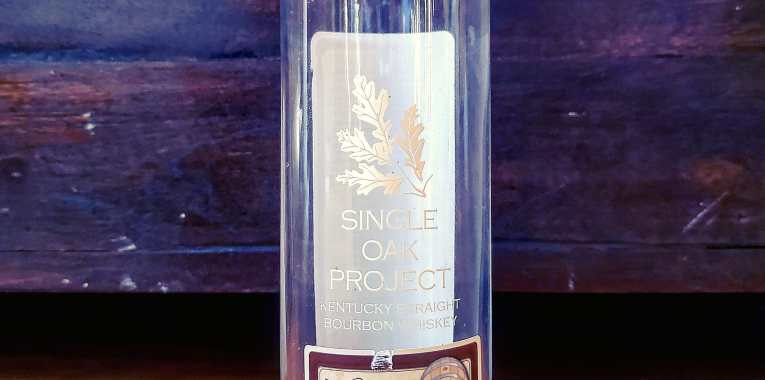
Quarantine Bottle Kill #4: Single Oak Project #156

I’m trying to cut down on the quarantine drinking so today’s bottle is a single 375 of Buffalo Trace Single Oak Project.

The Single Oak Project was a massive Bourbon experiment that was begun by Buffalo Trace in 2011. The goal was to break down the very DNA of Bourbon and be able to catalogue exactly what element imparts what flavor on the final product. It was the Human Genome Project of American Whiskey.

As the name implies the major variable that affects the final flavor of a whiskey is the process of oak aging. And more importantly how the oak interacts with the spirit over time. Ever tree and every barrel is different so the first variable that needed to be controlled was the oak.

Buffalo Trace carefully selected 96 American Oak trees with special attention paid to the grain and growth rings of each tree. These were then turned into oak staves and separated into staves from the top of the tree versus the bottom of the tree. They then varied the seasoning time of the staves. Half were seasoned for 6 months the others for 12 months.

Barrels were assembled using only staves that had been prepared in the exact same way. This produced 192 unique barrels.  These barrels then received either a #3 or a #4 char, the char essentially being how long the interior of the barrel was lit on fire and how deep it penetrated the staves.

They didn’t stop there though. Once the barrels were completed there were a few variables about what they were filled with. The mashbill of the whiskey varied (either a wheated or a rye Bourbon), the entry proof varied (105 or 125 proof) and then the style of ricks they were aged in varied (concrete or wood). 

By their own calculations this produced 1,396 taste combinations spread between 192 bottles. And over the course of four years they released all of these bottles to the public and opened a website where everyone could catalogue their tasting notes. At the end of the project all of the ratings, scores, and tasting notes would be gathered and a “winner” would be declared. Seeing how the project saw it’s final release in 2016 we know that the “winner” was Barrel #80 which has gone into production and will be released after reaching proper maturity in 2025, if we’re all still around by then. 

Barrel 80 was from the bottom half of the tree with an average grain size, seasoned for 12 months, and given a #4 char. The spirit was a rye Bourbon mashbill that entered the barrel at 125 proof and aged in a concrete rick. This is honestly very similar to traditional Buffalo Trace and it makes sense that a crowd source tasting would select something that is similar to an already popular flavor profile.

But of course the real winner of this project is the breadth of knowledge and flavor demonstrated by controlling the minutiae of every aspect of the whiskey making process. And with that in mind it’s still worth finding bottles and tasting through to see what those changes produce.

This bottle of Single Oak Barrel 156 has been on the booze shelf for years which completely defeats its purpose. So lets dive in.

This is another barrel from the bottom half of a tree with coarse grain, staves seasoned for 12 months, and given a #4 char. The spirit was a rye Bourbon base, entered the barrel at 105 proof and aged in a wooden rick. Now, after all that nerdiness here’s what it actually tastes like:

NOSE: Vanilla, Cherry, Heavy Oak, Pepper
PALETE: White Pepper, Tobacco, Leather, Stone Fruit, Rye Spice
FINISH: Dry, Spice, Medium, Earthy

I love the Single Oak Project because I love the minutia and variation.While I can wish that something on one of the more extreme ends of the bell curve had one out for wide production but the wealth of knowledge generated is worth a dram or a bottle.

Whiskey Wednesday: Take Off of Taketsuru

Continuing this month’s conversation about Nikka comes the news that Nikka will be discontinuing the Taketsuru 17, 21, and 25 Year old expressions as of March of 2020. While some stocks will remain under “heavy allocation” all three marks will no longer be listed by the company. The Nikka Taketsuru Pure Malt, a Non-Age Statement (NAS) edition that replaced the 12 Year old Taketsuru several years ago, will also be discontinued.  

While the loss of the age statements is lamentable, it falls neatly into the familiar story of aged stocks not being able to keep up with current demand for high end whisky. But the loss of the NAS Taketsuru Pure Malt comes as a bit of a shock. The NAS was originally released in late 2015 and was meant to address the supply issue. Then in 2019 it won Jim Murray’s Japanese Whiskey Of The Year. Add to this the discontinued Nikka Miyagikyo and Yoichi Single Malts in 2015 and the temporary interruption in supply of their Coffey Malt and Grain in early 2019 and the picture of a company struggling to match pace with demand while also seeking to define its core identity emerges. 

So, what exactly is being lost with the Taketsuru’s? 

The Taketsuru line was named after the company founder Masetaka Taketsuru. They have been the core of the Nikka line up for as long as I’ve been familiar with the brand.  They’re also incredibly representative of the Japanese blending style. Every bottle is the Taketsuru line is a Pure Malt which is an old term for Blended Malts. Not to be confused with a Blended Whisky. A Blended Whisky is made up of both single malt and grain whiskey. A Blended Malt is comprised only of Single Malts. In this case the Taketsuru’s are made from a blend of malts distilled at the Yoichi and Miyagikyo distilleries. 

Japanese Whisky makers often think of themselves more as blenders than distillers. They look to layer flavor by creating a blend of whiskies to create consistent and nuanced bottling. Take the Hibiki’s as a prime example. Suntory has repeatedly said that they consider the Hibiki to be the perfect representation of their art, both in terms of distillation but more as a blend. But while the Hibiki contains a fair amount of grain whiskey the Taketsuru line is comprised of big single malts.  

One of the advantages of the centuries old whisky tradition in Scotland is 100s of distilleries that are relatively friendly with each other. This means that if a distiller wanted to make a Blended Malt with a style of malt they didn’t distill themselves there was always another distiller that did who would be willing to sell or trade. When Masataka founded Nikka in 1934 as the Dai Nippon Kaju, Co. there was no one to barter with so if he wanted different styles to create a blend he had to distill them himself. 

This eventually lead to the creation of Nikka’s second distillery, Miyagikyo, outside on Sendai in 1969. This allowed for a greater depth of flavors for blending as well as over doubling the company’s production capability. Miyagikyo is much further south than its sibling Yoichi Distillery granting a different character as the whisky ages. We can expect to see more of this style of whisky from Nikka in the future as a planned expansion on Miyagikyo should be finished in 2021 with production expected to expand by 40%. 

As for the present, the Nikka Taketsuru 17 Year Pure Malt. Award the Best Blended Malt Award by the World Whiskey Awards in 2014 it’s a blend of single malts from both the Yoichi and Miyagikyo distilleries. Aged for a minimum of 17 years this is a powerful whisky. 

NOSE:  Fresh fruit, Cedarwood, Honey
PALETTE: White Pepper, Dried Fruits, Oolong Tea, A hint of smoke
FINISH: Medium to long, rounded smoke and with dark chocolate and leather

The Taketsuru line represents NIkka’s history. It pays homage to its founding father as well as combining the art of both of the company’s distinct distilleries. The loss of the Taketsuru line is the loss of a piece of history but it does open a future. Whisky, and in particular Japanese Whisky, is having an incredibly large moment. Bit even if whisky distilled 25 years ago is being depleted left and right the world, and the flavor, that whisky represents is gone. The challenge now is to find the way to create the spirit that fills the barrel to be bottled in 25 years while still keeping the lights on in the years between. 

Whiskey Wednesday: Nikka Days of Our Lives

I love a good story and Nikka Whisky certainly has a good story. A story of both an excellently crafted whiskey but also a phenomenal story in the life of the company’s founder, Masataka Taketsuru. The month of January is especially important to the story of Taketsuru and his redheaded Scottish wife, Rita. So I thought I’d take some time and look at a few of Nikka’s offerings for the rest of January. 

In 1918 Masataka Taketsuru was sent to Scotland by the Settsu Shuzo company to learn how to make whisky from the Scottish master craftsmen. The goal was to learn from the best, return home, and create a Japanese whiskey that would be on par with the best whiskies being produced in the world. The unexpected consequence was Taketsuru meeting Jessie Roberta Cowan, known as Rita, while teaching Judo to her brother Ramsay. 

In a time when “international” marriages were rare the two fell in love. Takatsuru proposed in September of 1919 and the two were married on January 8, 1920, exactly 100 years ago. After the marriage the two moved to Campbelltown where Taketsusru completed his apprenticeship. The two returned to Japan in November of 1920, partially due to Rita’s encouragement. Taketsuru had expressed a desire to stay in Scotland with his marriage to Rita but she disagreed. “We should not stay in Scotland, she said, “We should head to Japan. Masataka-san is living a big dream, a dream to make whisky in Japan. I want to live your dream together.” 

Upon their return to Scotland the landscape had changed. The post World War II depression had set in and the Settsu Shuzo company was no longer financially able to invest in new projects, like whisky making. When he left the company in 1922 he found a job, through a friend of Rita’s, as a science teacher. The following year he was offered a job at Kotobukiya to make whisky. 

The name Kotobukiya may not be familiar to Western ears but the company it grew into, Suntory, certainly is. While Masataka helped them produce their first whiskies from the brand new Yamazaki Distillery his first wide spread release was essentially a failure and Masataka parted way after fulfilling his ten year contract. 

In 1934 the couple founded the Dai Nippon Kaju, Co., literally the “Great Japanese Juice Company, in Yoichi, Hokkaido. The two said the Yoichi, more than any other place in Japan, reminded them most of Scotland. This endeavor was made possible by investors who were introduced to Taketsuru through Rita. Both of the primary investors had family that had taken private English lessons from Rita. With the help of these investors, and the production of many apple products in the early years, Taketsuru was eventually able to release his own whisky in 1940 winning much acclaim over the years and the company formally being renamed as Nikka Distilling in 1952. 

Sadly, on January 17, 1961 Rita passed away at the age of 64. She was buried on a hill overlooking the Yoichi Distillery and Taketsuru engraved both of their names on the tombstone promising they’d be together forever. 

As much as I love a good whisky making love story, I also love duty free shopping. There is always something unique and quirky to be found. But in a world where Japanese Whisky is in ultra-high demand, and age stated malts are disappearing daily even the unique duty-free offerings are drying up. Which is why, on a recent international trip, I was so surprised to find a bottle I had never seen before, the Nikka Days. 

The Nikka Days was released in 2018 and seems to be a response to all of the factors above that are pressing in on stocks of Japanese Malt. It is a blended whiskey made of lightly peated malt and grain whiskies from both the Yoichi and Miyagikyo distilleries. 

The brand says that it has always stood at the crossroads of between East and West, tradition and innovation. Saying that each day is a journey and an opportunity to learn from previous days, and that this whisky embodies that mentality. Hence the name. 

The whiskey is certainly result of the current journey of the whisky world. So how does it taste? 

NOSE: Apple, Orange Blossom, Vanilla, Melon 
PALETTE: White Chocolate, Toffee, Citrus, a touch of smoke, and fresh apples 
FINISH: Slightly sweet, bright, with a touch of creaminess 

It is certainly fitting that apples are so prominent on the nose and palette of this whisky. Ultimately this is a very serviceable whisky but it stands in the shadow of its history and the massive malts that Nikka is known for. The price point also makes it hard to justify as a day to day sipper but it is worth the journey to spend a few days with if you are traveling. 

Drinking Poetic: Cascading Lines

This is the story of a drink that got away from me. 

As I’ve said before I tend to turn every drink into a brown, bitter, and stirred variation on a theme. It should therefore come as no surprise that I’ve been trying to play around with some version of a hopped Old Fashioned style drink for at least a few years. Long enough that the idea of using hops in a drink now seems cliché. 

The first iteration that almost made a menu was while I was the Bar Manager at Faith & Flower. Dubbed the “Whiskey Icarus” this drink combined a hopped honey, Bernheim wheat whiskey, and Riesling.

I remember the drink being refreshing and surprisingly crisp. With the memory of the drink in my head I brought it into the initial R&D sessions at NoMad. However, I was never able to recreate that remembered flavor. I’m not sure if it was the specific Riesling that was being used, a change in the hops, or a change in production method. This inability to replicate is a prime example of why you should keep detailed notes, especially with liquid R&D. 

I couldn’t put the idea down and when I was putting together the One Year Anniversary Menu for NoMad LA I dragged the drink back into the conversation.

It was a Frankensteined drink from the start. The original thread lost and reassembled using existing NoMad syrups and ingredients. I made a homemade apricot and barley tea bitters (which are still one of my favorite ingredients I’ve ever made) Verjus replace the wine, Lapsang Cacao instead of hops, and tried split base after split base. While the initial variations were some of the least liked ideas for the menu there was something about the drink that kept tugging at us. It was intriguing enough that we wanted to figure it out. 

The first think that needed to happen was stripping the drink back down to basics. What was the central premise of the drink? A hopped, old fashioned style drink reminiscent of mead.  

Once the basic concept was nailed down we started picking out the elements of the numerous variations that we had liked. 

The addition of the chocolate from the infused cacao was so nice that we decided to keep it and made a Cascade Hop infused cacao to replace the smoky Lapsang tea. 

The bitter, grapefruit notes from the hopes were now overwhelming the subtle stone fruit of the Apricot and Barley Tea Bitters, however the barley helped to reinforce the hop component so the bitters were replaced with a teaspoon of barley tea syrup and to get a touch of that fruit aspect back a quarter ounce of Grand Marnier was added. 

Next it was time to address the split base. Out of all of the combinations a split between bourbon and aged genever complimented the original base the best. We swapped bourbon after bourbon looking for something luxurious. The genever was the Boomsa Oude which was rich and malty but light on the barrel and the best bourbon pairing that wasn’t a limited release was the Henry McKenna Bottled in Bond. This was before its gold medal win so we stocked up once it started clearing out. 

Because of the split base it didn’t have as heavy of an oak presence and a teaspoon of vanilla was added to compensate. 

And then because it’s the NoMad we added aquavit and sprinkled a pinch of fluer de sel on top. 

At this point no one was leading the ship and the palate fatigue was strong but this was the most balanced of the new version. You could tell we weren’t quite satisfied with the drink but it made the menu. Renamed the “Cascading Lines” as play on the Cascade hops and the conflux over different threads that had to come together for this drink. 

As the drink rolled across the floor in the first week changes and tweaks were inevitable.  As we tasted it with fresh palates it quickly became clear that the Grand Marnier was completely unnecessary. The final change happened completely by accident. 

As a standard we use White Crème de Cacao. However, during our opening there was a delivery issue and we ended up with a case of Dark Crème de Cacao. After sitting on it for nearly 1.5 years this infusion seemed a perfect opportunity to clear some inventory space. What seemed like a nothing change actually lent a deeper note to the drink that actually let the hops shine in a more balanced way. 

The lesson I took away here was the importance of a directed focus and idea during the R&D process. This ended up being the best version of the Cascading Lines but is it the best version of this idea? I’m still hoping to see the Whiskey Icarus on a menu one day. 

Cascading Lines :
Tsp Vanilla Syrup (50 Brix)
.25 oz Barley Tea Syrup (50 Brix)
.25 oz Cascade hopped Dark Cacao
.5 oz Henry McKenna Bottled In Bond Bourbon
1 oz O.P. Anderson Aquavit
1 oz Boomsma Oude Genever

Combine all ingredients in a mixing glass.
Short stir with 1×1 ice cubes.
Strain over a large 2×2 ice cube in a large rocks glass and garnish with a pinch of fluer de sel. 

Hopped Cacao:
15g Cascade hop pellets
1 liter dark crème de cacao
Vacuum seal.
Let set for 25 minutes.Pass through a chinois and store in a clean glass bottle under refrigeration for up to two (2) weeks. 

Drinking Poetic: The Old Fashioned

“I prefer things the Old Fashioned Way!” said every generation ever as things changed around them.

The Old Fashioned is my favorite cocktail. It appeals to me on such a deeply intellectual level that it rivals the psychic imprint that Lord of the Rings had on me in the third grade. And the imprint this simple drink has had on the world of cocktails is just as deep. But what exactly is an Old Fashioned?

Due to the past 15 years of the Cocktail Resurgence and the dissemination of information on the Internet, most bartenders outside of Wisconsin will tell you that an Old Fashioned is a basic cocktail comprised of Spirit, sugar, bitters, and water/dilution. If they’re particularly good they might ask if you have a preference on Bourbon or Rye but most would balk at the idea of making it with a different spirit or, god forbid!, serving it up instead of on the rocks. Yet all of these are part of the innumerable variables that are a part of the drink’s history.

Over the past 200 years the drink has survived, thrived, been basterdized, been reinvented, reimagined and misunderstood. But why does it work?

An Old Fashioned is quite simply the Ur-Cocktail. The original, OG, never to be replicated, cocktail. Once upon a time, when words and facts still meant something, a cocktail was just one of many mixed drinks families that each had their own rules and regulations for entrance to the family retreats.

The original definition of “cocktail” first appears in a newspaper in Hudson, New York on May 13th, 1806. In answer to the question, “What is a cocktail?” editor Harry Croswell responds, “Cock-tail is a stimulating liquor, composed of spirits of any kind, sugar, water, and bitters—it is vulgarly called bittered sling, and is supposed to be an excellent electioneering potion, in as much as it renders the heart stout and bold, at the same time that it fuddles the head. It is said, also to be of great use to a democratic candidate: because a person, having swallowed a glass of it, is ready to swallow any thing else.” Sounds familiar doesn’t it?

While later generations of bartenders would claim the drink was invented at The Pendennis Club in the 1880s the etymological roots of the drink have always been more believable to me. As you may imagine drinks were made very differently in the early 1800s from how they are now, no matter how “pre-Prohibition” a place claims to be deep down we know it’s not the same. Now imagine that you actually did know what it used to be like and all these new changes, changes like plentiful ice and clean water for making simple syrup, are ruining your favorite drink. So instead of getting it done with all these new age techniques you would ask for your cocktail “the old fashioned way.”

It all starts with that base spirit. Forevermore this drink will be linked to whiskey but it works with any base spirit, any at all.

Over the past 200 years the drink has survived, thrived, been basterdized, been reinvented, reimagined and misunderstood. But why does it work? Why has this drink lasted through the centuries why so many others have disappeared to never be drunk again? This is what triggers my intellectual arousal.

What this drink does is trick our brains. It takes basic tools, and basic culinary science, and polishes the rough edges off of a spirit allowing the heart and magic that is the core of it’s flavor. Unlike a sour or a daisy that seeks to fully incorporate a wide range of flavors into one cohesive whole, essentially masking the alcohol, this seeks to enhance the elements that are already there. It highlights the spirit.

n-POURING-WHISKY-large570.jpg

It all starts with that base spirit. Forevermore this drink will be linked to whiskey but it works with any base spirit, any at all. Into the glass goes a fiery, untamed, uncultured pour of pure unadulterated water of life in what ever form you please. The base is laid and everything that emerges from this drink is birthed from this primordial ethanol ocean.

Bitters.jpgNext is added a few short dashes of bitters. Bitter is an interesting flavor. Science still debates why exactly we taste bitter but the general consensus is that we evolved the capacity as a way to detect poisonous plants. This is also why a little bitter goes such a long way. Our brains are hardwired to recognize the bitter before anything else. It doesn’t matter how mouthwatering delicious something is if it’s going to ultimately kill you. Now couple this with the fact that pure alcohol is actually poison but doesn’t actually taste like anything. What we often recognize as “alcohol” is really just the upfront burn. This touch of bitter is a stage magician. We’re so focused on the bitter that we don’t notice the alcoholic burn that it just slipped past our taste buds.
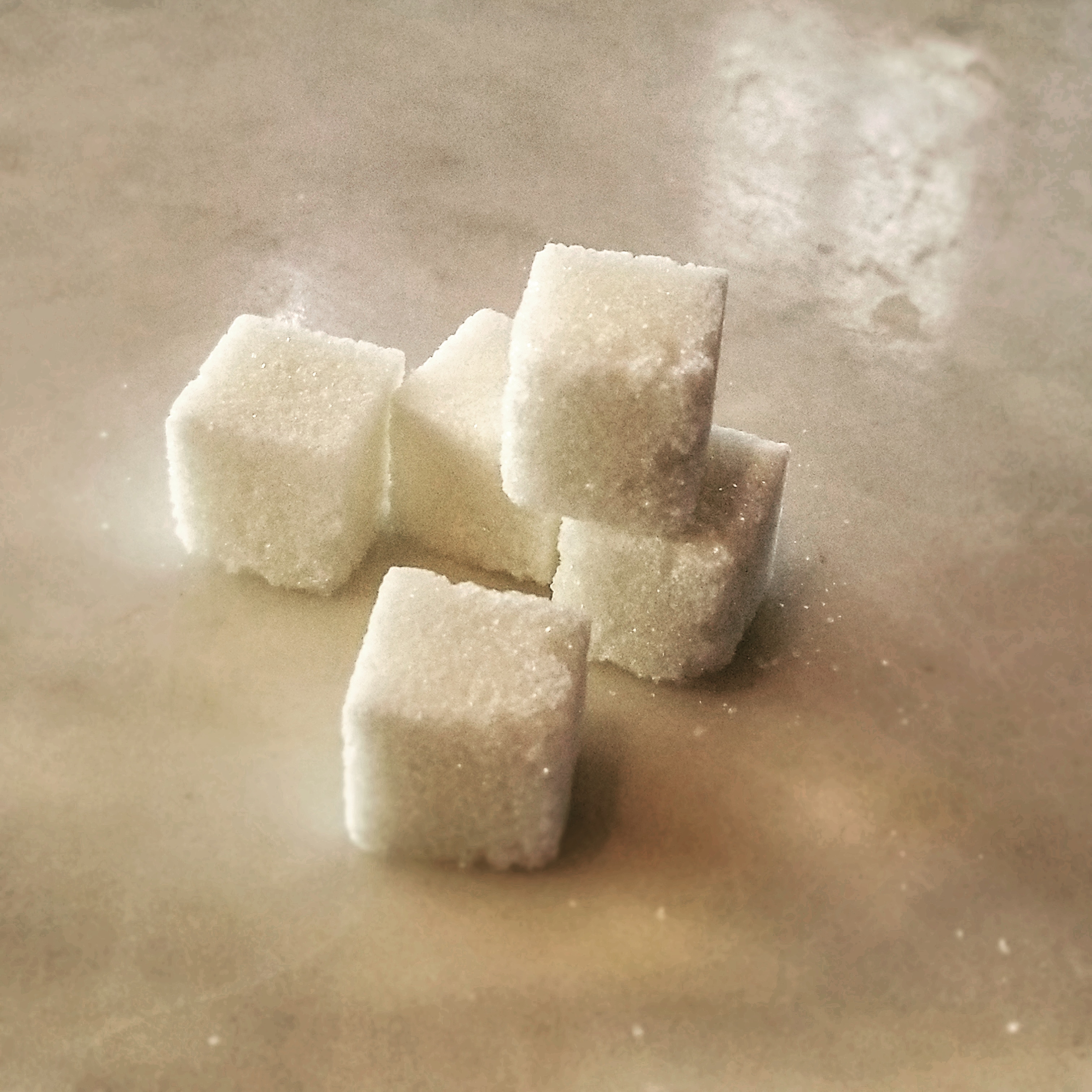
Sugar.jpg

But bitter tastes are unpleasant and while it only takes a splash to fool our monkey brains the end drink shouldn’t taste bitter. This is where a spoonful of sugar helps the medicine go down. A touch of sweetener rebalances the added bitter element. It should not be sweet, it should not be cloying, it should be just enough to balance the flavor scales.

Ice.jpgNext up is dilution. While alcohol itself has no flavor it acts as a great transport for flavor. Ethanol caries those flavors molecules in a magical solution but it keeps them locked up tightly. A little dilution opens those locks and lets the heart, the true flavor burst through.
Then the drink is finished the same way it’s started with a touch of aromatic, these days in the form of expressed citrus oils to enhance the newly awakened flavors but in the drinks proto-form nutmeg was also used. The idea is once again to sneak past that alcohol burn, except this time we’re pulling a fast one on our olfactory sense.

All of this combines for the perfect cocktail. All of the parts are interchangeable. Change the sugar for vermouth and you end up with a Manhattan or a martini. Swap the dash of bitters for a grand bitter like Campari, a bottled form of that bittersweet, and you end up with a negroni or a boulevardier. Or simply take the sugar, turn it into a simple syrup, fully dilute the cocktail and serve it up and you end up with a New Fashioned Cocktail. The very process and innovation that the first drinker shook their fist at and declared that they wanted an Old Fashioned with their muddled sugar cube and ice IN the glass.

So, after all that how do I drink my Old Fashioneds? Intellectually.

But also with a small brown sugar cube soaked with Angostura bitters, just enough to saturate the cube, then dropped into the bottom of a rocks glass. Add a splash of soda water, just enough to allow the bitters soaked sugar to be easily and fully muddled. Add two ounces of Bonded Rye whiskey, a large ice cube, stir, and then express the oil from a small slice of lemon and of orange over the top. Sip, drain, and repeat until the dawn comes.

Open Bottle: Yamazaki 18 Year Single Malt Mizunara Cask

In today’s edition of things you’ll never get to taste: Yamazaki 50 Year Old!

            On Friday August 17th 2018 a bottle of 1st edition Yamazaki 50 Year Old, one of only 50 bottles to exist, sold at auction for $312, 519.87. This is now the most expensive bottle of Japanese whisky ever sold at auction, beating the previous record set a mere three months earlier with the sale of bottle of 52-year old Karuizawa and blowing the previous record for Yamazaki set in 2016 out of the water.

But none of these can touch the record for most expensive bottle ever sold at auction, also set in May of 2018, for a bottle of MaCallan 60 Year old. The malt was distilled in 1926, bottled in 1986, featured a label created by Valerio Adami, is one of only 12 bottles in existence, and sold for $1.1 million USD.

Thirsty yet? Wish you could taste what must be the Elixir of Youth? Well, you can’t so lets talk about something absurd that you still might be able to put in your mouth: The Yamazaki Mizunara Cask.

To many drinkers and collectors Yamazaki is the quintessential Japanese whiskey. You can read more about their specific history, here, here, and here. Yet something that’s even more quintessentially Japanese than Yamazaki, kaiju, and anime is mizunara wood.

download-1
Quercus mongolica

Scientifically known as Quercus mongolica, this is a species of oak native to Japan, central and northern China, Korea, eastern Mongolia, and eastern Siberia. The infancy of the Japanese whiskey industry butted up against the outbreak of World War 2 and while imports of European and American oak barrels for aging were drying up whisky consumption was on the rise and became the main drink consumed by the Japanese army. Barrels were needed so the distillers turned to their native oak.

Up until then mizunara had been used primarily in the manufacturing high end furniture and when transferring to whisky making the distillers ran into a few problems. First up, it takes a good 200 years for a mizunara oak to fully mature for a good cask, and it doesn’t grow straight, making it difficult to form proper staves. On top of that, Japanese oak has a higher moisture content than it’s cousins making it more difficult to work with. It’s also more porous meaning the casks are more susceptible to leaking.

Despite all these setbacks it turns out what mizunara really needs to shine is the thing that it’s hardest to give: time. The true flavors of mizunara really start to shine after prolonged ageing. This has lead to it being an essential player in the blended/pure malts that Japanese producers are so found of but also rocketed it into the stratosphere of some of the most sought after style of aged Japanese whisky in the world.

As the world of rare whisky comes to mirror more and more the world of fine art and bottles are becoming collectors pieces to be admired but never enjoyed it’s worthwhile to be reminded that the true joy of a dram is in the drinking and the sharing.

Due to the maturation time needed and the problems of working with the wood itself there aren’t many whiskies that are fully aged in exclusively mizunara but the allure and price tag of whiskies aged in mizunara have led to multiple producers releasing mizunara seasoned releases that carry the name but not the refinement that is so readily apparent in the older Yamazaki releases.

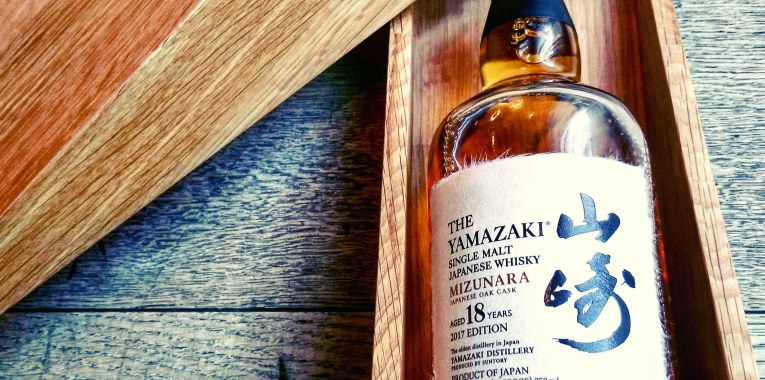
Take for instance their 2017 Yamazaki Mizunara release. The 2017 release is an 18 year old single malt aged exclusively in mizunara oak. Their Chief Blender, Shinji Fukuyo, tasted through hundreds of mizunara aged whiskies and put together this malt that may legally only be only 18 years but is stated to contain at least a small portion of 50 year old malt. Bottled at 96 proof and with a price tag slightly north of $1000 this is certainly not an everyday whisky- but can it clue us into the hype and auction fees of its unobtainable brethren?

NOSE: The nose is rich, fragrant and has a touch of sandal wood and greenery. An undertone of fresh baking spice is also present. The mizunara is already making itself known.

PALATE: A silky texture, with dry red fruit, coconut, citrus marmalade, a sweetness of caramel and a rich texture that is reminiscent of condensed milk with out the heavy feeling.

FINISH: It ends with a decisive spiciness, it’s reminiscent of Japanese incense, the lighter wood notes from the nose return and linger with the baking spice as you exhale.

This is a truly elegant pour of whisky. It is a prime example of how much patience is needed to truly coax the beauty of the mizunara out of the cask and into the glass. When I drink this I understand why Suntory is scouring Japan for old mizunara furniture to turn into more barrels.

I’ll probably never know how this stacks up to the most expensive Japanese whisky ever sold but it will always have something more noteworthy about it than that auction bottle ever will: I can actually drink it. As the world of rare whisky comes to mirror more and more the world of fine art and bottles are becoming collectors pieces to be admired but never enjoyed it’s worthwhile to be reminded that the true joy of a dram is in the drinking and the sharing.

This bottle is by no means commonplace and the price is nothing to scoff at but I can think of at least four places around Los Angeles where this is a bottle that can transport your evening and remind you that patience is sometimes its own reward.

And if you ask nicely I might even tell you where those places are before I drink it all myself.

Whiskey Wednesday: Early Times Proof of Concept

I’ve talked about it before but I’m really into traveling. Travel opens our eyes to new things, it also shines a new light on the familiar and common place. While most people filter this experience through art or culture being a bartender and a boozehound I end up seeing it through the glass at the bottom of a bottle.

Proof is often erroneously conflated with quality

Spirits nerds, especially us whiskey focused ones, love to talk about “the rules.” Your spirit can’t be a Scotch if it isn’t made in Scotland, your spirit can’t be whiskey unless it’s made from some type of grain, your corn whiskey can’t be Bourbon unless it uses a brand new, freshly charred barrel, etc., etc,. We love these rules because they help us clearly delineate the teams and offer an offer a definitive right vs. wrong answer in any debate.

These rules also offer consumer protection. Ever wonder why most spirits in the US are bottled at 80 proof (40% ABV)? It’s because that’s the legal minimum. In the EU that minimum is 37.5% so you will see products, even ones that are traditionally 40%, packaged at the lower threshold. Why? The answer as it so often is, is taxes.

Proof is often erroneously conflated with quality. While the higher the alcohol content the more intense the intrinsic flavors of the sprit will be this is not the sole indicator of quality. If it was Everclear would be the number one premium spirit in the world. But it is true that spirits used to be sold at much higher alcohol content. The old standard of “proof” used to be if gunpowder soaked in the spirit would still light on fire. This ensured that rum rations on ships wouldn’t interfere with the firing of it’s canons but also that the spirit hadn’t been watered down. This proof point is 57%.

All of these taxes, traditions, and experiences coalesced over the years until it was finally turned into law with the double whammy of the Bottled in Bond Act of 1897 and the Safe Food and Drug Act of 1906

57% being proof is slightly intellectually irritating though so for ease of use in the US the scale was reduced to 50%=100 proof for easier conversions for, you guessed it, tax purposes. And before you could simply buy a prepackaged bottle of booze from the store you used to take an empty bottle to the store and fill it up directly from the barrel. Diluting the spirit to 40% again made the math easier. A 26oz bottle filled with 40% alcohol will always contain 10oz of alcohol so you always know exactly how much to pay in taxes. But why settle on 40% instead of 50%? That’s the ABV strength where ethanol mixed with water lights on fire at room temperature.

All of these taxes, traditions, and experiences coalesced over the years until it was finally turned into law with the double whammy of the Bottled in Bond Act of 1897 and the Safe Food and Drug Act of 1906 which finally legally defined all of the nefarious white lightning, applejack, and whiskies floating around the American country side. And while this does a wonderful job of maintain a threshold of quality, and safety, it ends up excluding flavors and drinking traditions that fall outside these norms.

For instance, The EU ended up with a lower proof point to respect many of the Eastern European vodka makers, and it should be noted that most international councils, like Scotch and Cognac, have their own rules and minimums that have to be met. And in one of my favorite anecdotes Elmer T. Lee, one of the Father’s of Modern Bourbon, supposedly only drank his Bourbon at 60 proof because he felt that was the perfect point where the alcohol burn didn’t get in the way of the flavor. The guy knew a few things so lets take a look at something that falls outside of almost all of these rules.

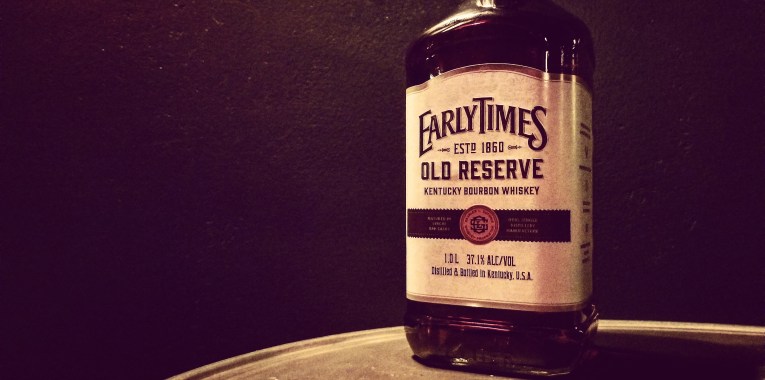
On a recent trip to the Cook Islands (look it up) in the second Duty Free store in an airport with only two gates I came across this bottle of Early Times. Now Duty Free is often a testing grounds for new products, premium bottlings, and a place to dump large amounts of product that aren’t moving.

Despite what the label says this bottle of Early Times is not a Bourbon, at least not in the United States. And this is where confusion comes in, does it follow the rest of the Bourbon laws? I have no idea so let’s assume it’s produced exactly the way regular Early Times is.

Regular Early Times is also not a Bourbon. It is produced in Kentucky by the Brown-Forman Corporation at the same distillery that produces Old Forester, which is a Bourbon. What separates the two is the barrel. Early Times is aged in reused Bourbon barrels so already it’s legally “just” a whiskey. But it’s packaged below the EU threshold of spirits at 37.1%, which means that this bottle isn’t even legally a whiskey. For the sake of novelty and the equivalent of nine American dollars I brought this bad boy across the ocean, through customs, and back home to the United States.

images.jpg

The reused barrels effect on the whiskey is immediately obvious as it’s color is lighter, more straw and hay than a full aged Bourbon that has those deep dark barrel influences.

On the nose there are all of those traditional whiskey aromas: vanilla, caramel, and a touch of stone fruit but they’re less intense due to the barrel. The spirits corn base is readily apparent even on the nose.

On the palette is sweet corn, a hint of spice, a touch of caramel, and not much else. It meats the flavor points of whiskey.

The finish is short but inoffensive. This isn’t terrible whiskey, but it is exactly the kind of whiskey an Old Fashioned cocktail was designed to enhance. Though it this case it would require a delicate touch because everything about this is so light that it would be easy to overwhelm the spirit with just a hair heavy dash of bitters.

I picked this bottle up because the proof point was amusing to me but in the end do those 2.9% points really make a difference? Yes, but there’s so much else going on with Early Times that they’re not going to make or break this spirit. It is putting in the minimum effort.

Ultimately, that’s why people look down on these bare minimum bottlings. It doesn’t feel special. They’re offering an experience that is just meeting a requirement. But sometimes all it takes is crossing an ocean for a requirement to transform into an unique, glass bottomed lens and let you see things in a new light.

Whiskey Wednesday: Nikka From The Barrel and to the US

 One of the best things about traveling is seeing what is out there in the world that can’t be seen from home.

When it comes to spirits traveling abroad often means encountering ex-pat style spirits; bottlings like Blanton’s Straight From The Barrel, an Early Times bottled at 37.1 Proof, or the Wild Turkey 13 Year. These are intriguing because they’re both familiar yet unattainable but they don’t fill a void or represent something new. Their appeal is mostly just that they can’t be had at home.

Despite what the name might imply, the whisky itself is not a single barrel expression.

More frustrating to me are those spirits that I discover but have no recourse to obtain at home. These are products that are fundamentally different from the familiar yet still incredibly appealing and often made by companies that already have products in the States. Products like the Giffard Melon, the Etter Apricot Eau-de Vie, and, until this past month, the Nikka From The Barrel Japanese Whisky numbered among them.

At this point it should be very apparent that Japanese whisky is the soup du jour of the whisky world, but instead of talking about the loss of an age statement or product line being discontinued for once we’re actually seeing an expansion of a product. And not a wholly new formulation specifically designed for a market, just an honest to god expansion of availability.

I first came across the Nikka From The Barrel when traveling to France a couple years ago. Not only was I struck but how incredibly flavorful it was but by how ubiquitous it was. I erroneously assumed it was a specialty release only to hear from the bartenders that it was their mixing Japanese whisky.  Keep in mind that this was pre-Toki when the prices were rising and stock plummeting and the ability to make cocktails with Japanese whisky was dwindling. Yet here was an over-proof, affordable, mixable Japanese whisky.  And I couldn’t have it.

Despite what the name might imply, the whisky itself is not a single barrel expression. It is instead a blend, remember the Japanese whisky makers consider themselves more blenders then distillers. This is Single Malts from Nikka’s Yoichi and Miyagikyo Distilleries, as well as grain whisky from Miyagikyo that has been rested and married in an oak barrel for 3-6 months. It is coming from the blending  barrel not a single barrel.

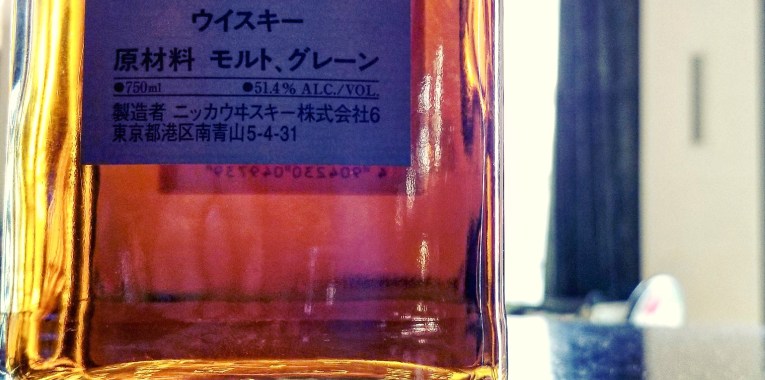
The extra aging allows the whiskies to marry and evolve together before being bottled at near cask strength, a powerful 102.8 proof. This power of proof and flavor is what made the whisky such an amazing value. There is just so much packed into its little bottle. And the bottle is little. Designed to be reminiscent of a “small lump of whisky” to visualize the concentrated power inside the bottle it is packed as 500ml. This is a bottle size so far outside the allowable norms for US production that I think this more than anything is what kept it from our shores for so long.

With its Stateside release, Nikka kept the same bottle design but simply scaled it to a 750ml size. Not quite as elegant and evocative but it’s always been what’s inside the bottle that counts.

So, what’s inside the bottle? The same blend of malt and grain married for 3-6

It’s also proof that global expansion and demand can be gracious and bring you new experiences and treasures, instead of putting up artificial boundaries.

months in oak casks. Still bottled at 51.4% alcohol this is a big hitter.

The Nose carries a hint of fresh, green fruit, with a baking spice overlay and of course a discernable oak note. The alcohol vapors can accidently overpower some of the more subtle notes if you inhale too deeply on the first sniff.

On the palate is a big, full bodied whiskey. The dark baking spice notes leap to the front. Brown sugar, caramel, and the fruit stays fresh and a touch more citrusy than expected from the nose. The distillate is incredibly clean and dry.

The finish is long, drawn out, and the oak lingers after the alcohol has burned off. A few drops of water really does help mellow this whisky and expand the range of flavor.

What’s truly great about this whisky to me is that it’s simultaneously an entry level whisky and yet not. It’s something the evolves over time, much like the person drinking it.

It’s also proof that global expansion and demand can be gracious and bring you new experiences and treasures, instead of putting up artificial boundaries.